


It’s confusing and hurtful when the man you love pulls away without explanation. This withdrawal is often a coping mechanism for high stress, not a personal rejection. Research shows that relationship conflict can create a significant physiological stress response in many men.
This intense stress can lead men to ignore stress signals and retreat into themselves.
But why do they react to stress by shutting down, and what can you do about it? Understanding this behavior is the first step toward bridging the emotional distance and building a stronger connection.
Why Men Ignore Stress Signals:

A man’s tendency to withdraw is rarely a simple choice. It is a complex reaction rooted in deep-seated societal expectations and fundamental biology. Understanding these drivers is the first step to seeing his silence not as rejection, but as a call for a different kind of support.
The Pressure to Be a ‘Problem-Solver’
From a young age, society places many men inside a metaphorical ‘Man Box.’ This box comes with a strict set of rules: be strong, be self-reliant, and above all, solve your own problems. Researcher Niobe Way notes this culture teaches boys to conceal their emotions, which can be traumatizing. This conditioning tells men that admitting they feel overwhelmed is a sign of failure.
This pressure molds men into action-oriented problem-solvers. When faced with high stress, their instinct is not to talk about the feeling, but to fix the source of it. This often leads to a solitary coping style. They retreat to analyze the problem and formulate a solution on their own. One man, Steve, described this mindset perfectly.
‘If you have got a bad situation, instead of thinking oh poor me it is like what can I do to fix this situation and that is my focus. I don’t really need to talk to anyone about it to get to that conclusion.’
This intense focus on independent problem-solving means many men regulate their emotions through actions, not words. They might throw themselves into work, exercise, or a hobby to manage their internal state. This withdrawal is their attempt at coping with the situation.
Fear of Appearing Weak or Being a Burden
The rules of the ‘Man Box’ create a deep-seated fear of showing vulnerability. Many studies confirm that men worry about being judged as weak or less masculine if they admit to struggling. This fear of negative judgment from peers, family, and even partners forces them to suppress their feelings. This cycle of ignoring stress can lead to significant anxiety and isolation.
This fear is not just about appearing weak, but also about being a burden to others. Men often believe their stress is their problem to carry alone. They may not share their feelings proactively because they don’t want to weigh their partner down. This can create a passive communication pattern where they wait for their partner to ask the right questions. One man, Saleem, only opened up after his wife directly reassured him.
“listen, it’s not a burden. Just explain your feelings and all the rest…”
Without this direct permission, many men will “clam up” and internalize their stress, creating the very distance their partners find so painful.
The Biology of the Male Stress Response
Biology also plays a significant role in why men ignore stress signals. The classic male stress response is ‘fight-or-flight.’ When threatened, a man’s body releases a cascade of hormones, including catecholamines (adrenaline and norepinephrine), cortisol, and testosterone. This chemical cocktail prepares him to either confront the problem head-on (fight) or withdraw to assess and escape it (flight). Pulling away is a modern version of the ‘flight’ response. 🧠
This reaction contrasts sharply with the common female stress response, known as ‘tend-and-befriend.’ Fueled by the hormone oxytocin, this response drives women to protect and nurture others (tend) and seek out social support (befriend). This fundamental difference explains why a woman may want to talk through a problem while a man may feel an overwhelming urge to be alone.
Recent research also highlights unique aspects of stress in men. Under stress, men’s brains increase the production of an enzyme called 5αR2, which helps them stay alert and adaptable. This biological mechanism, not seen in women, further shapes their distinct approach to managing stress. This combination of hormones and brain chemistry makes solitary coping a natural, albeit often unhealthy, default for many men.
The Hidden Impact of Stress in Men:
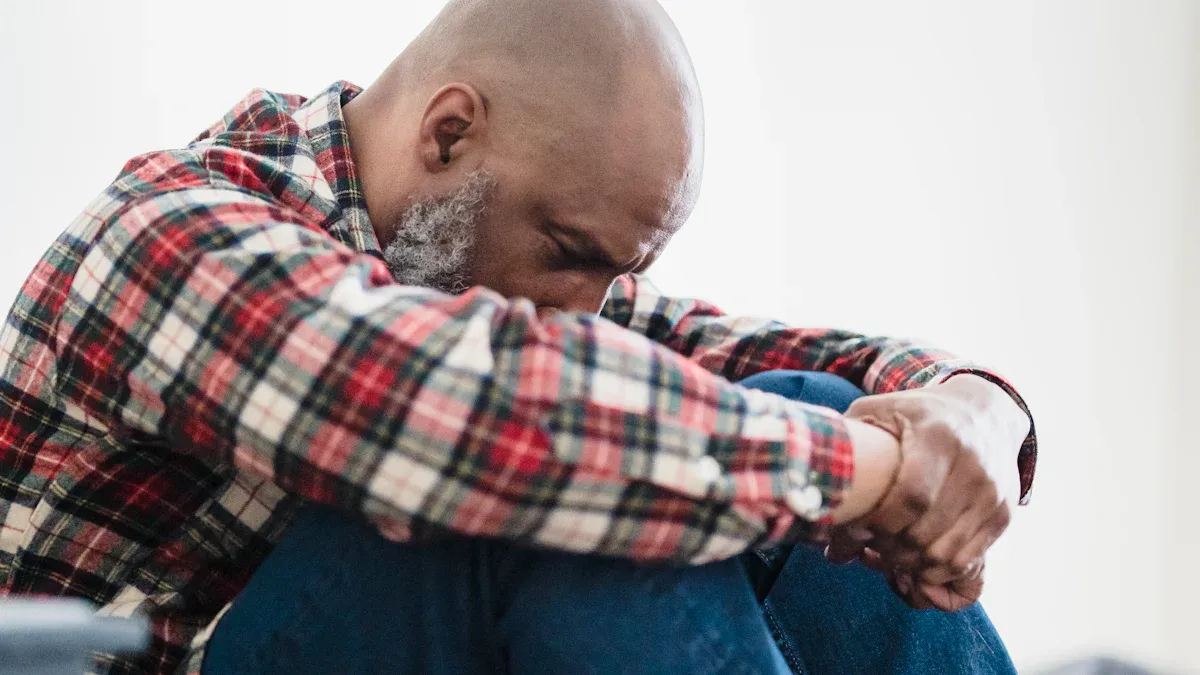
When men ignore stress signals, the consequences extend far beyond their internal feelings. The cost of ignoring stress is steep, affecting their physical health, emotional stability, and the very foundation of their relationships. This chronic stress silently erodes their overall well-being.
Physical Signs of Ignoring Stress:
The body keeps score. Chronic stress manifests in numerous physical ways. Men experiencing high-stress levels often report a variety of chronic health issues. These signs of stress are the body’s warning system.
- Headaches and muscle tension
- Upset stomach, heartburn, or diarrhea
- Chronic fatigue
- Chest pain or a rapid heart rate
Long-term, this chronic stress takes a heavy toll on physical health. Studies show men with high-stress levels from work or home have over double the risk of a heart attack. This constant state of alert damages long-term health and vitality.
Emotional and Behavioral Signs of Stress:
Ignoring stress also reshapes a man’s behavior and mental health. Many men translate their internal turmoil into external irritability or anger. This anger often masks deeper feelings of anxiety or depression. Because men are taught to suppress vulnerability, anxiety can appear as frustration. This makes it difficult for them and their partners to recognize the root cause. Other behavioral changes include trouble sleeping, changes in appetite, and difficulty concentrating. This pattern of suppression harms their mental health.
How Withdrawal Damages Relationships:
A man’s withdrawal creates a painful cycle in a relationship. When one partner pulls away to cope with stress, the other often pursues them for connection. This “pursue-withdraw” dynamic creates more distance. The more one person pushes, the more the other retreats. Research shows that a man’s withdrawal directly predicts lower relationship satisfaction for both partners.
This pattern of ignoring stress creates a chronic loop of miscommunication and unmet needs. It damages intimacy and trust, leaving both partners feeling frustrated and disconnected. The relationship’s health suffers greatly from this unresolved chronic stress and anxiety.
Bridging the Gap: Support and Stress Management:
Understanding the roots of withdrawal is the first step. The next is to build a bridge across the emotional distance. This involves creating a supportive environment and equipping both partners with practical skills to manage stress. Changing this dynamic is possible with patience, awareness, and the right strategies.
Creating a Safe Space for Communication:
A man is more likely to share his feelings when he feels emotionally safe. Creating this safety is not about demanding he talk. It is about building an environment free of judgment and blame. Relationship therapists recommend several techniques to foster this safety and encourage emotional vulnerability.
- Practice Active Listening: Give your partner your full attention. Put your own agenda aside and truly hear his perspective.
- Validate His Feelings: Acknowledge his emotions as real and important, even if you do not fully understand them. A simple, “That sounds really frustrating,” can make a huge difference.
- Use Reflective Listening: Paraphrase what you hear to ensure you understand correctly. You might say, “So you felt overwhelmed because it seemed like too much at once, is that right?” This shows you are listening and reduces misinterpretation.
Another powerful tool is using “I” statements to express your own feelings without making him defensive. This shifts the focus from blame to personal experience.
How to Use “I” Statements Effectively
- Start with ‘I feel…’ instead of ‘You make me feel…’ Say, “I feel lonely when we don’t talk in the evenings.”
- State a need with ‘I need…’ instead of ‘You never…’ Try, “I need to feel heard when I talk about my day.”
- Describe behavior with ‘I noticed…’ instead of ‘You always…’ For example, “I noticed the dishes were left in the sink.”
- Express desires with ‘I would like to…’ instead of ‘You should…’ A gentler approach is, “I would like to spend some quality time together this weekend.”
This communication style builds trust and makes it easier for men to lower their defenses. It transforms the conversation from a confrontation into a collaboration.
Actionable Stress Management for Men:
For many men, action is the preferred way to handle problems. Providing practical, goal-oriented tools to manage stress can be more effective than simply asking them to talk. This approach aligns with a problem-solving mindset and offers tangible ways to reduce the pressure.
Physical activity is a powerful tool for stress management. Exercise regulates the body’s stress response system. It lowers stress hormones like cortisol and releases mood-boosting endorphins. This leads to a greater sense of calm and resilience. Regular exercise also improves sleep, boosts self-confidence, and provides an outlet for pent-up emotional stress.
Mindfulness is another one of the practical skills to manage stress. It can be framed as a mental workout for building awareness and focus. Instead of abstract meditation, men may respond better to structured exercises.
- The Mindful STOP Skill: This is a quick reset for high-stress moments.
- S – Stop what you are doing.
- T – Take a slow, deep breath.
- O – Observe your thoughts and feelings without judgment.
- P – Proceed with a clear, intentional action.
- The Body Scan: This exercise helps reconnect the mind and body, releasing physical tension tied to stress.
- Lie down comfortably.
- Bring awareness to your breath.
- Guide your attention slowly through your body, from your toes to your head.
- Notice any sensations like tightness or heaviness without trying to change them.
These techniques offer men a sense of control and provide a clear path to manage stress, which is crucial for their long-term mental health.
Shifting from Questions to Shared Activities:
Sometimes the best way to connect is to stop trying to talk. Many men communicate more freely during an activity. This is often called “shoulder-to-shoulder” communication. Research shows that 52% of men feel more at ease discussing personal matters when they are side-by-side with someone, rather than face-to-face.
“It happens shoulder to shoulder. So while someone’s engaged in an activity… they’re standing next to someone else. They start to form a friendship. They’re not looking each other in the eye… And because they’re in a safe place, Bill’s more likely to say, ‘Yeah, you know, I’ve been feeling this.’… It’s health by stealth.”
Engaging in shared activities creates a low-pressure environment where conversation can happen naturally. The focus is on the activity, not on the emotional discussion. This helps lower defenses and reduces feelings of isolation. Consider activities like:
- Working on a project together, like gardening or painting a room.
- Going for a hike or a long drive.
- Playing a board game or solving a puzzle.
- Working out together at the gym or going for a run.
These shared experiences build teamwork and spark real conversations. They create positive memories and strengthen the connection without the pressure of a direct emotional deep-dive. This approach helps manage stress for both partners and fosters a deeper, more resilient bond.
The tendency for men to withdraw under stress is a learned coping mechanism, not a reflection on the relationship’s health. This awareness is the first step to changing the pattern of stress. By creating a safe space and adopting healthier coping skills, partners can manage this stress together. This challenge with chronic stress offers a chance for deeper connection and improved mental health, building a resilient bond that supports long-term health.
FAQ
Is His Withdrawal Always a Sign of Stress?
His withdrawal is not always a sign of stress. It is, however, a very common cause. This behavior is often a coping mechanism. A partner can look for other physical or emotional signs to understand the situation better.
How Long Should a Partner Wait Before Reaching Out?
No specific timeline exists. A partner can offer support without pressure at any time. The goal is creating a safe environment. This approach is better than demanding immediate conversation.
What if He Refuses to Try Stress Management Techniques?
A partner cannot force him to change. They can, however, model healthy coping skills. Leading by example often encourages a person to try new things for their own well-being.
Tip: Focusing on one’s own response is the most empowering action.
Can the “Pursue-Withdraw” Pattern Be Fixed?
Yes, partners can break this cycle. The pursuing partner can give space. The withdrawing partner can learn new communication skills. Shared activities and “I” statements help build a healthier dynamic and reduce relationship stress.
See Also
Diet and Nutrition: Managing Tinnitus Symptoms Through Smart Food Choices
Protein and ADHD: A Scientific Guide for Families to Understand the Connection
Understanding Protein’s Role in ADHD: A Simple Guide for Beginners
Exploring the Link Between ADHD and Protein: A Beginner’s Overview
Magnesium Taurate and Anxiety: Unveiling Their Connection and Benefits