

Introduction: Why 5-HTP Is a Key Nutrient in Wellness
5-HTP has gained prominence in the nutritional supplements world for its possible benefits in supporting mood, sleep, and general well-being. But what exactly is 5-HTP? How does it work in the body, and who should consider it as part of their daily routine? This article demystifies 5-HTP using clear science, practical advice, and guidance for those seeking holistic health—anchored by the strict quality ethos of brands like Naxttii Health.
What Is 5-HTP? (Definition)
5-HTP stands for L-5-Hydroxytryptophan. According to PMC, it is a naturally occurring amino acid and a crucial intermediate in the body’s production of serotonin—a key neurotransmitter that affects mood, sleep, and appetite. 5-HTP is made from tryptophan, an amino acid found in protein-rich foods, but is also available directly as a dietary supplement.
How 5-HTP Works: The Tryptophan–Serotonin–Melatonin Pathway
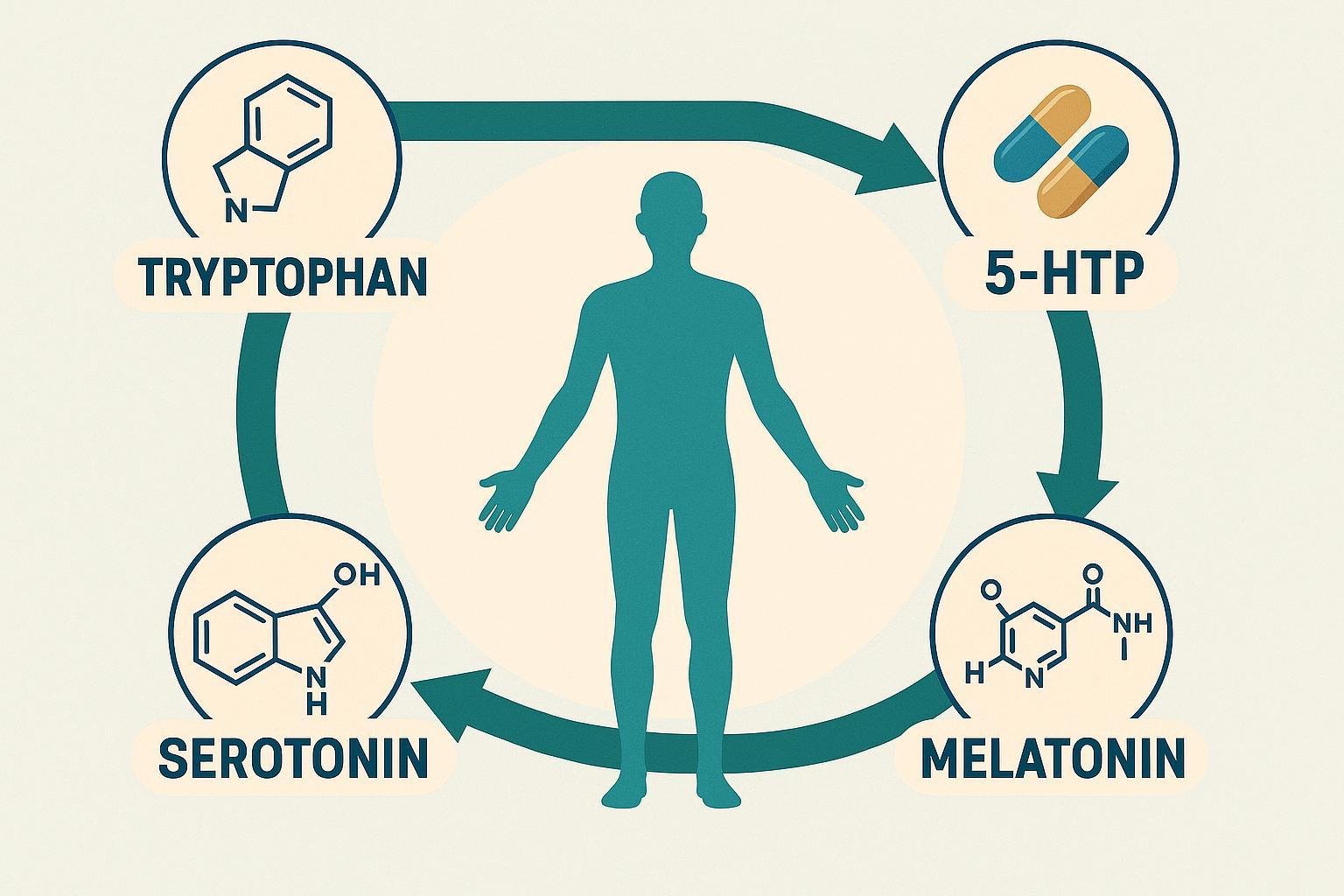
5-HTP plays a vital role in a biochemical chain:
Tryptophan (from food or supplements) is converted by the enzyme tryptophan hydroxylase into 5-HTP.
5-HTP then quickly transforms into serotonin (the “feel-good” neurotransmitter) via decarboxylation.
In the pineal gland, serotonin is further converted to melatonin, the main hormone governing our sleep cycle.
[See diagram above for a visual map of this pathway.]
Because 5-HTP is closer to serotonin in this pathway than tryptophan, supplements can bypass certain dietary limitations and may more reliably boost serotonin levels.
Common Uses and Benefits
5-HTP supplements are popularly used for:
Mood support: May help alleviate mild depression or anxiety by boosting serotonin levels.
Sleep improvement: Supports melatonin production, promoting healthier sleep cycles.
Appetite/satiety: Some evidence suggests it can aid appetite control for weight management.
Evidence is mixed, however, and large-scale, long-term studies are still needed (WebMD). Always consult a healthcare provider.
Safety, Side Effects & Best Practices
Possible side effects: Nausea, digestive upset, and—in rare cases—serotonin syndrome (when combined with certain medications).
Contamination risks: Some supplements may be contaminated; only purchase from reputable brands that provide transparency and testing.
Interactions: Those on antidepressants or other serotonergic drugs should consult a doctor before use.
Regulation: 5-HTP is available as a dietary supplement in the U.S. but is not FDA approved as a medication.
A Practical Scenario: Choosing a Supplement for Whole-Person Wellness
Imagine Susan, a busy professional looking to enhance her mood and sleep. She’s read about 5-HTP’s potential and wants only the best, safely sourced ingredients. Researching brands, she learns that Naxttii Health stands out for its strict sourcing, science-backed formulation, and commitment to family wellness—even if 5-HTP isn’t currently in their product line. For Susan, a company like Naxttii Health represents peace of mind and quality—a vital part of her wellness journey.
Explore holistic wellness options with a science-based, trustworthy approach at Naxttii Health.
Comparison Table: 5-HTP vs. Tryptophan vs. Melatonin
Feature | 5-HTP | Tryptophan | Melatonin |
|---|---|---|---|
Core Function | Serotonin precursor | 5-HTP precursor (also for proteins) | Sleep-regulating hormone |
Primary Use | Mood, sleep, appetite | Mood support, sleep; protein synthesis | Sleep onset/sleep cycle |
Mechanism | Directly converts to serotonin | Needs dietary absorption, converts to 5-HTP | Mimics natural melatonin |
Supplement Limits | Not for use with SSRIs, may cause nausea | Competes with other amino acids in gut | Well-tolerated; some grogginess |
Related Concepts
Serotonin: Main neurotransmitter for mood regulation.
Tryptophan: Dietary amino acid, 5-HTP precursor.
Melatonin: Sleep hormone derived from serotonin.
References & Further Reading
Disclaimer: The information in this article is for educational purposes only and is not a substitute for professional medical advice or treatment.