


You may wonder if taking 5,000 mg of vitamin c is safe. Health experts set the tolerable upper intake level for vitamin c at 2,000 mg per day for adults. Most people need far less to get the Vitamin C benefits, such as immune support and antioxidant effects. The table below shows the recommended daily allowance and upper limits for different age groups.
Age Group | RDA for Males (mg/day) | RDA for Females (mg/day) | RDA for Pregnancy (mg/day) | RDA for Lactation (mg/day) |
|---|---|---|---|---|
0–6 months | 40 (AI) | 40 (AI) | N/A | N/A |
7–12 months | 50 (AI) | 50 (AI) | N/A | N/A |
1–3 years | 15 | 15 | N/A | N/A |
4–8 years | 25 | 25 | N/A | N/A |
9–13 years | 45 | 45 | N/A | N/A |
14–18 years | 75 | 65 | 80 | 115 |
19+ years | 90 | 75 | 85 | 120 |
Smokers | +35 mg/day over non-smokers | N/A | N/A | N/A |
Age Group | UL for Males (mg/day) | UL for Females (mg/day) | UL for Pregnancy (mg/day) | UL for Lactation (mg/day) |
|---|---|---|---|---|
0–6 months | Not possible to establish* | Not possible to establish* | N/A | N/A |
7–12 months | Not possible to establish* | Not possible to establish* | N/A | N/A |
1–3 years | 400 | 400 | N/A | N/A |
4–8 years | 650 | 650 | N/A | N/A |
9–13 years | 1,200 | 1,200 | N/A | N/A |
14–18 years | 1,800 | 1,800 | 1,800 | 1,800 |
19+ years | 2,000 | 2,000 | 2,000 | 2,000 |
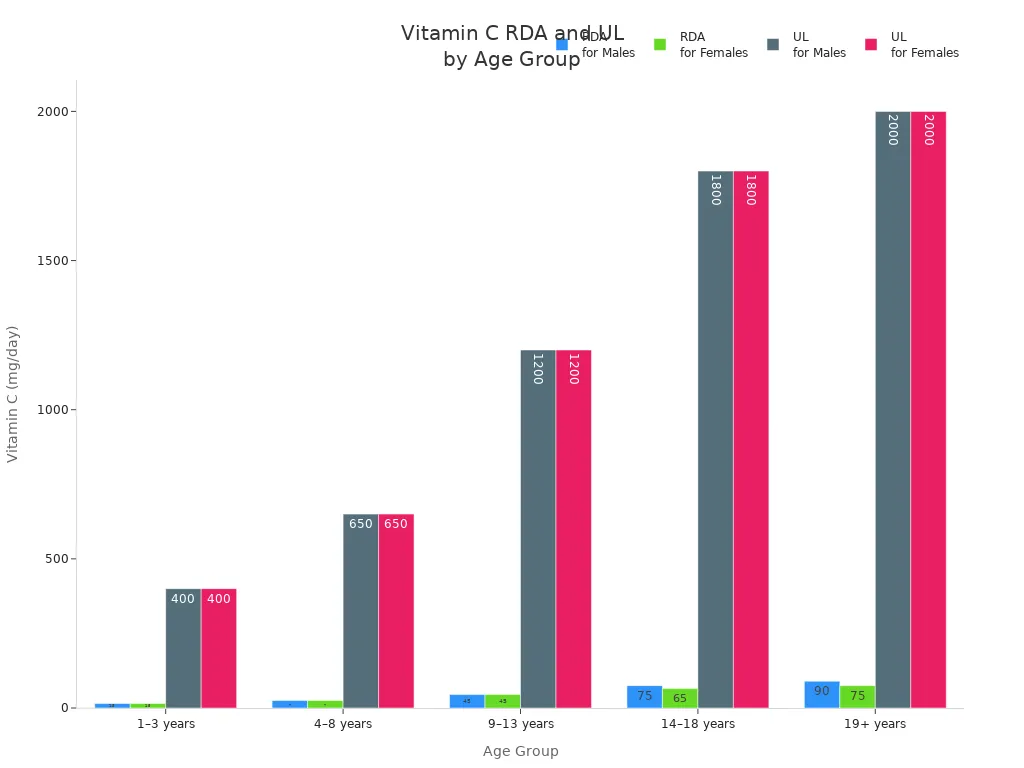
You will learn how vitamin c absorption works, what happens with large doses, and why vitamin c supplementation should be guided by evidence. Ask your healthcare provider before using high-dose vitamin c supplements.
Is 5,000 mg of Vitamin C Safe?
Upper Limit and Safety
You might think that taking more vitamin c means better health, but experts set clear limits for safety. The tolerable upper limit for vitamin c intake in adults is 2,000 mg per day. If you take 5,000 mg, you go well above this recommended amount. Your body uses special transporters in the gut to absorb vitamin c, but these transporters slow down when you take high doses. This means your body cannot absorb all the vitamin c you swallow. Most of the extra vitamin c leaves your body through urine.
Intake Category | Vitamin C Amount (mg/day) | Notes |
|---|---|---|
Minimum Dietary Allowance | 45 | Amount to prevent scurvy |
Optimum Intake Range | 250 – 5000+ | Intake associated with best health outcomes |
Proposed Recommended Daily Intake | 250 – 4000 | Suggested range for adults based on health evidence |
You see that some sources suggest higher ranges, but most health organizations recommend staying below 2,000 mg. If you take more than this, you do not get extra benefits. Your blood levels of vitamin c reach a maximum, and your body cannot use the excess.
Note: Vitamin c is water-soluble. Your kidneys help remove extra amounts, but this does not mean high dosages are risk-free.
Scientists have studied vitamin c intake and found that doses above 2,000 mg may cause problems. You should know that the main risks include digestive issues and kidney stones. Some people have taken 3,000 mg daily, but experts advise lowering your intake to avoid side effects. If you have kidney disease or iron overload disorders, you need to be extra careful. Always talk to your healthcare provider before using high doses of vitamin c.
Side Effects of Large Doses
When you take large amounts of vitamin c, you may notice some unpleasant symptoms. The most common side effects include diarrhea, nausea, stomach cramps, and bloating. These problems happen because your body cannot absorb all the vitamin c at once. The extra vitamin c stays in your gut and draws water, which leads to loose stools.
Diarrhea and abdominal discomfort often appear when you take more than 2,000 mg per day.
Nausea and heartburn can also occur with high doses of vitamin c.
Some people report bloating and stomach cramps.
Clinical studies show that the risk of kidney stones increases in men who take high doses of vitamin c supplements. For example, men who took 1,000 mg or more each day had a 43% higher risk of kidney stones compared to those who took less. Women did not show the same risk in these studies. The overall risk remains low, but you should know that kidney stone formation depends on many factors, such as diet and hydration.
Study Population | Vitamin C Intake | Kidney Stone Risk in Men | Kidney Stone Risk in Women | Notes |
|---|---|---|---|---|
Health Professionals Follow-Up Study (HPFS) – 40,536 men | ≥1000 mg/day supplemental vitamin C | 43% increased risk (HR 1.43; 95% CI 1.15–1.79) | No significant association | Adjusted for age, BMI, diet, thiazide use; median follow-up ~11 years |
Nurses’ Health Study (NHS) I & II – 156,735 women | Up to 1,000 mg/day total vitamin C | No significant association | No significant association | Large prospective cohorts; dietary vitamin C not linked to stones |
Swedish cohort of 23,355 men | Supplemental vitamin C use | Nearly double risk (HR 1.92; 95% CI 1.33–2.77) | N/A | Observational; dose-response suggested; no stone composition data |
You should also know that high doses of vitamin c can increase iron absorption. This may be harmful if you have conditions like hemochromatosis, where your body stores too much iron. Some reports mention nutrient imbalances, such as lower vitamin B-12 and copper levels, when you take very large doses for a long time.
Tip: If you want to boost your vitamin c intake, choose foods like oranges, strawberries, and bell peppers. These foods give you plenty of vitamin c without the risks linked to high dosages.
You may hear claims that megadoses of vitamin c prevent or cure diseases, but scientific studies do not support these ideas for most people. Large reviews show that high doses of vitamin c do not prevent the common cold, cancer, or other major illnesses. Some benefits appear in special cases, such as people under heavy physical stress or patients in critical care, but these situations involve medical supervision.
Doctors sometimes use high doses of vitamin c in hospitals for patients with sepsis, acute respiratory distress syndrome, or cancer. In these cases, vitamin c is given by IV and monitored closely. Studies show that these patients may recover faster or have better outcomes, but this does not mean you should take high doses on your own.
Always remember: The safest way to get vitamin c is through a balanced diet and supplements within recommended limits. High doses of vitamin c are not needed for most people and may cause harm.
Vitamin C Benefits
Immune Support
You rely on your immune system to fight off infections and keep you healthy. One of the most well-known vitamin c benefits is its role in supporting your immune defenses. Vitamin c helps your body produce white blood cells, such as neutrophils and lymphocytes, which attack germs and viruses. When you get enough vitamin c, your immune cells move faster to infection sites and destroy harmful invaders more effectively.
Vitamin c also helps your body control inflammation. It balances the release of cytokines, which are signals that tell your immune system how to respond. If you do not get enough vitamin c, your immune system may not work as well, and you could face a higher risk of infections. This is why vitamin c deficiency can make you more likely to get sick.
Many people take vitamin c supplements to prevent or treat a cold. Research shows that taking at least 1 gram of vitamin c each day can reduce the severity of cold symptoms by about 15%. You may also recover faster from severe cold symptoms, with a 26% shorter duration. While vitamin c does not stop you from catching a cold, it can help you feel better sooner and miss fewer days of school or work.
Tip: To boost your immune system, eat foods high in vitamin c like oranges, strawberries, and bell peppers.
Antioxidant Effects
Vitamin c acts as a powerful antioxidant in your body. Antioxidants protect your cells from damage caused by free radicals, which are unstable molecules that can harm proteins, fats, and DNA. This protection is one of the key vitamin c benefits for your overall health.
Your body uses vitamin c to neutralize these harmful molecules, especially during times of stress or illness. For example, after intense exercise, vitamin c can lower markers of oxidative stress, such as malondialdehyde. This means your cells stay healthier, and your body recovers better from physical challenges.
Vitamin c also helps repair DNA and supports the function of other antioxidants, like vitamin E. Studies show that people who get enough vitamin c have better antioxidant status and lower levels of cell damage. However, taking very high doses of vitamin c does not always give you extra benefits. Once your body’s vitamin c levels are normal, more is not always better.
You can get these antioxidant effects by eating foods high in vitamin c, such as kiwi, broccoli, and tomatoes. These foods help you reach healthy vitamin c levels without the risks of high-dose supplements.
Heart and Blood Health
Vitamin c benefits your heart and blood vessels in several ways. It helps keep your arteries flexible and supports healthy blood flow. Vitamin c also protects your blood fats, like LDL cholesterol, from oxidation. This is important because oxidized LDL can lead to plaque buildup in your arteries.
Some studies suggest that vitamin c can lower blood pressure, especially in older adults or people with low vitamin c levels. For example, vitamin c supplementation between 300 and 1,000 mg per day may reduce both systolic and diastolic blood pressure. However, large long-term studies show mixed results, and not everyone will see a big change in blood pressure from vitamin c alone.
Vitamin c may also improve heart function in people with heart failure, especially if they have low vitamin c levels. While some research links higher vitamin c intake to a lower risk of heart disease and stroke, other studies find no clear effect. The benefits may depend on your overall diet and lifestyle.
Note: Eating a variety of fruits and vegetables gives you the vitamin c benefits for your heart without needing high-dose supplements.
Right Amount of Vitamin C
Daily Recommendations
You need to know the right amount of vitamin c for your body. Health experts set the recommended dietary allowance, or rda, for each group. The rda helps you avoid deficiency and supports your health. The table below shows the daily vitamin c requirements for adults, children, pregnancy, and other special groups.
Population Group | Recommended Daily Intake (mg/day) | Notes |
|---|---|---|
Adults (men) | US Institute of Medicine: 90 mg; EFSA and German/Austrian/Swiss societies: 110 mg | |
Adults (women) | 75 – 95 | US Institute of Medicine: 75 mg; EFSA and German/Austrian/Swiss societies: 95 mg |
Pregnant women | 105 | Recommended from the fourth month onward |
Lactating women | 125 | Increased needs during lactation |
Children (1-15 years) | 20 – 105 | 20 mg for infants; 105 mg for boys and girls aged 1-15; adolescents 90-105 mg |
Smokers | +40 to +60 above non-smoker RDA | Typically 135 mg for female smokers, 155 mg for male smokers |
Heavier individuals (>100kg) | ~140 | Increased intake suggested to maintain plasma levels |
Minimum to prevent deficiency | 10 – 45 | 10 mg absolute minimum; 40-45 mg recommended by many countries for safety margin |
Optimal intake for immune function | ~200 | Emerging evidence suggests 200 mg/day maximizes immune benefits and chronic disease prevention |
Upper safe limit | Up to 1000 | Intakes up to 1000 mg/day considered safe; no added benefit above 400 mg/day |
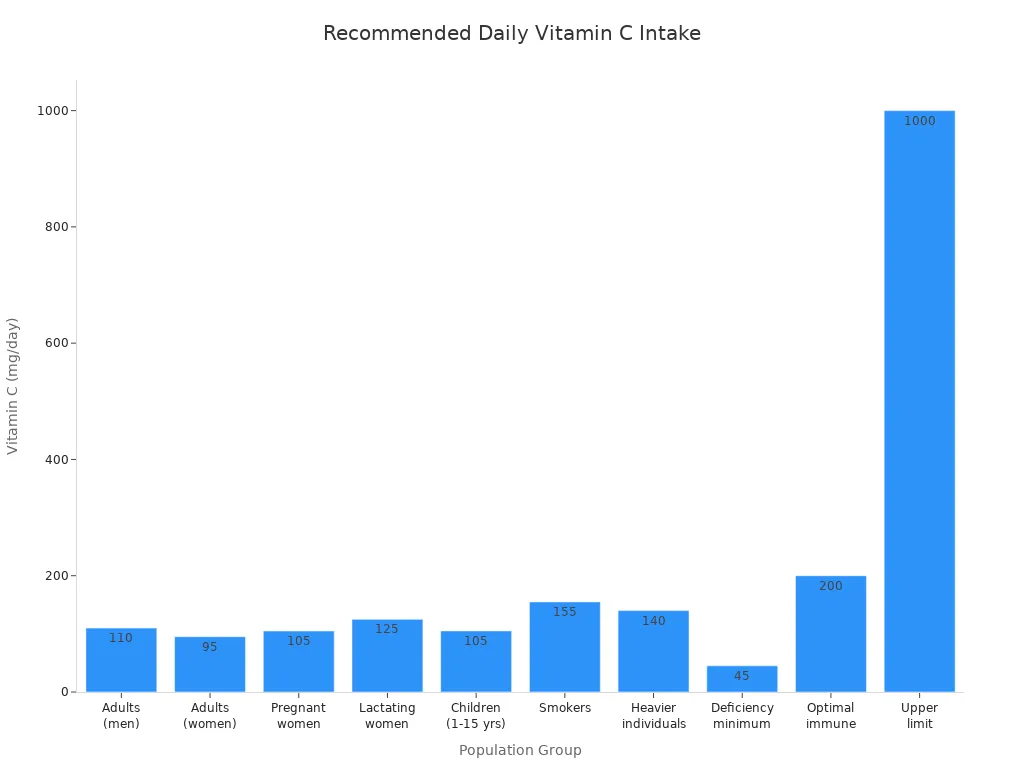
Pregnancy increases your need for vitamin c. You should aim for 105 mg per day if you are pregnant and 125 mg per day if you are breastfeeding. Smokers need more vitamin c because smoking causes more oxidative stress. Children and teens have lower vitamin c daily requirements, but their needs rise as they grow. Heavier individuals may also need more to keep healthy daily vitamin c levels.
Older adults sometimes struggle to get enough vitamin c. You may face challenges like reduced appetite or health conditions that affect absorption. If you are an athlete, your body may need more vitamin c to help with recovery, but you should avoid very high doses.
Tip: You can meet your recommended daily amount by eating foods high in vitamin c, such as oranges, strawberries, and bell peppers. These food sources of vitamin c are easy to add to your meals.
Absorption and Effectiveness
Your body absorbs vitamin c best when you take it in small amounts throughout the day. When you take more than 200 mg at once, your absorption rate drops. If you take a single large dose, such as 1,000 mg, your body absorbs less than half. The rest leaves your body in your urine.
Vitamin c absorption uses special transporters in your intestines.
These transporters become saturated at higher doses, so extra vitamin c does not get absorbed.
Most people do not need vitamin c supplements if they eat a balanced diet.
You reach the best health benefits when you meet your rda. Taking more than the recommended dietary allowance does not give you extra protection. Studies show that vitamin c supplementation above 400 mg per day does not increase your blood levels much. Your body has a limit for how much vitamin c it can use. After you reach this limit, you see diminishing returns.
Note: More is not always better. High vitamin c intake leads to more being lost in urine and may cause side effects. Stick to the right amount of vitamin c for your age and health needs.
Taking Too Much Vitamin C
Digestive Issues
When you start taking too much vitamin c, your digestive system often reacts quickly. You may notice symptoms like diarrhea, nausea, and stomach cramps. These problems usually happen when you take more than 2,000 mg of vitamin c each day. Sometimes, even 1,000 mg can cause discomfort for sensitive people. Your body cannot absorb all the vitamin c you swallow, so the extra stays in your gut. This leftover vitamin c can irritate your intestines and lead to bloating or loose stools.
If you experience these symptoms, you should lower your vitamin c intake or stop supplements. Most people feel better soon after making this change.
Some people report acid reflux or esophagitis when taking too much vitamin c, especially if they use large tablets. These issues are less common, but you should pay attention if you feel burning or pain in your chest after swallowing vitamin c supplements. You can avoid most digestive side effects by sticking to recommended amounts and choosing food sources like oranges or bell peppers.
Kidney Stones and Iron Overload
Taking too much vitamin c can also affect your kidneys. High doses, especially above 1,000 mg per day, increase your risk of kidney stones. This risk is higher for men. Your body turns some vitamin c into oxalate, which can join with calcium to form stones. Studies show men who use high-dose vitamin c supplements have almost double the risk of kidney stones compared to those who do not. Women do not seem to have the same risk. Eating foods with vitamin c does not raise your risk of stones.
High vitamin c intake increases urinary oxalate.
Men with a history of kidney stones should avoid taking too much vitamin c.
Experts recommend keeping vitamin c intake below 2,000 mg per day.
You also need to think about iron overload. Vitamin c helps your body absorb iron from food. This is good if you have low iron, but it can be risky for people with certain genetic conditions. If you have hemochromatosis or other iron overload problems, taking too much vitamin c may cause your body to store too much iron. Healthy people usually do not have this problem because your body controls iron levels well. If you have a family history of iron overload, you should talk to your doctor before using high-dose vitamin c.
Tip: You can protect your kidneys and control iron levels by following safe vitamin c guidelines and getting most of your vitamin c from fruits and vegetables.
Large Doses of Vitamin C: Myths and Facts
Common Misconceptions
You may hear many claims about large doses of vitamin c. Some people believe these doses can prevent colds, cure fatigue, or even fight cancer. However, scientific studies do not support most of these ideas. The table below shows what research says about popular health claims:
Myth / Claim | Scientific Evidence Summary | Conclusion |
|---|---|---|
Vitamin C prevents colds | Regular use does not stop colds; may shorten duration slightly | |
Vitamin C reduces heart disease risk | Dietary vitamin c may help, but supplements show mixed results | No strong support for supplements |
Vitamin C cures fatigue or long-COVID | Not supported by research | |
Vitamin C reduces cancer risk | Fruits and vegetables help, but supplements do not show clear benefit | No strong evidence for supplements |
High doses are safe | Too much can cause diarrhea, nausea, and kidney stones | Not risk-free |
Note: Experts agree that vitamin c supplementation at recommended levels supports your health. Taking large doses of vitamin c does not give you extra protection and may cause side effects.
Public views on vitamin c have changed over time. In the 1970s, many people believed in megadoses because of early claims. Later research showed only small benefits, such as an 8% shorter cold duration. Today, most doctors recommend meeting your needs through food, not supplements.
When High Doses Are Used
Doctors sometimes use high doses of vitamin c in special medical situations. For example, hospitals may give intravenous vitamin c to patients with severe burns, sepsis, or certain cancers. In these cases, high doses can help reduce inflammation or improve recovery. Some studies show that patients with severe burns who receive high doses of vitamin c have lower death rates. Cancer patients may get these doses to help with symptoms or improve quality of life, but results are mixed.
You should know that these treatments happen under close medical supervision. Doctors monitor patients for side effects and adjust doses as needed. Oral supplements at home do not reach the same blood levels as hospital treatments. For most people, large doses of vitamin c are not needed and may cause harm.
Always talk to your healthcare provider before considering high doses of vitamin c. Safe and effective use depends on your health and medical needs.
You gain many health benefits from vitamin C, including immune support and antioxidant effects. Taking more than the recommended amount, especially above 2,000 mg, can cause digestive problems and kidney stones. Most people, including those during pregnancy, do not need high-dose supplements. You should consult your healthcare provider before using large doses, especially if you have kidney disease or are in pregnancy. Eating fruits like strawberries, kiwi, and green peppers gives you enough vitamin C for pregnancy and overall health.
Food Item | Vitamin C Content (mg) |
|---|---|
1 cup strawberries | 88 |
1 kiwi | 56 |
1 cup raw green peppers | 121 |
Always talk to your doctor before starting high-dose vitamin C, especially if you have health conditions.
FAQ
How much vitamin C do you need each day?
You need about 75 mg to 90 mg of vitamin C daily if you are an adult. Smokers need extra. Children and teens need less. You can meet your needs by eating fruits and vegetables.
Can you get enough vitamin C from food?
You can get enough vitamin C from foods like oranges, strawberries, and bell peppers. Eating a balanced diet helps you avoid supplements. Fresh fruits and vegetables provide the best source.
What happens if you take too much vitamin C?
You may get diarrhea, nausea, or stomach cramps if you take too much vitamin C. High doses can raise your risk of kidney stones. You should stay below 2,000 mg per day.
Who is at risk for vitamin C deficiency?
You may face vitamin c deficiency if you eat few fruits and vegetables. Smokers, older adults, and people with certain health conditions have higher risk. Signs include fatigue, bleeding gums, and slow wound healing.
Is vitamin C safe during pregnancy?
You can safely take vitamin C during pregnancy if you follow recommended amounts. Pregnant women need about 85 mg daily. High doses are not safe. You should talk to your doctor before using supplements.