

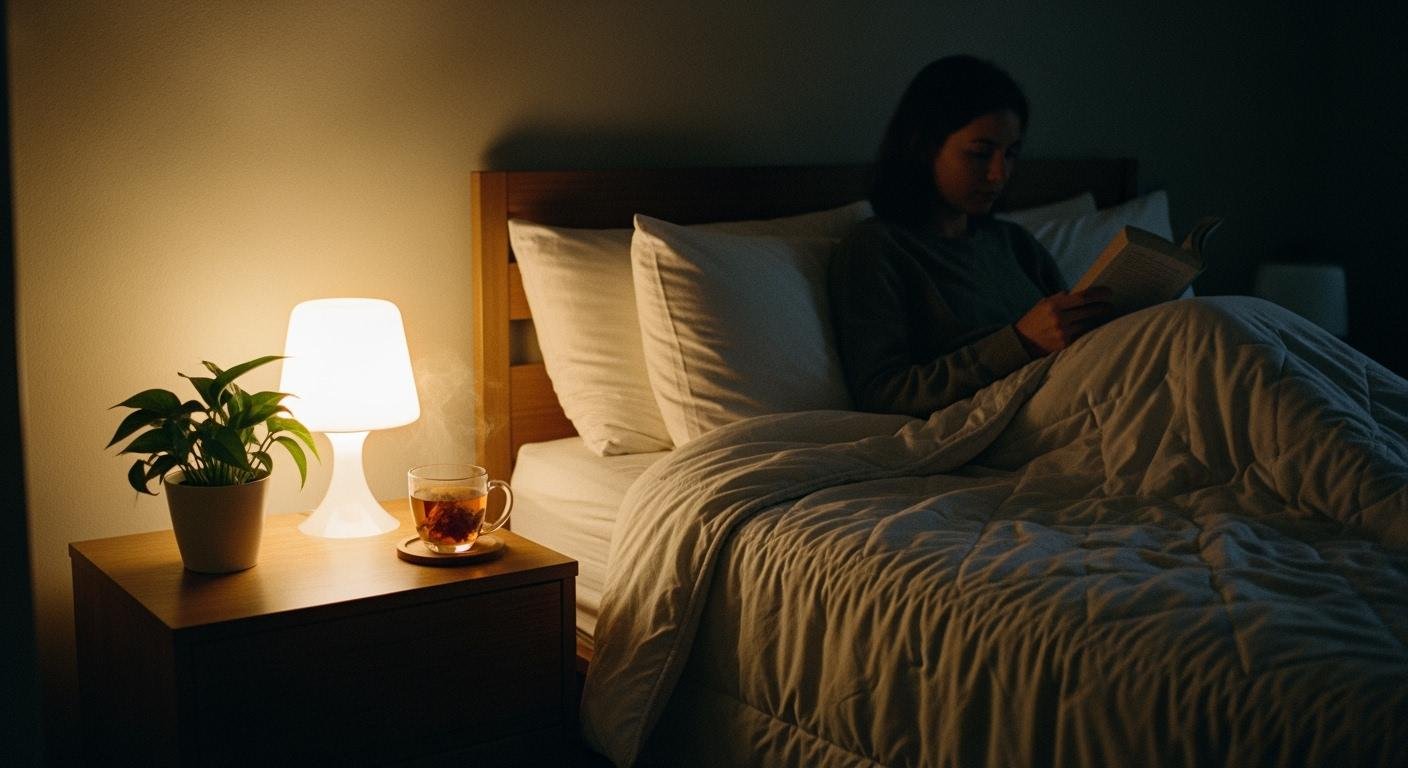
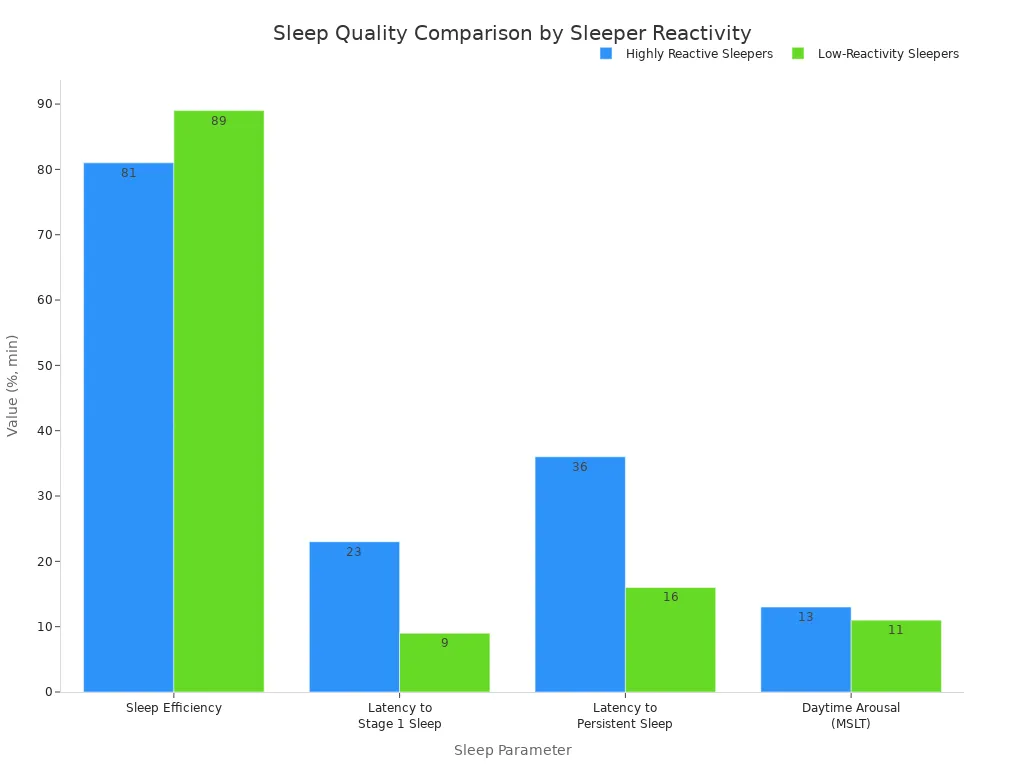
You get a full night’s sleep, yet you still feel tired. You are not alone. Statista finds that 45% of Americans feel this way even after 7-8 hours of sleep. Your evening can feel stressful, making it hard to “switch off” for quality sleep. This high reactivity to evening stress directly impacts your sleep quality.
A simple evening routine can help. Building a relaxing evening routine is easier than you think. Your bedtime routine, or wind-down routine, is your first step. Let’s transform your nighttime routine with these simple evening routines.
Dim the Lights for Your Nighttime Routine

Your brain has a master clock. Light is the main signal that sets this clock. Bright light during the day tells your brain to be awake. Darkness tells it to prepare for sleep. This is your body’s natural circadian rhythm. A great nighttime routine uses this science to your advantage.
Signal Your Brain for Sleep
Think of your brain as a light-sensitive switch. Bright evening light, especially blue light from screens and overhead fixtures, keeps that switch in the “on” position. This light hits special cells in your eyes. These cells then tell your brain to stop making melatonin, the hormone that signals darkness and helps you get ready for sleep.
Your body’s response to light is unique. Some people are very sensitive and find even normal room lighting can disrupt their ability to get quality sleep. Dimming the lights is a powerful way to tell your brain it’s time to wind down. This simple change is a key part of a successful nighttime routine.
Create a Simple Sundown Plan
Creating a “sundown” plan is an easy step in your bedtime routine. You don’t need to sit in total darkness for hours. The goal is to gradually reduce your light exposure as the evening goes on. This helps your body naturally prepare for deep sleep.
Here are a few simple ideas to get you started:
- Switch to warm lighting. Turn off bright overhead lights. Use table lamps with warm-colored bulbs (incandescent or warm white LEDs) instead. Red light is even better for promoting sleep.
- Dim your screens. If you must use a device, turn on its “night mode” or use blue-light-blocking glasses. This reduces the blue light that most affects your sleep.
- Build a relaxing habit. You can read a book under a soft lamp. You could also take a bath with the lights dimmed. This makes your nighttime routine something you look forward to.
The “Mind Dump” Journaling Practice
Does your mind race the moment your head hits the pillow? You might replay the day’s events or worry about tomorrow’s to-do list. This mental clutter makes it hard to get quality sleep. A “mind dump” is a simple journaling practice that can help. It’s a powerful tool for your nighttime routine.
Clear Your Mind of Worries
Writing down your thoughts and feelings is like “offloading” them from your brain. This mindfulness practice helps you process the day’s events. It gives structure to anxious feelings, which helps you move past them. Studies show that expressive writing frees up mental resources. This makes your brain less reactive and more focused on relaxation. Taking just a few minutes to write can reduce bedtime anxiety and help you find peace of mind. This simple act helps you regulate your emotions and break free from the endless cycle of worry, which is essential for deep sleep.
A 5-Minute Brain-Clearing Guide
This practice is not about perfect writing. It is about releasing thoughts. You just need a pen, paper, and five minutes of your evening. This small step can promote relaxation and prepare your mind for sleep.
- Set a Timer: Find a quiet spot and set a timer for 5 minutes.
- Write Freely: Write down everything on your mind. Do not worry about grammar or spelling. Just let the thoughts flow onto the page.
- Make a List: One study found that people who wrote a specific to-do list for the next day fell asleep much faster. Getting these tasks out of your head and onto paper tells your brain it can let go until morning.
- Let It Go: When the timer goes off, close the notebook. You have successfully cleared your mind for a night of restful sleep.
Need a place to start? Try these simple prompts:
- What is on my mind right now?
- What am I grateful for today?
- What tasks do I need to handle tomorrow?
Build a Relaxing Evening Routine with Stretching

Your body holds onto the stress of the day. You might feel it as tightness in your neck, shoulders, or back. Adding gentle movement to your relaxing evening routine is a fantastic way to let go of this physical tension and prepare your body for deep sleep.
Release Physical Tension
Gentle stretching does more than just loosen tight muscles. It sends a powerful signal to your nervous system to calm down. This type of low-intensity movement helps activate your parasympathetic nervous system, which is your body’s “rest and digest” mode. This activation promotes a feeling of calm and relaxation.
Stretching also improves blood flow, delivering more oxygen to your muscles and helping them recover from the day. This process helps reduce muscle stiffness and interrupts the cycle of physical tension that can keep your mind racing. By focusing on your body and breath, you create a moment of mindfulness that quiets daily worries and prepares you for better sleep.
“The goal of somatic stretching is to turn inward, become aware of where you’re holding tension and use your breath and gentle movement to release built-in stress in your body,” says mind-body expert Beth Ando-Brenman, MPT. “The breath powers the mind-body connection – it’s the key to relieving tension and feeling centered and calm.”
3 Simple Stretches for Rest
You don’t need a full yoga class to get the benefits. These three simple stretches can be done right in your bedroom as part of your evening routine. Focus on slow, deep breaths to maximize relaxation and get ready for sleep.
- Child’s Pose: Kneel on the floor with your knees hip-width apart. Lower your torso between your knees and rest your forehead on the floor or a pillow. Reach your arms out in front of you. Breathe deeply, feeling the stretch in your lower back. Hold for as long as feels comfortable.
- Knee-to-Chest Pull: Lie on your back. Gently pull one knee toward your chest, holding it with both hands. You should feel a nice stretch in your lower back and hip. Hold for 20-30 seconds, then switch to the other leg. This is great for releasing lower back tension before sleep.
- Simple Neck Stretch: Sit comfortably on the edge of your bed. Gently tilt your left ear toward your left shoulder, holding for 20 seconds. You will feel a light stretch along the right side of your neck. Return to the center and repeat on the other side. This helps release tension from a day spent at a desk or looking at screens.
Unplug from Tech in Your Evening Routines
You probably scroll through your phone or watch TV right before bed. It feels relaxing, but it might be the reason you struggle with sleep. Your phone, tablet, and computer screens are a major source of sleep disruption. Adding a tech-free period to your evening routines can dramatically improve your ability to get restful sleep.
Reduce Blue Light Exposure
The bright blue light from your screens sends a confusing message to your brain. It essentially tells your brain it is still daytime. This signal stops your body from producing melatonin, the hormone that helps you feel sleepy and prepare for sleep. Studies show that just a couple of hours of screen time in the evening can suppress melatonin and delay your body clock. This makes it harder to fall asleep and can disrupt your entire sleep cycle.
Experts recommend creating a “digital sunset” for a better nighttime routine. Try to put all screens away at least 30 to 60 minutes before you plan to go to sleep. This gives your brain the time it needs to wind down and start producing melatonin naturally.
Swap Your Screen for Calm
Interactive activities on your phone, like scrolling social media or playing games, are very stimulating. They increase your alertness and make it difficult for your mind to prepare for rest. Instead of staring at a screen, you can swap it for a calming activity. This simple change helps you transition peacefully toward sleep.
Here are a few screen-free ideas to try:
- Read a chapter of a physical book or magazine.
- Listen to a calming audiobook or a relaxing podcast.
- Do some of the simple stretches mentioned earlier.
- Spend a few minutes with a coloring book or a puzzle.
Choosing a quiet activity helps your nervous system relax. This makes it much easier to fall into a deep and restorative sleep.
Prep for Tomorrow in Your Evening Routine
Worrying about tomorrow is a common cause of restless nights. Your mind might race with thoughts about your to-do list or fears about the day ahead. A simple evening routine that prepares you for the morning can calm these thoughts and pave the way for deep sleep.
Lower Next-Day Anxiety
The 90 minutes before you go to sleep are crucial for your brain. During this time, your body naturally lowers its stress hormone, cortisol, to prepare for rest. If you go to bed with unresolved worries, your brain works overtime. This evening stress can turn into morning anxiety and leave you feeling drained.
Taking a few minutes to prepare for the next day sends a signal of calm to your brain. This simple act helps you process your thoughts and reduces bedtime anxiety. It tells your mind that things are under control, allowing it to switch off and focus on restorative sleep. This is a key part of effective evening routines.
Set Up a Stress-Free Morning
A chaotic morning can ruin your day before it even starts. You can create a more peaceful start by making a few small decisions the night before. This reduces “decision fatigue” and saves your mental energy for more important things. A well-planned nighttime routine helps you wake up feeling organized and ready for a good day.
Participants in one study reported feeling more awake and refreshed when they had a structured plan. One person said, “I was able to spend less time lying down and dawdling in a bed.” This shows how a little prep can improve your mood and help you get better sleep.
Here are a few simple tasks to add to your evening routine:
- Lay out your clothes. Pick out your outfit for the next day. This removes one decision from your morning rush.
- Pack your bags. Get your work bag, gym bag, or kids’ backpacks ready to go.
- Prep your lunch. Make your lunch or at least decide what you will eat.
- Tidy up for 10 minutes. A clean space reduces visual clutter and helps you start the day with a clear mind. This helps you get the quality sleep you need.
You can reclaim your evening and get better sleep. Your journey starts with simple evening routines. You learned about dimming lights, journaling, stretching, unplugging, and prepping for tomorrow. Consistency in your bedtime routine is more important than perfection for quality sleep. A regular schedule helps your body’s clock and improves your sleep.
Don’t feel overwhelmed. Just choose one small action to add to your nighttime routine tonight. Building better evening routines is a process. You have the power to create restful nights and wake up ready for the day. Good sleep is within your reach.
FAQ
How long should my evening routine be?
Your routine can be short and sweet. Aim for 15 to 30 minutes. Consistency is more important than length. You should choose a duration that feels relaxing and easy for you to stick with every night.
What if I miss a day in my routine?
Don’t worry if you miss a day! Just return to your routine the next evening. The goal is progress, not perfection. One night off won’t undo your hard work. You can simply pick it back up.
Which routine should I start with?
You can start with the routine that feels easiest. Dimming the lights is a simple first step. The “mind dump” is also a great choice. Pick one habit and build from there once you feel comfortable.
Tip💡: The best routine is the one you’ll actually do. Choose what excites you most and start there!
Can I still watch TV if I wear blue light glasses?
Blue light glasses can help reduce exposure. However, TV shows are often stimulating and can keep your brain awake. For best results, you might try swapping screen time for a calming activity like reading a book.
See Also
Unlock Better Sleep: A Beginner’s Guide to Magnesium Malate
Magnesium Malate for Sleep: Science-Backed Support for Restful Nights
Starting Magnesium Supplements: Your Clear Path to Confident Wellness
Managing Tinnitus Symptoms: Nutritional Strategies for Dietary Support
Methyl Folate: Your Step-by-Step Guide to Optimal Timing and Selection