

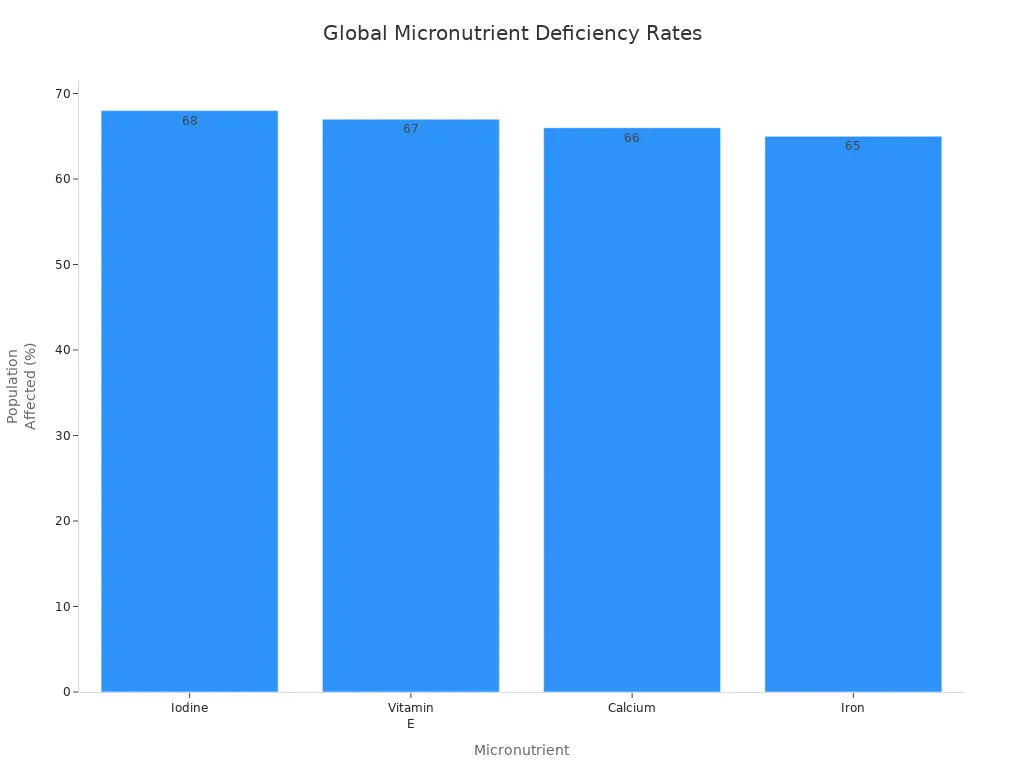
You depend on micronutrients for strong growth and lasting vitality. Unlike macronutrients, your body needs these vitamins and minerals in tiny amounts, yet they play a huge role in keeping you healthy. Millions of people worldwide face deficiencies that impact development and disease resistance. For example, more than half the global population lacks enough iodine, vitamin E, calcium, or iron.
Micronutrients matter because nutrition shapes your energy, immunity, and overall well-being. Take a moment to think about your own intake—could you be missing something essential?
Why Micronutrients Matter
Essential for Growth and Development
You need micronutrients for your body to grow and develop properly. These tiny vitamins and minerals help your cells work, divide, and repair themselves. Without enough of them, your body cannot build strong bones, muscles, or organs. Children especially need these nutrients to support brain growth and learning.
Here are some ways micronutrients support your growth and development:
- Zinc helps your body make DNA and new cells. It also keeps your immune system strong.
- B vitamins help your body turn food into energy and support your brain and nerves.
- Antioxidants, like vitamin C and vitamin E, protect your cells from damage.
- Some micronutrients, like vitamin C, help your body absorb other nutrients, such as iron.
If you do not get enough essential daily nutrients, you may feel tired, get sick more often, or have trouble focusing in school.
Micronutrients matter for your brain, too. Many nutrients play a key role in how you think and learn. The table below shows how some important micronutrients help your brain:
| Micronutrient | Role in Cognitive Development |
|---|---|
| Omega-3 fatty acids | Important for brain health and cognitive function |
| Vitamin B12 | Essential for neurological function |
| Folic acid | Supports brain development and function |
| Zinc | Critical for brain development and cognitive function |
| Iron | Vital for cognitive development and learning |
| Iodine | Necessary for proper brain development |
You can see that micronutrients matter for your overall health and your ability to learn and grow. If you do not get enough, you may face problems with memory, attention, and even your mood.
Role in Disease Prevention
Micronutrients protect you from many diseases. They help your body fight infections and keep your organs working well. If you do not get enough, you may develop health problems that can last a lifetime.
Some common diseases linked to micronutrient deficiencies include:
| Micronutrient Deficiency | Associated Disease/Condition | Impact |
|---|---|---|
| Iron | Microcytic anemia | Fatigue, weakness, shortness of breath, dizziness |
| Vitamin A | Preventable blindness | Increased risk of severe infections, high mortality in children |
| Iodine | Preventable brain damage | Negative impacts on health and productivity, socioeconomic development hindered |
A lack of iron, folate, and vitamins B12 and A can lead to anemia. Anemia means your blood cannot carry enough oxygen, so you may feel weak and tired. This problem affects about 42% of children under five and 40% of pregnant women around the world.
Micronutrients also help prevent long-term diseases. Antioxidants protect your cells from damage that can lead to heart disease and cancer. When you meet your nutrient needs, you lower your risk of these serious health problems.
You need to get the right amount of each micronutrient every day. The chart below shows how much of each key micronutrient you need, whether you are male or female:
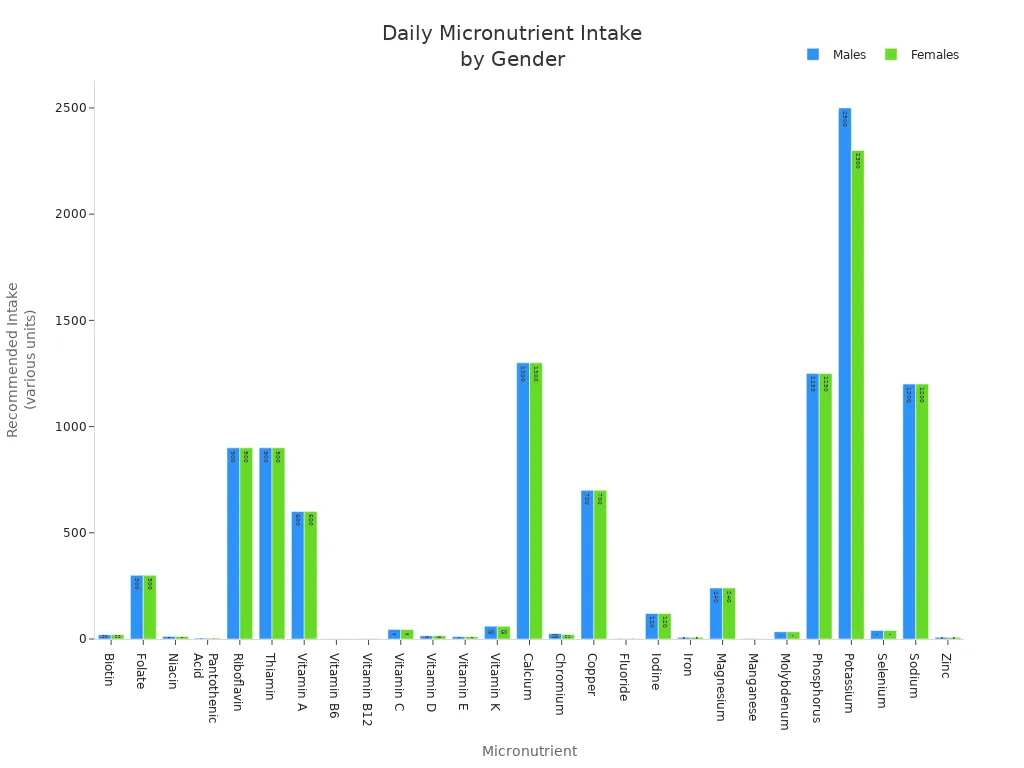
If you do not get enough micronutrients, your overall health can suffer. You may get sick more often, heal more slowly, or have trouble growing. That is why good nutrition is so important for everyone, no matter your age.
Micronutrients matter because they keep your body strong, your mind sharp, and your future bright.
Micronutrients and Health Functions

Energy and Metabolism
You need micronutrients every day to keep your body running. They help your cells turn food into energy. For example, vitamin B1 helps change pyruvate into acetyl-CoA, which is a key step in energy production. Vitamins B2 and B3 help make coenzymes that power the Krebs cycle and electron transport chain. These cycles create the energy your body uses for everything you do. Magnesium helps your body make ATP, which is the main energy carrier in your cells. Iron helps move oxygen in your blood and supports electron transfer. When you eat a diet rich in micronutrients, you support strong energy production and better overall health.
Immune Support
Micronutrients matter for your immune function. They help your body fight off germs and heal faster. If you do not get enough, you may get sick more often. The table below shows how some important micronutrients support your immune function:
| Micronutrient | Immune Function Evidence |
|---|---|
| Vitamin B12 | Needed for immune cell formation; low levels weaken your immune system. |
| Vitamin C | Protects immune cells from damage and helps them work better. |
| Vitamin D | Linked to fewer respiratory infections; low levels may cause immune problems. |
| Vitamin E | Boosts immune cell function and may help you resist infections. |
| Zinc | Needed for immune cell growth; low levels make you more likely to get sick. |
You can see that getting enough micronutrients helps your immune function and keeps you healthy.
Bone and Brain Health
Micronutrients play a big role in keeping your bones and brain strong. Calcium and vitamin D help build strong bones and keep them healthy. Iron and B-vitamins support your brain and help you think clearly. Vitamin C helps your brain stay healthy and supports learning. You also need magnesium, zinc, and vitamin E for good brain function. Eating fruits and vegetables gives you many of these nutrients. Older adults need micronutrients like vitamin K2, vitamin B6, and omega-3 fatty acids to keep their bones and minds sharp. When you focus on micronutrients, you support your overall health and stay active and alert.
Signs of Micronutrient Deficiency

Common Symptoms
You may not always notice when your body lacks important micronutrients. Many symptoms can appear slowly and seem unrelated at first. Some of the most common signs include:
- Fatigue or feeling tired all the time
- Changes in your skin, hair, or nails, such as rashes or brittle nails
- Eye problems, like trouble seeing at night or dry eyes
- Muscle weakness or trouble with balance
- Mood changes, such as feeling sad or irritable
- Memory loss or trouble focusing
The table below shows how certain symptoms connect to specific vitamins:
| Symptom | Associated Vitamins |
|---|---|
| Mood changes | B3, B6, B9, B12 |
| Nerve disruptions | B1, B6, B12, E |
| Tongue changes | B2, B3, B6, B9 |
| Swelling | B1, C |
| Bleeding and bruising | C, K |
| Weaker bones | D |
| Losing balance or falling | B12 |
If you notice these symptoms, you may want to talk to a healthcare provider. Simple blood tests can check for low levels of vitamin D, B12, iron, and other nutrients.
Impact on Vitality
Micronutrient deficiencies can make you feel less energetic and affect your daily life. You might get sick more often because your immune system becomes weaker. You may also feel tired even after a good night’s sleep. Low levels of iron, vitamin C, and B vitamins can cause chronic fatigue and make it hard for your body to use energy from food. When your body does not get enough micronutrients, you may find it harder to pay attention in school or remember things.
Recent research shows that missing key micronutrients can lead to problems with memory, focus, and even your mood. For example, not getting enough vitamin B12 or iron can cause confusion or trouble learning new things. If you want to stay active and healthy, you need to make sure your body gets all the micronutrients it needs.
Getting Enough Micronutrients
Dietary Sources
You can meet your nutrient needs by choosing a variety of nutrient-rich foods every day. Different foods provide different essential micronutrients. Here are some top sources you can add to your meals:
- Lean animal proteins (lean meat, poultry, fish): vitamin D, vitamin A, iron, zinc, choline, niacin, potassium, phosphorus
- Oats: vitamin E, selenium, magnesium
- Eggs: riboflavin, vitamin E, vitamin D, choline
- Broccoli: vitamin K, beta carotene, calcium, potassium, vitamin C
- Quinoa: vitamin A, B vitamins, folate, zinc
- Lentils: magnesium, potassium, folate
- Sweet potatoes: beta carotene, vitamin A, vitamin E
- Leafy greens: vitamin A, folate, vitamin C, vitamin K, potassium, zinc, iron
- Berries: magnesium, iron, potassium, vitamin A
- Seaweed: iodine, iron, calcium, potassium
- Nuts and seeds: phosphorus, choline, vitamin E, calcium, selenium, niacin, B vitamins
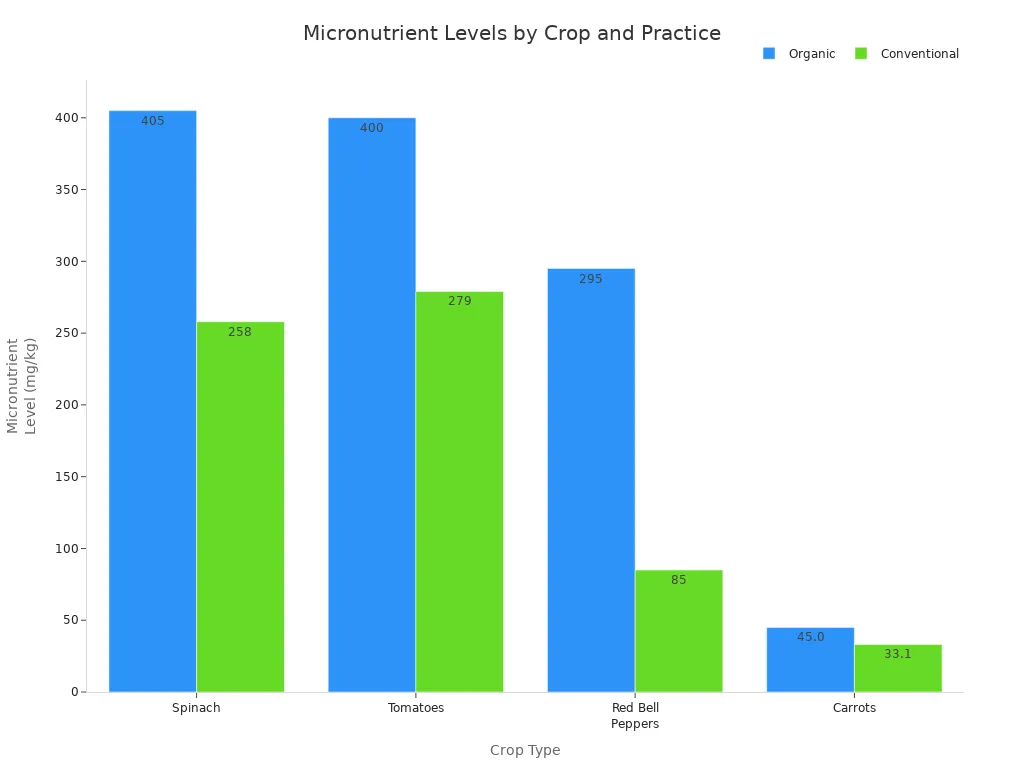
Micronutrient levels in foods can change based on where and how they grow. For example, organic spinach and tomatoes often have more vitamin C than conventional ones. The chart below shows how some crops differ in micronutrient content:
Smart Intake Strategies
You can support your wellness by making smart choices about what you eat. Experts recommend these strategies:
| Strategy | Description |
|---|---|
| High-quality food sources | Eat a variety of fresh, seasonal fruits and vegetables for more nutrition. |
| Personalized diet planning | Work with a nutritionist to create a plan that meets your needs. |
| Fortification | Choose fortified foods to help meet daily requirements. |
| Judicious supplementation | Use supplements only when a diet assessment shows you need them. |
| Education and awareness | Learn about the importance of micronutrients for your health. |
A diet rich in micronutrients helps regulate inflammation, supports blood sugar control, and promotes a healthy gut. These benefits lower your risk for chronic diseases and improve long-term wellness.
| Role of Micronutrients | Impact on Chronic Diseases |
|---|---|
| Regulating inflammation | Reduces risk of heart disease, metabolic disorders, and autoimmune problems |
| Blood glucose metabolism | Improves insulin sensitivity and lowers risk of type 2 diabetes |
| Promoting gut microbiota | Boosts immune function and metabolic health |
Supplementation Tips
Sometimes, you may need supplements to meet your nutrient needs. Health authorities like the World Health Organization use careful steps to make safe guidelines for micronutrient supplementation. They review the best evidence, balance risks and benefits, and update advice as new research appears. You should only take supplements if a healthcare provider recommends them after checking your diet and health. Too much of some micronutrients can cause harm, so always follow expert advice.
Tip: Focus on nutrition from whole foods first. Supplements can help fill gaps, but they should not replace a balanced diet. Good nutrition supports your wellness and long-term wellness.
Individual Needs and Risks
Factors Affecting Requirements
Your body’s need for micronutrients changes throughout life. Age, lifestyle, health, and even where you live can affect how much you need. For example, older adults may not absorb vitamins and minerals as well as younger people. If you have a chronic illness or take several medicines, your body might not get enough nutrients from food. Your daily habits, like how active you are or what you eat, also play a big role.
Here is a table that shows some important factors that can change your nutrient needs:
| Factor | Description |
|---|---|
| Age | Older adults often have trouble absorbing and using micronutrients. |
| Lifestyle Choices | What you eat and how active you are can change your intake of vitamins and minerals. |
| Medical Conditions | Chronic diseases and medicines can lower your micronutrient intake. |
| Socio-economic Status | Low income and education can make it harder to get good nutrition. |
| Gender | Older women with less income or education may have more deficiencies. |
| Cultural Background | People from some countries, like Italy or Greece, may be at higher risk for poor intake. |
Athletes have different micronutrient needs than non-athletes. If you play sports, you use more energy and lose nutrients through sweat. You may need more vitamins and minerals to stay healthy and perform well. Special groups, like pregnant women, also need extra nutrients for their health and their baby’s growth.
Risks of Over- or Under-Supplementation
You need to balance your intake of micronutrients. Too little can cause serious health problems, but too much can also be harmful. If you do not get enough, you may feel tired, get sick often, or have trouble growing. In children, deficiencies can lead to anemia, slow growth, and weak immunity. Around 56% of preschool children worldwide do not get enough micronutrients. Undernutrition causes millions of deaths in children under five each year.
On the other hand, taking too many supplements can be dangerous. For example:
- High calcium supplements can cause hypercalcemia, especially in postmenopausal or pregnant women.
- Too many vitamins or minerals from supplements can lead to side effects and health problems.
Tip: Focus on getting your nutrition from food first. Only use supplements if your doctor or dietitian says you need them.
Knowing your own nutrient needs helps you stay healthy and avoid risks. Always talk to a healthcare provider before starting any new supplement.
Micronutrients matter for your growth, energy, and disease prevention. You support healthy aging and lower your risk of chronic diseases when you meet your daily needs. You can check your intake using tools like a 24-hour dietary recall or a food frequency questionnaire:
| Method | How It Helps You Assess Intake |
|---|---|
| 24-hour Dietary Recall | Tracks what you eat in a day |
| Food Frequency Questionnaire | Shows how often you eat certain foods |
Take time to review your diet and make informed choices. When you focus on micronutrients, you set yourself up for better health.
FAQ
What are the most important micronutrients I need every day?
You need a mix of vitamins and minerals daily. Some key ones include vitamin A, vitamin C, vitamin D, iron, calcium, and zinc. Each supports different parts of your body and helps you stay healthy.
Can I get all my micronutrients from food?
Yes, you can get most micronutrients from a balanced diet. Eat a variety of fruits, vegetables, whole grains, lean proteins, and dairy. If you have special needs or restrictions, you may need to talk to a doctor.
How do I know if I have a micronutrient deficiency?
You may notice signs like tiredness, weak nails, or trouble focusing. If you feel unwell often, ask your doctor for a blood test. Early detection helps you fix any problems quickly.
Are supplements always safe to take?
Supplements can help if you have a deficiency, but taking too much can harm you. Always follow your doctor’s advice before starting any supplement.
What happens if I get too much of a micronutrient?
Too much of some micronutrients, like vitamin A or iron, can cause health problems. You may feel sick or have other side effects. Stick to recommended amounts for safety.
See Also
Exploring 5-MTHF: Science-Driven Benefits for Wellness Today
Understanding Methylated Vitamins: Essential Benefits for Better Absorption
Meta Magnesium Explained: Types, Advantages, and Naxttii’s Health Strategy
Triple Action Magnesium: Definition, Benefits, and Daily Health Importance
Understanding “mcg” on Labels: Comparing mcg, ug, and μg in Supplements