

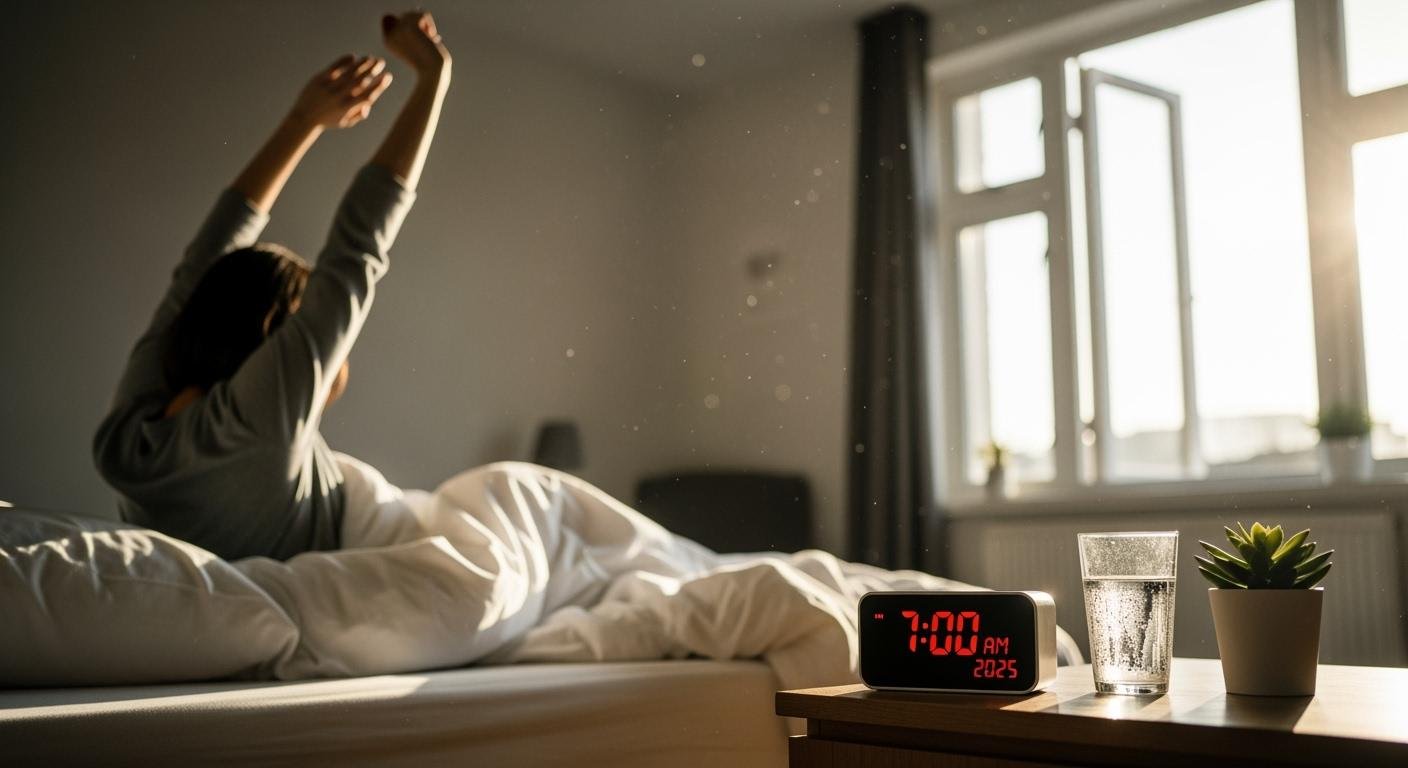
Waking up after a bad night’s sleep can feel like starting with your battery at 10%. You are not alone; one-third of adults regularly get poor sleep. This impairs your focus and decision-making. We will show you how to function after a poor night’s sleep and reset for tonight.
Your Immediate Action Plan
Here is how to recover from poor sleep, starting now:
- ☀️ Get morning sunlight.
- 💧 Hydrate before caffeinating.
- 😴 Take a strategic power nap.
Morning Recovery After a Poor Night’s Sleep

First, take a deep breath. You had a bad night’s sleep, and that’s okay. The worst thing you can do right now is panic about it. Stressing over lost sleep only increases your fatigue and makes the day feel even harder. Your goal today isn’t perfection; it’s smart management. Let’s walk through your morning action plan to get you back on track after a poor night’s sleep.
Skip the Snooze Button
That nine-minute snooze button feels like a gift, but it’s actually a trap. When your alarm jolts you awake, your body is already in the middle of its natural wake-up process. Hitting snooze and drifting off again confuses your brain.
- Your brain starts a new sleep cycle it can’t finish.
- This interruption causes a groggy feeling called sleep inertia.
- It also disrupts your body’s release of cortisol, a hormone that helps you feel awake.
Dr. Chris Winter, a neurologist, calls this “fragmented, low-quality sleep.” Instead of snoozing, place your alarm across the room. This forces you to get out of bed, breaking the cycle immediately. It’s tough, but it’s your first win of the day.
Get Morning Sunlight
Your next step is to find the sun. Your body’s internal clock, or circadian rhythm, needs a signal to know the day has started. Morning sunlight is that signal. It tells your brain to stop producing melatonin (the sleep hormone) and helps regulate your energy for the entire day. This simple act is crucial for recovering from a bad night of sleep.
Your Sunlight Goal
Aim to get outside within the first hour of waking. You don’t need a long time to feel the benefits.
- On a sunny day: 5 to 10 minutes is perfect.
- On a cloudy day: Extend it to 15 or 20 minutes.
This exposure boosts your morning cortisol, which is essential for alertness and focus. It also helps set you up for better sleep tonight.
Hydrate Before Caffeinating
You might want to reach for coffee immediately, but your body needs water first. You lose a surprising amount of fluid overnight, so you wake up dehydrated. Being properly hydrated is key to feeling your best.
Wait at least 60 minutes after waking before you have your first cup of coffee. This allows your body’s natural cortisol peak to do its job. Starting your day hydrated gives you a clean slate for energy production.
- Wake up and drink a full glass of water. 💧
- Get your morning sunlight. ☀️
- Then, after about an hour, enjoy your coffee. ☕
Fuel with a Power Breakfast
What you eat for breakfast can make or break your recovery from poor sleep. A sugary cereal or pastry will give you a quick spike of energy followed by a hard crash. You need a meal that provides steady, long-lasting fuel. Focus on a balance of protein, healthy fats, and complex carbs.
Avoid the sugar crash and choose one of these power options instead:
| Breakfast Option | Why It Works |
|---|---|
| Scrambled Eggs with Spinach | Eggs provide protein and choline for energy. Spinach adds iron, which is crucial for carrying oxygen and fighting that tired feeling. |
| Oatmeal with Nuts and Berries | Oatmeal offers fiber for sustained energy. Nuts and seeds add B vitamins and magnesium, which are vital for energy production. |
| A Smoothie with Greek Yogurt | Greek yogurt is packed with protein. Add a banana for potassium to support muscle function and leafy greens for more energy-boosting nutrients. |
This kind of breakfast stabilizes your blood sugar and keeps you feeling full and focused for hours.
How to Recover from Poor Sleep During the Day
You made it through the morning. Now you face the midday slump, which feels even worse after a night of poor sleep. Your goal is to navigate the afternoon without losing all your momentum. These strategies will give you an energy boost and help you stay productive.
How to Take a Power Nap
The urge to nap can be overwhelming. Instead of fighting it, you can use it to your advantage. A short, strategic nap can be a powerful tool to recover from poor sleep. The key is to keep it brief to avoid waking up groggy.
How to Take a Power Nap 😴
- Time it right: Aim for a nap between 1 PM and 3 PM. Napping later can interfere with your sleep tonight.
- Keep it short: Set an alarm for 10 to 20 minutes. This is the sweet spot for improving alertness without entering deep sleep.
- Find a quiet spot: Lie down in a dark, quiet room to help your brain switch off quickly.
You might think a nap that short is useless, but science says otherwise. One study found that even a six-minute nap significantly improved memory recall. A brief rest helps refresh your brain, giving you a much-needed mental reset to tackle the rest of your day.
Use ‘Exercise Snacks’ to Boost Energy
When you feel your energy levels dropping, your first thought probably isn’t to move your body. However, a quick burst of activity can be exactly what you need. Think of these as “exercise snacks”—short, simple movements that get your blood flowing.
Short bursts of exercise trigger your brain to release chemicals like dopamine and serotonin. These chemicals are crucial for your mood and alertness. As psychiatrist Dr. Gail Saltz explains, “Exercise often improves alertness and cognitive function… [it] helps decrease stress and anxiety, shifting mood positively.”
You don’t need a gym. Try one of these right at your desk for a quick energy boost:
- Desk Push-ups: Place your hands on your desk and do 10 push-ups.
- Chair Squats: Stand up from your chair and sit back down 15 times without using your hands.
- Marching in Place: Lift your knees high for 30 seconds to get your heart rate up.
- Wall Sit: Lean against a wall and slide down until your knees are at a 90-degree angle. Hold for 30 seconds.
Beat Brain Fog with a 5-Minute Focus Reset
A bad night’s sleep often comes with brain fog. Your thoughts feel slow, and focusing on a task seems impossible. When this happens, you need a quick reset to improve your concentration. You can use a simple mindfulness technique to get out of your head and into the present moment.
Try this 5-minute reset to clear the fog and sharpen your focus:
| Technique | How to Do It | Why It Works |
|---|---|---|
| Box Breathing 🧠 | Inhale for 4 seconds. Hold your breath for 4 seconds. Exhale for 4 seconds. Hold again for 4 seconds. Repeat for 2-3 minutes. | This technique is used by Navy SEALs to calm the nervous system and sharpen focus under pressure. |
| The 5-4-3-2-1 Method | Name 5 things you can see, 4 things you can feel, 3 things you can hear, 2 things you can smell, and 1 thing you can taste. | This grounds you in your environment, pulling your attention away from distracting thoughts and back to the present. |
Avoid the Afternoon Sugar Crash
That vending machine candy bar looks tempting when you’re tired. A sugary snack provides a fast spike in blood sugar, which feels like an energy boost. However, your body releases insulin to manage that sugar, and what goes up must come down. This leads to a “sugar crash” that leaves you feeling even more tired than before.
“Choosing an apple and a handful of nuts instead of a donut provides the body with a combination of protein, fat, and fiber-rich carbohydrates that can mean the difference between a high-energy and a low-energy afternoon.” – Maya Feller, MS, RD, CDN
To avoid this cycle after a night of poor sleep, choose snacks that provide steady, lasting energy. Pair a protein or healthy fat with a complex carb.
Here are some smart swaps: 🍎
- Instead of a candy bar, grab an apple with a handful of almonds.
- Instead of a soda, drink a glass of cold water and eat a hard-boiled egg.
- Instead of a pastry, try Greek yogurt with a few berries.
The Evening Reset for Better Sleep

You’ve successfully managed the day. Now, your focus shifts to setting yourself up for a great night’s sleep. This evening reset is your most important tool for breaking the cycle of poor sleep.
Maintain a Consistent Bedtime
After a bad night’s sleep, you might be tempted to go to bed extra early. It is better to keep to your regular sleep schedule. Going to bed and waking up around the same time every day, even on weekends, reinforces your body’s internal clock. This consistency makes it easier to fall asleep and wake up naturally. Sticking to your sleep schedule is crucial, so try to keep to your regular sleep schedule tonight. A consistent sleep schedule is your best defense against future sleep problems.
Create a Relaxing Wind-Down Routine
Your brain needs clear signals that it’s time to rest. A wind-down routine does just that, helping your body lower stress and begin producing melatonin, the hormone that makes you feel sleepy.
Your Wind-Down Toolkit 🌙
Dedicate 30-60 minutes before bed to screen-free, calming activities.
- Read a physical book: Avoid the blue light from tablets or phones.
- Journal your thoughts: One study found that writing about positive experiences for 15 minutes reduced bedtime worry and improved sleep quality.
- Listen to calm music or a podcast.
- Do some gentle stretching or yoga.
Skip the Alcoholic Nightcap
A glass of wine might make you feel sleepy, but it’s a trap for your sleep quality. Alcohol helps you fall asleep faster, but it disrupts your sleep later in the night. As your body processes the alcohol, it causes more awakenings and suppresses restorative REM sleep. This fragmentation means you wake up feeling less rested. Instead, try a calming, non-alcoholic alternative like a chamomile tea or a beverage with valerian root.
Optimize Your Sleep Environment
Turn your bedroom into a sanctuary for sleep. Your environment plays a huge role in how well you rest. Think of it like creating a cave: cool, dark, and quiet.
| Element | Your Goal | Why It Works |
|---|---|---|
| Temperature 🌡️ | Keep it between 60-67°F (15-19°C). | A cool room helps your body temperature drop, which is a natural signal for sleep. |
| Light 💡 | Make it as dark as possible. | Darkness signals your brain to produce melatonin. Even small amounts of light, especially blue light from screens, can disrupt this process. |
| Noise 🤫 | Keep it quiet. | Use earplugs or a white noise machine to block out disruptive sounds. |
From Sleep Deprivation to Chronic Issues
One bad night is manageable, but what happens when it becomes a pattern? Regularly having a bad night’s sleep can lead to a negative cycle that’s hard to break. Understanding this cycle and knowing when to seek help for poor sleep is key to protecting your long-term health.
Recognizing a Negative Sleep Cycle
You might be stuck in a negative sleep cycle if you notice certain signs. This cycle begins when poor sleep makes you feel tired and irritable during the day. Being sleep-deprived makes it harder to manage stress, focus, and make good decisions. This can lead you to unhealthy habits, like eating junk food or skipping exercise, which only makes your trouble sleeping worse.
Are You in a Negative Sleep Cycle?
Ask yourself if you experience these signs often:
- Feeling sleepy all day or falling asleep during quiet activities.
- Finding it hard to focus at work or school.
- Feeling irritable or having trouble managing your emotions.
This pattern of sleep deprivation can impact your mental health and energy levels, making it difficult to break free.
Tracking Patterns with a Sleep Diary
If you are regularly having a bad night’s sleep, a sleep diary can help you see what’s really going on. This simple tool helps you connect your daily habits to your sleep quality. For a week or two, track a few key things each day.
You can use a simple notebook or a digital app like the Consensus Sleep Diary. Note down the following:
- What time did you go to bed?
- How long did it take you to fall asleep?
- How many times did you wake up during the night?
- What time did you wake up for the day?
- How tired did you feel the next day?
This log will reveal patterns and help you identify triggers for your trouble sleeping.
When to Get Help for Poor Sleep
Sometimes, lifestyle changes are not enough. It is important to know when to get help for poor sleep. If your symptoms last for more than a few weeks or make it hard to function, it’s time to talk to a doctor.
See a professional if you experience any of the following:
- You feel tired even after getting 7-8 hours of sleep.
- Your partner says you snore loudly or gasp for air at night.
- You have an uncontrollable urge to move your legs at bedtime.
- You struggle to stay awake during the day, like while watching TV or driving.
These could be signs of underlying conditions like sleep apnea, restless legs syndrome, or chronic insomnia. A doctor can help you find the right solution.
You can recover from poor sleep by managing your day smartly and protecting your evening routine. A single bad night’s sleep does not have to ruin your week. You have the tools to put a bad night of sleep behind you.
Use these strategies to recover from poor sleep and get back on track, starting today. You’ve got this! 💪
FAQ
Is it safe to drive when I’m sleep-deprived?
No, it is not safe. Drowsy driving is as dangerous as drunk driving. Your reaction time slows down, and your judgment is impaired. You should avoid driving if you feel tired. If you must travel, consider using public transportation or a ride-sharing service instead. It is always better to avoid driving.
Can I just drink more coffee to get through the day?
More coffee is not always the answer. While one or two cups can help, too much caffeine can make you feel jittery and anxious. It can also disrupt your sleep tonight.
Caffeine Tip ☕ Stick to 1-2 cups before 2 PM. This gives you a boost without ruining your chances for a good night’s rest.
Can I “catch up” on sleep over the weekend?
You can’t fully erase a sleep debt, but sleeping in for an hour or two on the weekend can help you feel more rested. However, the best solution is a consistent sleep schedule. Try not to vary your wake-up time by more than 90 minutes.
Should I do a hard workout after a bad night’s sleep?
A tough workout might be too much for your tired body. Intense exercise can increase your stress hormones and leave you feeling more exhausted.
Instead, try these options:
- A brisk walk
- Light jogging
- Gentle yoga
These activities boost energy without overtaxing your system.
See Also
Magnesium Malate For Sleep: A Beginner’s Path To Restful Nights
Unlock Better Sleep: Your Introductory Guide To Magnesium Malate
Opti-Folate L-Methylfolate 1000 mcg: A 2024 Review For Modern Wellness
Diet And Nutrition Strategies To Manage Tinnitus Symptoms Effectively
Optimizing Methylfolate Intake: Finding The Best Time For Supplements