

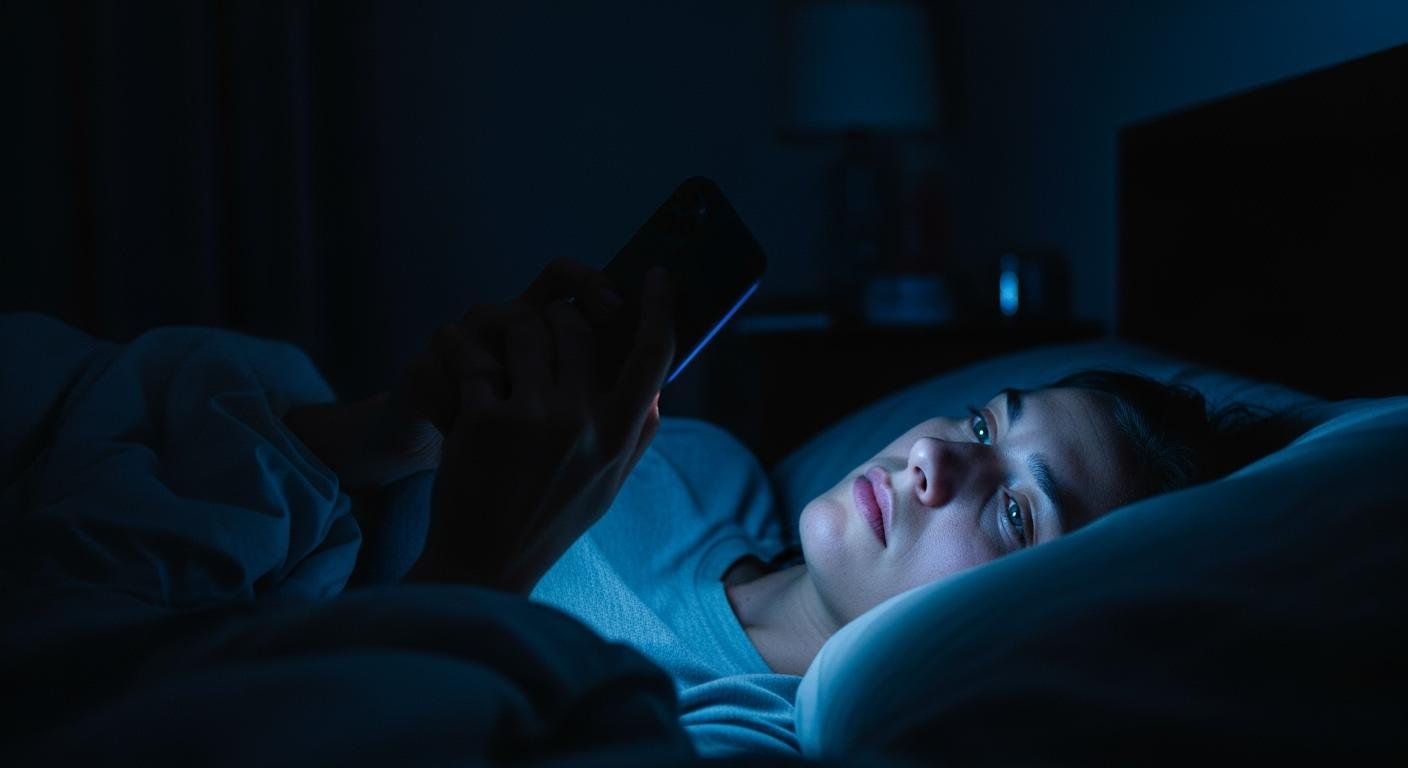
The blue light from your screen at night sends a powerful daytime signal to your brain. This signal stops the production of melatonin, the natural hormone that helps you feel sleepy. You are not alone in this habit; this exposure to blue light is a widespread issue.
💡 Did You Know? Studies show that 90% of Americans use an electronic device in the hour before bed. This increased exposure to light at night is directly linked to a significant rise in sleep problems.
The good news is this is a problem with simple solutions. You can take back control of your sleep starting tonight.
How Blue Light Disrupts Sleep:

Your body has a master clock that tells you when to feel awake and when to feel tired. This internal clock is known as your circadian rhythms. Evening exposure to blue light from screens and lighting directly interferes with these essential circadian rhythms, making it harder for you to get the restorative sleep you need. Let’s explore how this happens.
Disrupting Your Circadian Rhythms:
Your brain uses light as its primary signal to set your daily schedule. This makes light the most powerful “time-giver” for your circadian system. The timing of light exposure is critical. Light in the morning helps advance your internal clock, waking you up. Light at night, however, delays your clock. This pushes your natural sleepiness to a later time.
Chronic exposure to blue light at night leads to a mismatch. Your internal circadian rhythms fall out of sync with the natural day-night cycle. This desynchronization can disrupt how your body functions and can lead to sleep deprivation. The blue light effects on your circadian system are significant. Your brain’s specialized light-sensitive cells, which control your circadian rhythms, are most sensitive to blue light. This means even a short exposure to blue light at night can powerfully shift your internal clock.
🔬 A Look at the Science Studies show just how potent blue light is. Researchers have found that it can shift circadian rhythms twice as much as green light. This means your body gets a much stronger “stay awake” signal from blue light.
Suppressing the Sleep Hormone Melatonin:
Melatonin is the hormone your body produces in darkness. It signals to your body that it is time to prepare for sleep. Exposure to blue light at night is the most effective way to stop this process.
Here is the simple breakdown:
- 👁️ Your eyes contain special cells called intrinsically photosensitive retinal ganglion cells (ipRGCs). These cells are part of your circadian system.
- 🧠 When these cells detect blue light (especially wavelengths between 460-500 nm), they send a direct signal to your brain’s master clock, the suprachiasmatic nucleus (SCN).
- 🛑 The SCN then tells your pineal gland to stop producing melatonin.
This suppression of melatonin is one of the most direct blue light effects. It tricks your brain into thinking it is still daytime. As a result, you feel less drowsy, it takes you longer to fall asleep, and your overall sleep quality suffers. Studies show that even dim room light can suppress melatonin, but the short wavelengths in blue light are the most powerful culprits. This disruption to your natural sleep cycles is a key reason you might feel tired but wired at bedtime.
The Difference Between Day and Night Light:
Your body evolved to work with the sun’s natural light cycle. The light you get during the day is very different from the light you should experience at night. Understanding this difference is key to improving your circadian rhythms.
Daytime Light (Your Friend ☀️) Natural daylight is full-spectrum. It contains all the colors of the rainbow, with a high proportion of blue light. This daytime exposure to blue light is beneficial. It boosts alertness, improves your mood, and enhances performance. Getting plenty of bright, natural light during the day strengthens your circadian system. It sets a clear “wake” signal, which helps your body produce melatonin on schedule later that evening.
Evening Light (Your Foe 📱) Artificial light, especially from modern LEDs and screens, is different. It often has a narrow spectrum with high peaks of blue light. When you look at a screen after sunset, you send your brain a signal that conflicts with the time of day. Your circadian rhythms expect darkness, but they receive a blast of daytime light instead.
| Light Source | Spectral Composition | Impact on Circadian Rhythms |
|---|---|---|
| Natural Daylight | Full-spectrum, rich in blue light. | Positive: Sets the body clock, boosts alertness, and promotes healthy sleep at night. |
| Artificial Evening Light | Narrow-spectrum, often with high blue light peaks. | Negative: Suppresses melatonin, delays sleep, and disrupts the body clock. |
In short, your body needs bright blue light during the day and darkness at night to maintain healthy circadian rhythms. The problem arises when artificial sources bring daytime light into your night.
Common Sources of Evening Blue Light:
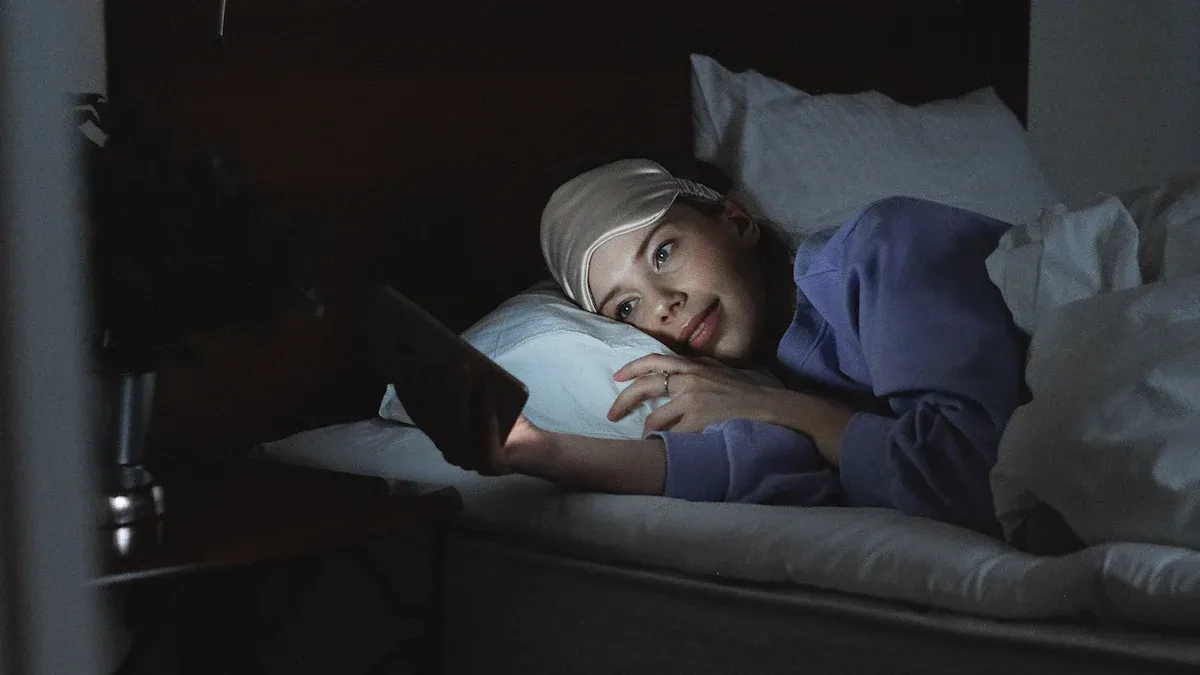
You can find sources of evening blue light all around your home. Identifying these sources is the first step to managing your exposure and improving your sleep. The biggest culprits are often the glowing screens and modern lights you use every day. Understanding where this light comes from helps you make smarter choices in the hours before bed.
Screens on Phones, Tablets, and Laptops:
Your personal electronic devices are powerful sources of blue light. You probably hold your phone, tablet, or laptop very close to your face. This closeness makes the light exposure much stronger for your eyes. These electronic devices emit blue light that directly signals your brain to stay awake and alert. A study in Molecular Vision showed how this light disrupts your body’s natural sleep-wake cycle.
Even if you use a night filter, your screen can still disrupt sleep. Activities like playing games, watching exciting shows, or answering work emails stimulate your brain. This cognitive stimulation can prevent you from winding down and falling asleep easily.
Limiting screen time for one to two hours before bed is a great strategy. This gives your brain the time it needs to start producing melatonin without interference from your electronic devices.
TVs and Modern Home Lighting:
You might not think of them first. However, your television and home’s lights are also major sources of blue light. Modern TVs, especially large, bright ones, can fill your room with sleep-disrupting light.
The bigger issue for many homes is modern lighting. Energy-efficient LED bulbs are now very common, but they have a hidden flaw. Many LEDs create white light using a blue diode and a phosphor coating. This process produces a lot of blue light. Bulbs described as “cold white” are especially high in the blue light spectrum. This means your overhead lights and lamps can suppress melatonin just like your other electronic devices, making it harder for you to feel sleepy.
Simple Steps for Better Sleep Tonight:
Now that you understand how blue light works, you can take simple, effective steps to protect your sleep. You do not need to make drastic changes all at once. Small adjustments to your evening routine can lead to significant improvements in how quickly you fall asleep and how rested you feel in the morning.
Set a Digital Curfew: ⏰
One of the most powerful strategies for better sleep is creating a screen-free period before bed. This is a core part of good sleep hygiene. You can set a “digital curfew” by putting away all electronic devices for a set time before you plan to sleep. Most experts recommend stopping screen use 30 to 60 minutes before bed. For an even greater benefit, consider turning off all screens at least one hour, or even two hours, before bedtime.
This simple habit gives your brain a clear signal to wind down. It allows your melatonin production to begin naturally without interference from the alerting blue light of your screens.
- Studies show that when adolescents restricted mobile phone use in the hour before bed, they went to bed 17 minutes earlier and gained 19 minutes of total sleep time each night.
- The American Academy of Sleep Medicine recommends turning off all screen-based devices 30 minutes before bedtime and keeping them out of the bedroom.
Use Your Device’s Night Mode: 📱
Most modern phones, tablets, and computers have a built-in “night mode” or “night shift” feature. You can use this setting to make your screen’s color warmer in the evening. The feature reduces the amount of blue light your screen emits, which can help reduce eye strain in low-light conditions.
However, you should know that night mode is not a perfect solution. While these settings shift the color, they do not completely eliminate blue light. Research from the Lighting Research Center found that Apple’s Night Shift feature did not prevent melatonin suppression. The problem is often the screen’s brightness, not just its color. Even with a warm filter, a bright screen can still send a “daytime” signal to your brain. Software filters are helpful, but they are limited because they cannot block all the blue light from your screen’s backlight.
Expert Tip: Think of night mode as a good first step, but not the final solution. It is better than nothing, but you should still dim your screen’s brightness as much as possible in the evening.
Consider Blue-Light-Blocking Glasses: 👓
For a more effective solution, you can try blue-light-blocking glasses. These glasses have special lenses that physically filter out specific wavelengths of light. Unlike software filters, high-quality glasses can block a much higher percentage of the disruptive blue light that suppresses melatonin.
Research on these glasses shows mixed but promising results. Some studies report significant improvements in sleep quality, while others find little effect. However, many users report feeling sleepier earlier when wearing them in the evening.
There are two main types of lenses:
- Clear or Yellow Lenses: These are best for daytime use. They typically filter between 20% and 65% of blue light to reduce digital eye strain.
- Amber or Red Lenses: These are designed for evening and nighttime use. They are much more effective at blocking the specific blue light that impacts your sleep.
Research shows that physical filters are more effective than software. A study found that amber filters significantly improved sleep quality, while software-based night modes did not produce the same benefit. For maximum effect, look for amber lenses that block a high percentage of light in the 400-500 nm range.
Optimize Your Evening Lighting: 💡
Your screens are not the only source of evening blue light. The light bulbs in your home also play a huge role. Many modern LED bulbs, especially “cool white” or “daylight” bulbs, are rich in blue light. Using these bright lights in the evening can disrupt your sleep just as much as your phone.
You can optimize your home’s lighting for better sleep. In the two to three hours before bed, switch from bright overhead lights to dimmer, warmer sources.
| Light Type | Color Temperature | Effect on Melatonin | Best Time to Use |
|---|---|---|---|
| Blue Light | 5000-6500K | Strongly suppresses | Morning and early afternoon |
| White Light | 3500-4500K | Moderately suppresses | Daytime work hours |
| Warm White | 2700-3000K | Minimal suppression | Evening activities |
| Amber/Red Light | 1800-2200K | No suppression | 1-2 hours before bed |
For your bedroom, aim for very dim light. Studies show that keeping evening light exposure under 10 lux (and under 1 lux in the sleep environment) is ideal for protecting melatonin. You can achieve this by using a single, dim lamp with a warm-toned or red bulb. Incandescent bulbs are a great choice because they naturally produce a warmer spectrum.
Get Morning Sunlight Exposure: ☀️
One of the best ways to fix your sleep at night is to manage your light in the morning. Your circadian rhythms rely on a strong “wake up” signal to stay on track. Getting bright, natural sunlight shortly after you wake up provides this powerful signal.
Morning sunlight helps regulate your melatonin secretion later in the day. Studies show that individuals exposed to sunlight before 10 a.m. have better overall sleep quality and a more aligned body clock. This morning exposure to blue light helps ensure your brain produces melatonin at the right time that evening.
- On a bright, sunny day: Aim for 10-15 minutes of sunlight.
- On an overcast day: You will need a bit longer, around 20-30 minutes.
- On very cloudy days: Try to get at least 30 minutes of outdoor light.
You do not need to look directly at the sun. Just being outside without sunglasses is enough for your eyes to get the signal they need. This simple morning habit reinforces your natural sleep-wake cycle and is a crucial step in managing the effects of evening exposure to blue light.
You now understand how evening blue light disrupts your sleep. You do not need to change everything at once. Choose one simple action for tonight. You could activate your device’s warmest night mode setting or set a digital curfew an hour before bed. Taking control of your light environment puts better, more restorative sleep within your grasp. 😴
FAQ
Do all screens emit harmful blue light?
Yes, all digital screens on phones, tablets, and computers emit blue light. You can use your device’s night mode to reduce some of this light. However, dimming your screen’s brightness is also very important for protecting your sleep.
Are blue light glasses really effective? 👓
Blue light glasses can be effective, especially for evening use. Amber or red-tinted lenses are best for nighttime. They physically block the blue light that stops your brain from producing the sleep hormone melatonin, helping you feel tired at the right time.
How long before bed should I stop using screens?
You should stop using all screens at least 30 to 60 minutes before you plan to sleep. For the best results, create a screen-free window of one to two hours before bedtime. This gives your brain a clear signal to wind down.
Is blue light bad during the day?
No, blue light from the sun is good for you during the day. It helps set your body’s internal clock, boosts your mood, and makes you feel alert. Getting morning sunlight is a great way to improve your sleep quality at night.
See Also
Magnesium Malate: Science-Backed Support for Restful Sleep and Well-being
Beginner’s Guide: Magnesium Malate for Improved Sleep Quality
Protein and ADHD: A Scientific Guide for Health-Conscious Families
Understanding the Connection: Protein’s Role in Managing ADHD Symptoms
Methylfolate (5-MTHF): Safe, Effective Supplementation with Science-Backed Guidance