


Want to know the top ways to live longer? Start with simple longevity habits you can build today. Make your annual checkup non-negotiable. Track your health numbers. Get screened for diseases early. Address mental health openly. If you build a longevity lifestyle through daily habits like exercise, healthy eating, and stress management, you can expect to live up to 24 years longer. Small steps make a big difference.
Move More for Longevity

Why Exercise Is a Top Way to Live Longer
You want to live longer and feel strong? Start with regular exercise. After age 40, your muscle mass drops about 1% every year. That means you lose strength and balance if you sit too much. Exercise helps you preserve muscle and bone, so you can stay active and independent as you age.
Check out this chart showing how different types of exercise can reduce your risk of early death:
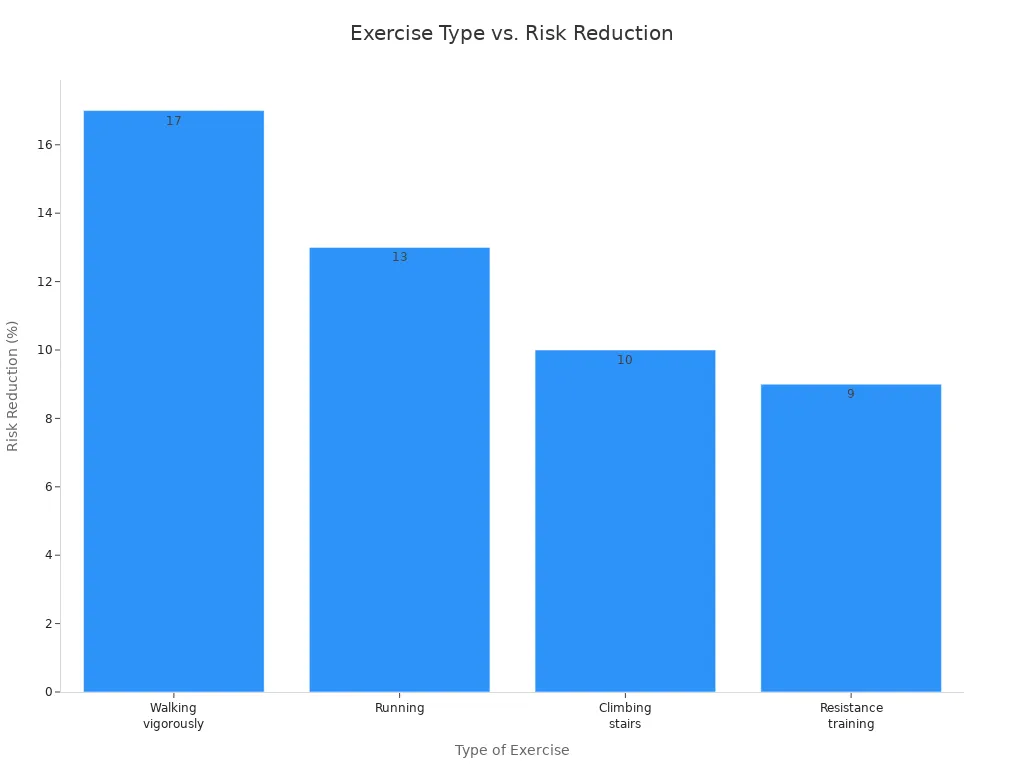
Here’s a quick table with the numbers:
| Type of Exercise | Risk Reduction (%) |
|---|---|
| Walking vigorously | 17 |
| Running | 13 |
| Climbing stairs | 10 |
| Resistance training | 9 |
You don’t need to run marathons. Just get up and move every day. Walking, climbing stairs, and lifting weights all count as healthy habits that improve longevity.
Easy Longevity Habits for Staying Active
You can build longevity habits without fancy equipment or gym memberships. Try these simple steps:
- Walk briskly for 30 minutes most days.
- Climb stairs instead of taking the elevator.
- Do strength training twice a week. Focus on keeping your muscles strong, not lifting the heaviest weights.
- Stretch or do yoga to keep your joints flexible.
- Make movement part of your lifestyle. Park farther away, stand up during phone calls, or play with your kids.
Tip: Mix aerobic and resistance exercise. This combo helps you maintain muscle mass and metabolic health. Don’t forget to eat enough protein and get vitamin D and calcium for strong bones.
If you exercise regularly, you protect your health and improve longevity. Start small. Add movement to your day. You’ll feel better, stay stronger, and live longer.
Eat a Balanced Diet
Foods That Improve Longevity
You want to live longer and feel your best? Start with a balanced diet. Fruits, vegetables, and whole grains help you fight disease and keep your body strong. These foods pack vitamins, minerals, and fiber that support your health every day.
Here’s what you should aim for:
- Eat at least two servings of fruit and three servings of vegetables daily.
- Try to get five servings of fruits and vegetables each day. This simple habit can lower your risk of early death.
- Choose whole foods and minimally processed foods. Plant foods like fruits, vegetables, whole grains, nuts, and legumes are top picks for a nutrient-rich diet.
Check out this table for healthy habits that improve longevity:
| Diet Pattern | Main Features | Years Added to Life |
|---|---|---|
| Mediterranean-style diet | Fruits, veggies, whole grains, healthy fats | Up to 2 |
| DASH diet | Veggies, fruits, whole grains, lean protein | 1.9 |
| Diabetes Risk Reduction Diet | High-fiber foods, healthy fats | 3 |
Tip: Research shows that a high-quality diet rich in fruits, vegetables, whole grains, and unsaturated fats can improve longevity and support healthy aging.
Simple Diet Upgrades for a Longevity Lifestyle
You don’t need to overhaul your lifestyle overnight. Small changes make a big impact. Try these easy upgrades:
- Fill half your plate with fruits and vegetables at every meal.
- Swap refined grains for whole grains like brown rice or oats.
- Choose nuts for snacks instead of chips.
- Replace sugary drinks with water or unsweetened tea.
- Add fiber-rich foods like beans, lentils, and whole grains to your meals.
Want to boost your longevity habits? Include an extra couple of tablespoons of vegetables each day. Skip one serving of processed meat per week. These steps help you build a balanced diet and improve longevity.
Note: The Mediterranean-style diet, plant-based meals, and the DASH diet are linked to lower disease risk and longer life. You can start with one healthy habit and build from there.
Protect Your Sleep
Sleep’s Role in Longevity Habits
You might not realize it, but sleep is one of the most powerful longevity habits you can build. When you get enough rest, your body repairs itself and your mind resets. Adults should aim for at least 7 hours of sleep per night to boost health and live longer. Missing out on quality sleep can raise your risk for heart disease, high blood pressure, and even early death.
Take a look at how sleep quality affects your health and life expectancy:
| Key Findings | Description |
|---|---|
| Poor Sleep Quality | Linked to increased cardiovascular disease risk and reduced quality of life. |
| Health Outcomes | Insufficient sleep correlates with elevated blood pressure, obesity, and chronic diseases. |
| Mortality Risk | Inadequate sleep increases all-cause mortality risk by 14%. |
| Gender Differences | Short sleep duration is linked to higher mortality risk in men due to lifestyle factors. |
| Public Health Concern | Highlights the prevalence of sleep deprivation in modern societies. |
If you want to improve longevity, make sleep a daily habit. Good sleep helps you feel energized, think clearly, and stay healthy.
Building Better Sleep Routines
You can build better sleep routines with a few simple changes. Try these tips to support quality sleep and help you live longer:
- Set a consistent bedtime and wake-up time, even on weekends.
- Create a wind-down routine before bed. Read, stretch, or listen to calm music.
- Stay active during the day. Regular movement helps you fall asleep faster at night.
Here are some healthy sleep habits and their benefits:
| Healthy Sleep Habit | Benefit |
|---|---|
| Getting seven to eight hours each night | Linked to longer life expectancy and lower risk of disease. |
| Falling asleep easily most nights | Shows better sleep quality and overall health. |
| Waking up rested most mornings | Reflects good sleep quality and improved longevity. |
| Not using sleep medications | Suggests natural sleep patterns for long-term well-being. |
Tip: Make your bedroom cool, dark, and quiet. Avoid screens before bed. These small changes can help you get the rest you need.
When you protect your sleep, you support your health and give yourself the best chance to live longer.
Monitor Your Health
Proactive Checkups to Improve Longevity
You want to stay ahead and live longer? Make regular checkups part of your routine. These visits help you catch problems early and keep your body running smoothly. You can see how often you should schedule checkups based on your age:
| Age Group | Recommended Frequency |
|---|---|
| Men under 40 | Every 2-3 years |
| Men 40-50 | Annually |
| Men over 50 | Twice yearly |
Doctors check your blood pressure, cholesterol, and hormones. You can track your own health numbers at home. Look at this chart to see what most men monitor:
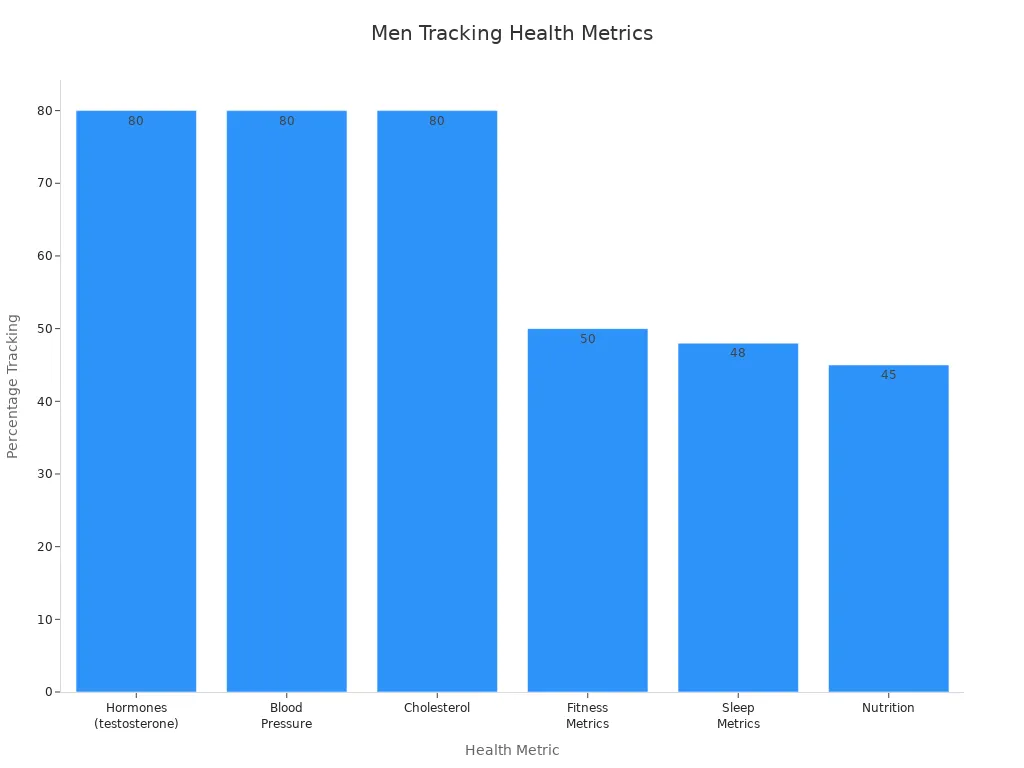
| Health Metric | Percentage of Men Tracking |
|---|---|
| Hormones (e.g., testosterone) | 80% |
| Blood Pressure | 80% |
| Cholesterol | 80% |
| Fitness Metrics (e.g., VO2 max) | 50% |
| Sleep Metrics (e.g., HRV, REM) | 48% |
| Nutrition (calories, macros) | 45% |
Tracking these numbers helps you build longevity habits and maintain a healthy weight. You can spot changes early and make adjustments before problems grow.
Tip: Write your health numbers in a notebook or use an app. This makes it easy to share with your doctor and see your progress.
Essential Screenings for Men
You can protect your health by getting the right screenings at the right time. Here are the most important ones:
- Blood pressure checks start in your 20s.
- Cholesterol monitoring begins at age 20 and repeats every four to six years.
- Prostate cancer screening starts at age 50.
- Colon cancer screening begins at age 45.
- Skin cancer exams every year, especially if you spend time in the sun.
- Blood sugar tests if you have diabetes risk factors.
- Bone density screenings for men over 70 or younger men with risk factors.
- Mental health check-ins with your provider.
You also need dental exams once or twice a year and eye exams every two to four years. Diabetes screening starts at age 35 if you are overweight. Lung cancer screening is annual for adults ages 50 to 80 with a history of smoking.
Note: Regular physical exams help you stay on top of your health. Ask your doctor about screenings that fit your age and risk factors.
You can take charge of your health and live longer by making these screenings and checkups part of your routine.
Manage Stress Well
Stress and Longevity
Stress sneaks up on you. Sometimes you feel it in your shoulders or your stomach. Chronic stress does more than make you feel tense. It can actually shorten your life. When you face stress every day, your body changes. Your heart works harder. Your immune system gets weaker. You become more likely to get sick.
Here’s what happens when stress sticks around:
- Chronic stress links to heart disease and mental health disorders. These problems can cut your life short.
- Your body reacts to daily stressors. If you have a chronic condition, stress can make things worse and affect how long you live.
- Stress changes how your body works. It can raise your risk of dying early.
- Long-term stress leads to health issues like diabetes and heart disease. These conditions lower your life expectancy.
- Your immune system gets suppressed. You become more vulnerable to illness.
- Stress over time connects to a shorter life because it affects your body in so many ways.
You can’t avoid stress completely, but you can manage it. Building strong longevity habits helps you protect your health and live longer.
Simple Ways to Reduce Stress
You have the power to lower your stress. Try these easy techniques to help your body and mind relax:
- Mindfulness meditation helps you shift out of stress mode fast. It lowers strain on your heart.
- Deep breathing, like the 4-4-8 method, calms your nerves and drops your blood pressure.
- Nature walks soothe your nervous system. They support healthy arteries.
- Daily downtime without screens gives your mind a break and helps your body recover.
- Gentle yoga or stretching releases muscle tension and boosts blood flow.
Tip: Pick one stress-busting habit and practice it every day. Even five minutes can make a difference. You’ll feel better, think clearer, and support your health for years to come.
Avoid Smoking & Limit Alcohol
Longevity Habits for Healthy Choices
You want to live longer and feel better? Start by avoiding smoking and limiting alcohol. These two choices make a huge difference in your health. Many men do not realize how much these habits can cut years off their lives. Take a look at what recent studies show:
- Alcohol use can shorten your life by about 1.5 years, even if you do not smoke.
- Smoking is one of the top reasons men die early.
- These risks stay high, no matter your education or background.
If you want to build strong longevity habits, focus on cutting back or quitting. You give your body a better chance to heal and stay strong. Your heart, lungs, and brain all benefit when you make these changes.
Tip: Every day you avoid smoking or limit alcohol, you help your body repair itself. You also lower your risk for cancer, heart disease, and other serious problems.
Steps to Quit or Cut Back
Quitting smoking or drinking less can feel tough, but you do not have to do it alone. Many men succeed by following a step-by-step plan. Here are the stages most people go through:
- Precontemplation: You are not thinking about quitting yet.
- Contemplation: You start to wonder if you should change.
- Preparation: You make a plan to quit or cut back.
- Action: You take steps to stop.
- Maintenance: You work to stay on track.
You can also use different strategies to help you succeed. Check out this table for some of the best options:
| Objective | Description |
|---|---|
| Proactive outreach | Reach out to men who may not feel ready to quit. |
| Effective interventions | Use proven methods in community settings. |
| Cost-effective treatments | Find treatments that do not break the bank. |
| Specialized matching | Match high-risk men with the right support. |
Lifestyle medicine can help you quit smoking or reduce alcohol. You can get support in person or through telehealth. These services give you a plan that fits your needs and helps you stay healthy.
Remember: You do not have to quit alone. Support, planning, and the right tools make a big difference.
Maintain a Healthy Weight
Weight’s Impact on Longevity
You probably hear a lot about weight and living longer. The truth is, your weight can affect how you feel and how long you live. Men with a body mass index (BMI) in the right range tend to have better outcomes. Here’s what experts say about the ideal BMI for men:
- The best BMI for men to maximize longevity is about 25 to 26.
- Men under 50 do best with a BMI around 23.
- As you get older, the ideal BMI goes up. Men over 80 should aim for a BMI near 25.
- The lowest risk of dying early happens at a BMI of 26.
Research shows that maintaining a healthy weight can influence your life expectancy and disease risk. For older men, being overweight or even obese doesn’t always mean worse health. Sometimes, carrying extra weight helps you recover from illness or injury. It can also protect your bones and lower your risk of osteoporosis.
Tip: Don’t stress about hitting a “perfect” number. Focus on feeling strong and healthy.
Easy Habits for Weight Management
You can build longevity habits with simple changes. Try these daily steps to manage your weight and support your health:
- Keep your weight in a healthy range. Even losing 5-10% of your weight can lower your risk for disease.
- Drink alcohol in moderation. A little is okay, but too much can hurt your health.
- Eat a high-quality diet. The Mediterranean diet is a great choice for men.
- Avoid smoking. This habit increases your risk for lung cancer and other problems.
- Exercise every day. Aim for at least 30 minutes of moderate activity.
Here’s a quick table to help you remember the ideal BMI ranges:
| Age Group | Ideal BMI Range |
|---|---|
| Under 50 | 23 |
| 50-80 | 25-26 |
| Over 80 | 25 |
🏃♂️ Small steps add up. Walk more, eat better, and stay active. These habits help you feel your best and live longer.
Build Social Connections

Social Support to Improve Longevity
You might not realize it, but your friendships and connections can help you live longer. When you feel lonely or isolated, your body reacts. Stress hormones rise. Sleep gets worse. Your immune system weakens. These changes can lead to more health problems and speed up aging. Men who stay connected enjoy better health and a lower risk of early death.
Take a look at this table showing how social ties affect your chances of living longer:
| Impact | Risk/Benefit |
|---|---|
| Loneliness increases early death | +26% risk |
| Isolation increases early death | +29% risk |
| Strong social ties increase survival | +50% survival benefit |
Staying connected gives you a survival boost that beats many medical treatments. Emotional support from family and friends acts as a safety net. It helps you handle stress and bounce back from tough times. Both structural social integration and perceived support predict how long you live. Building strong relationships is one of the most powerful longevity habits you can start.
Ways to Strengthen Relationships
You can grow your network and improve your health with simple steps. Try these ideas:
- Join a club or group that matches your interests.
- Volunteer for a cause you care about.
- Take part in group fitness activities.
- Attend local community events.
- Reach out to friends and family members.
You do not need a huge circle. Even a few close connections make a big difference. When you spend time with others, you feel happier and less stressed. You also build a support system that helps you through challenges. Start small. Send a text, make a call, or invite someone for coffee. These actions help you strengthen relationships and support your health for years to come.
Tip: Make connecting with others a regular part of your routine. Your body and mind will thank you.
Support Mental Health
Mental Wellness Longevity Habits
You might not talk about mental health every day, but it shapes how you feel and how long you live. Men often face bigger challenges with mental health than women. These challenges can lead to more years of potential life lost and lower life expectancy. Many men with mental disorders have not seen the same improvements in health as others. This gap creates serious public health concerns.
- Men with mental disorders lose more years of life compared to women.
- Mental health issues can lower life expectancy and increase health risks.
- Advances in mental healthcare have helped, raising life expectancy from 58.86 years to 73.75 years after 2010.
When you focus on positive mental health, you boost your chances of living longer. Research shows that men who feel happy and function well are 60% less likely to die early. Building mental wellness habits is a key part of your longevity habits.
Tip: Make mental health a priority. You can improve your well-being and add years to your life.
Simple Practices for Better Well-Being
You can support your mental health with easy daily habits. Try these steps to feel better and live longer:
- Stay active with exercises like walking or yoga. These activities keep your body and mind strong.
- Eat foods that support your health. Choose fiber, protein, and vitamins. Avoid processed sugars and fats.
- Challenge your mind. Solve puzzles, read books, or pick up a new hobby.
- Learn about healthcare services. Keep up with regular check-ups.
- Adapt to changes in life. Talk to friends or professionals when you need advice.
Here’s a quick table to help you remember these habits:
| Practice | Benefit |
|---|---|
| Physical activity | Boosts mood and energy |
| Healthy eating | Supports brain and body |
| Mental challenges | Keeps mind sharp |
| Regular check-ups | Prevents health problems |
| Social support | Reduces stress |
Note: Small steps make a big difference. You can build strong mental health and improve your well-being with simple daily habits.
You can start building longevity habits today, no matter where you are. Even small steps, like walking more, make a big difference.
| Step Group | Average Steps per Day | Risk Reduction (%) |
|---|---|---|
| Third Group | 7,800 | 40-53% lower risk |
Many men face barriers like busy schedules or lack of motivation. Try adding one healthy habit at a time and plan your routines. Remember, your choices inspire your kids and those around you.
Many of my high-risk patients were star athletes in high school and even college, but are now unhealthy due to inactive lifestyles and a poor diet.
Pick one or two changes and take action today. Your future self—and your family—will thank you.
FAQ
How can I start building longevity habits if I feel overwhelmed?
You can pick one habit and focus on it. Start with walking or eating more vegetables. Small steps help you build confidence. You do not need to change everything at once.
What is the best exercise for longevity?
Walking briskly works for most men. You can add strength training or yoga. Mix different activities to keep your body strong. Choose what you enjoy so you stick with it.
Do I need to follow a strict diet to live longer?
You do not need a strict diet. You can eat more fruits, vegetables, and whole grains. Try to limit processed foods and sugary drinks. Simple swaps make a big difference.
How much sleep should I get for better health?
Aim for seven to eight hours each night. Good sleep helps your body recover and keeps your mind sharp. You can set a regular bedtime to improve your sleep quality.
Can social connections really help me live longer?
Yes! Strong friendships and family ties boost your health. You feel happier and less stressed. You can join groups or reach out to friends to build your support network.
See Also
Exploring 5-MTHF: Science-Driven Advantages for Health Enthusiasts
A Beginner’s Journey with Magnesium Supplements: Start Confidently
Magnesium Malate for Sleep: A Scientific Beginner’s Handbook
Understanding Magnesium Malate: A Sleep Aid for New Users
Navigating ADHD and Protein: Essential Insights for Newcomers