


You don’t need a big change to boost your wellness. Anyone can start with small daily habits like drinking water or taking a walk. Science shows that repeating simple actions each day helps you build strong habits for long-term wellness—even if you miss a day sometimes.
Physical Wellness

Physical wellness means taking care of your body every day. You can build a healthy lifestyle by focusing on a few simple daily habits. These habits help you feel better, move more easily, and lower your risk of getting sick. Let’s look at four key areas you can start with today.
Hydration Habits
Water keeps your body working well. When you stay hydrated, you help your heart, brain, and muscles do their jobs. Drinking enough water each day supports your energy and helps you think clearly. Studies show that people who drink enough water have a lower risk of chronic diseases and may even live longer.
Tip: Carry a water bottle with you. Take small sips throughout the day to make hydration a healthy habit.
Here’s what research found about hydration and health:
| Study Source | Population | Key Finding | Health Indicators |
|---|---|---|---|
| National Heart, Lung, and Blood Institute | Over 11,000 adults tracked for 30 years | Higher hydration levels linked to lower risk of chronic diseases and longer life expectancy | Lower blood sodium levels, fewer chronic diseases, better biological aging |
Most adults need about 11.5 cups of water a day if you’re a woman, or 15.5 cups if you’re a man. This includes water from both drinks and foods. If you want to stay hydrated, aim for at least nine cups of fluids a day for women and 13 cups for men.
Drinking water helps you:
- Keep your body temperature steady
- Remove waste through sweat and digestion
- Support your heart and blood flow
- Boost your mood and focus
Making hydration part of your daily health routine is a simple way to support overall health and wellness.
Daily Movement
Moving your body every day is one of the best things you can do for staying healthy. You don’t need to run a marathon. Even a short walk or stretching counts. Health experts recommend at least 150 minutes of activity each week. That’s just over 20 minutes a day.
Regular movement lowers your risk of heart disease, diabetes, and even some cancers. It also helps you feel happier and sleep better. You can try different types of exercise to keep things fun and work different muscles.
| Exercise | Benefits |
|---|---|
| Swimming | Good for joints, boosts mood, burns calories |
| Tai Chi | Improves balance, easy for all ages, helps older adults |
| Strength Training | Builds muscle, burns calories, helps with weight management |
| Walking | Lowers disease risk, strengthens bones, lifts your mood |
| Kegel Exercises | Strengthens pelvic floor, helps prevent incontinence |
You can start small. Try taking the stairs, dancing to music, or stretching when you wake up. The key is to make movement a part of your daily habits. Over time, you’ll notice more energy and better health.
Balanced Nutrition
Eating a variety of healthy food gives your body the fuel it needs. Balanced nutrition means you get the right mix of carbohydrates, proteins, fats, vitamins, minerals, fiber, and water. Each part plays a role in keeping you strong and supporting good health.
- Carbohydrates give you energy.
- Proteins help your muscles grow and repair.
- Fats protect your organs and help your body use vitamins.
- Vitamins and minerals keep your immune system strong.
- Fiber helps your digestion and keeps your blood sugar steady.
- Antioxidants protect your cells from damage.
Many diets, like the Nordic, DASH, and MIND diets, show that eating more fruits, vegetables, whole grains, and less salt can lower your risk of heart disease, high blood pressure, and memory loss.
Note: Try adding one extra fruit or vegetable to your meals each day. Small changes add up to better nutrition and wellness.
Quality Sleep
Sleep gives your body and mind time to rest and recover. Adults need at least seven hours of sleep each night for good health. A regular sleep schedule helps you feel more alert, improves your mood, and supports your immune system.
| Age Group | Recommended Sleep Hours |
|---|---|
| Adult 18–60 years | 7 or more hours |
| Adult 61–64 years | 7–9 hours |
| Adult 65 years and older | 7–8 hours |
Missing sleep can lead to health problems like heart disease, weight gain, and trouble thinking clearly. It can also make you feel stressed or sad. Chronic sleep loss raises your risk for serious conditions, including diabetes, stroke, and depression.
To improve your rest:
- Go to bed and wake up at the same time every day.
- Keep your bedroom cool and dark.
- Turn off screens at least 30 minutes before bed.
Making sleep a priority is one of the most important daily habits for staying healthy and supporting long-term wellness.
Mental Wellness

Taking care of your mind is just as important as caring for your body. You can build strong mental wellness by adding a few simple habits to your day. These habits help you decrease stress, feel happier, and handle tough times better. Let’s explore some easy ways to support your mental health every day.
Mindfulness Practices
Mindfulness means paying attention to the present moment. You notice your thoughts, feelings, and surroundings without judging them. This practice helps you decrease stress and feel calmer. Mindfulness can also improve your health by lowering anxiety and helping you accept your emotions.
| Benefit | Description |
|---|---|
| Reduces stress | Mindfulness practices can help lower stress levels and improve overall mental health. |
| Improves mental health | Effective in treating issues like depression, anxiety disorders, and substance abuse. |
| Enhances emotional acceptance | Helps individuals accept painful emotions rather than avoiding them, leading to better coping. |
| Complements psychotherapy | Often used alongside cognitive behavioral therapy to address maladaptive thoughts. |
You don’t need a lot of time to get started. Just five minutes a day can make a difference. Try sitting quietly and focusing on your breath. Notice how your body feels. If your mind wanders, gently bring it back. You can also practice mindfulness while eating, walking, or even brushing your teeth.
Tip: Start your day with a mindful moment. Take a few deep breaths and notice how you feel before you jump into your routine.
Meditation for Wellness
Meditation is a powerful tool for mental clarity and relaxation. Many people use meditation to decrease stress, improve focus, and boost their mood. Even a few minutes each day can help you feel more balanced.
| Findings | Description |
|---|---|
| Mood Disturbance | Meditation decreased mood disturbance, anxiety, and fatigue. |
| Cognitive Enhancement | Meditation enhanced attention, working memory, and recognition memory. |
| Anxiety Response | Meditation reduced the behavioral anxiety response to an acute stress. |
| Long-term Effects | Meditation programs reduce symptoms of anxiety, panic, and depression. |
| Cognitive Improvement | Meditation increases the volume of brain regions linked to memory and focus. |
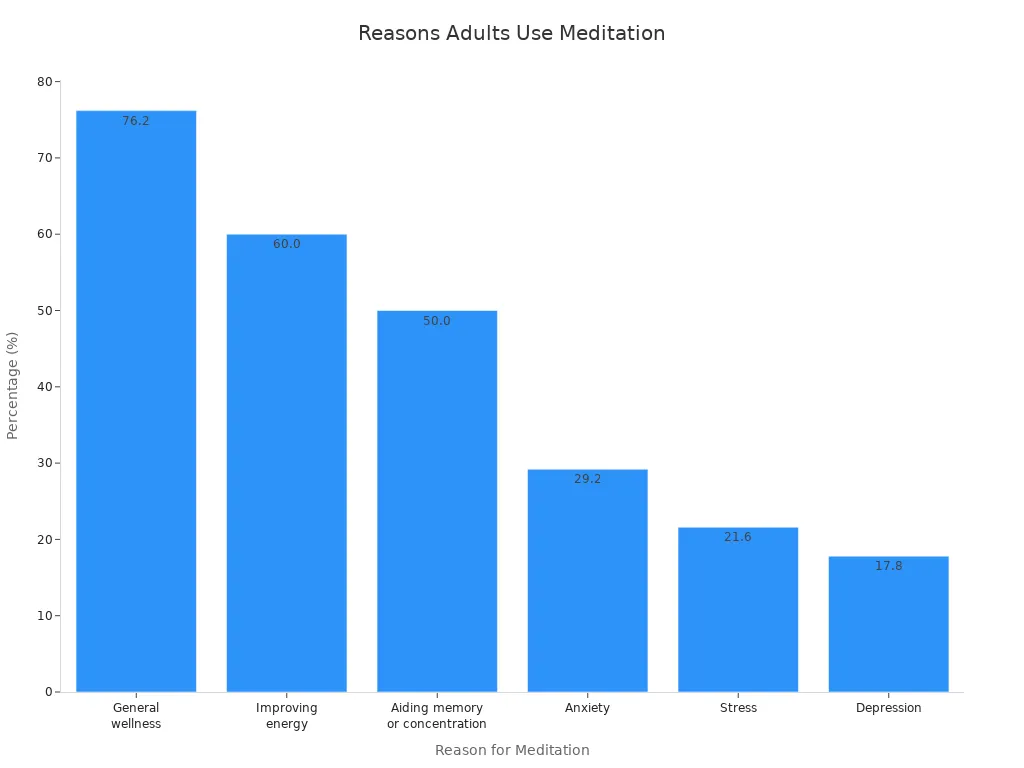
A daily meditation practice does not have to be long. You can start with just one to five minutes. Consistency matters more than time. Most adults who use meditation do it for general wellness, better energy, and sharper memory.
| Metric | Percentage |
|---|---|
| Adults who have tried meditation | 14% |
| Adults practicing meditation regularly | 4.1% |
| Adults using meditation for mental wellness | 76.2% |
Note: Try a simple breathing meditation. Sit quietly, close your eyes, and focus on your breath for a few minutes. Notice how you feel afterward.
Practicing Gratitude
Gratitude means noticing and appreciating the good things in your life. Practicing gratitude can lift your mood and help you see the positive side of things. You can write a thank-you letter to someone who matters to you. You can keep a gratitude journal and write down three things you’re thankful for each day. You can also combine gratitude with mindfulness by taking a moment to reflect on what went well.
- Write gratitude letters to important people in your life.
- Keep a gratitude journal to remember reasons for thankfulness.
- Combine gratitude with mindfulness meditation or prayer.
Callout: Practicing gratitude helps you focus on what’s good, even on tough days.
Social Connection
Strong social ties play a big role in your mental wellness. Spending time with friends, family, or your community can boost your mood and help you feel supported. Building meaningful relationships gives you a sense of belonging and helps you handle stress better.
| Findings | Description |
|---|---|
| Impact of Loneliness | Loneliness has a stronger effect on mental health outcomes than isolation. |
| Social Support in Work Settings | Lack of social support increases risks for burnout and anxiety. |
| Longitudinal Studies | 83% of studies show social support benefits depression symptoms. |
| Loneliness and Adverse Outcomes | Feeling lonely links to higher risks of depression and anxiety. |
You can connect with others by joining a club, calling a friend, or volunteering. Even small moments, like chatting with a neighbor, can make a difference. Make time for relationships that matter to you.
Stress Management
Everyone faces stress, but you can learn to manage it. Simple daily habits help you decrease stress and protect your health. Try these strategies:
- Prioritize sleep and eat nutritious foods.
- Engage in regular exercise and self-care.
- Maintain strong social connections.
- Improve time management to avoid feeling overwhelmed.
- Practice mindfulness and let go of perfectionism.
- Meditate to reduce anxiety.
- Reframe negative thoughts and practice self-compassion.
- Spend time in nature to boost your mood.
- Relax your muscles with stretches, massage, or a warm bath.
- Protect your sleep with a steady routine.
Tip: Check in with yourself every day. Notice how you feel and what you need. Small steps can make a big difference in your mental health.
Building these habits helps you take care of your mental health for the long run. You don’t have to do everything at once. Pick one or two habits to start, and watch how your wellness grows.
Building Small Daily Habits
Start Small
You don’t have to change everything at once. Start with one or two small daily habits. Pick something so easy you can’t say no, like drinking a glass of water after breakfast or making your bed. These tiny actions help you build momentum and make your routine feel less overwhelming. Over time, you can add more steps or make your habits a little bigger.
- Choose a simple habit.
- Break it into small steps.
- Pair it with something you already do, like brushing your teeth.
Be Consistent
Doing your new habit every day helps your brain create strong pathways. The more you repeat an action, the easier it gets. You don’t need to wait for the perfect moment. If you miss a day, just start again the next day. Consistency matters more than perfection.
| Evidence | Explanation |
|---|---|
| Repeating a habit strengthens brain pathways | Makes the habit automatic over time |
| Don’t wait for a fresh start | Keeps you moving forward even after setbacks |
Track Progress
Tracking your daily habits can boost your motivation. You can use a notebook, a calendar, or a simple app. Some popular tools include Loop Habit Tracker, Streaks, and malife. Marking your progress helps you see how far you’ve come and reminds you to keep going. Try a quick self-reflection at the end of each week to notice what’s working.
Self-Compassion
Be kind to yourself as you build new habits. Self-compassion means you forgive yourself for slip-ups and keep moving forward. This attitude helps you stay motivated and supports your mental wellness. Self-reflection can help you learn from mistakes without being too hard on yourself. Remember, building new habits takes time—sometimes two to five months—so give yourself credit for every step.
Habits for Long-Term Wellness
Preventive Care
You can build lasting wellness by making preventive care part of your daily routine. Preventive care means you take steps to protect your health before problems start. You might schedule regular checkups, get screenings, or stay up to date with vaccinations. These simple habits help you catch issues early and keep you feeling your best.
- Upstream preventive measures lower your risk for disease and disability.
- Investing in preventive care saves money and keeps you healthier over time.
- Regular screenings and vaccines help you avoid costly treatments.
Studies show that following four or five healthy habits at age 50 can give you almost 10 more years free from chronic disease. These habits reduce your risk of heart attack, stroke, diabetes, and cancer.
You can focus on balanced nutrition, daily movement, and maintaining a healthy weight. Avoiding smoking and limiting alcohol also support long-term wellness. When you stay involved in your care, you make better choices and feel more satisfied with your health.
Engaging in Hobbies
Hobbies bring joy and help you relax. You might try gardening, painting, or volunteering. These activities give your mind a break and boost your mood. People who enjoy hobbies often report better health and higher life satisfaction.
- Hobbies reduce stress and anxiety.
- They improve memory and help you stay sharp.
- You can meet new friends and feel less lonely.
- Creative hobbies like arts and crafts spark your imagination.
A study of over 93,000 people found that those with hobbies had fewer symptoms of depression and felt happier. When you focus on the value of your hobbies, you build lasting wellness and enjoy life more.
Small daily actions, like preventive care and hobbies, add up to long-term wellness. You can start today and see the benefits grow over time.
You can build a healthy life by starting with small daily habits. These routines make healthy choices easier and help you feel in control.
- Set simple goals and reward yourself for sticking with them.
- Connect new habits with positive feelings.
| Benefit | Description |
|---|---|
| Consistency | Habits bring stability and help you reach goals. |
| Stress Relief | Routines lower stress and boost your mood. |
Pick one habit today. Progress beats perfection. Your wellness journey starts now!
FAQ
How do I stick with new habits when I feel busy?
Try starting with just one small habit. You can set a reminder on your phone. Celebrate each win, even if it feels tiny!
What if I miss a day or mess up?
Don’t worry! Everyone slips up sometimes. Just start again the next day. Progress matters more than perfection. 😊
Can I build wellness habits without spending money?
- Yes! Drink water, walk outside, and practice gratitude. These habits cost nothing and help you feel better every day.
See Also
Exploring 5-MTHF: Key Benefits for Modern Health
Understanding Methylated Vitamins: Boosting Absorption and Health
Dietary Strategies for Effectively Managing Tinnitus Symptoms