


You can maintain vitality in your 40s and beyond. You might wonder how to stay energetic, healthy, and mentally sharp as you get older. The answer lies in small, steady changes. Simple steps like eating well, moving your body, sleeping better, managing stress, and keeping a positive mindset help you feel your best.
Studies show these habits matter:
- 53% reduction in Alzheimer’s risk with proper nutrition
- 40% lower risk of Alzheimer’s with regular exercise
- 30% less brain shrinkage with effective stress management
- 70% lower dementia risk with improved sleep
- 48% reduction in Alzheimer’s risk with social and mental stimulation
You can start today and see lasting results by maintaining vitality one step at a time.
Maintain Vitality with a Balanced Diet

Whole, Nutrient-Dense Foods
You can maintain vitality by choosing whole, nutrient-dense foods every day. These foods give your body the fuel it needs to stay energetic and sharp. Try to fill your plate with colorful vegetables and fruits. They offer antioxidants that help fight aging. Lean meats and whole grains support muscle and brain health. Limit added sugars and saturated fats. Pick low-fat dairy for calcium and protein.
Here’s a quick look at some nutrients and their importance:
| Nutrient | Importance |
|---|---|
| Iron | Supports energy levels and overall health |
| Zinc | Essential for immune function and metabolism |
| Calcium | Important for bone health, especially in older adults |
| Folate | Vital for cell division and overall health |
| Vitamin A | Supports vision and immune function |
| Vitamin B12 | Crucial for nerve function and energy production |
You can follow dietary patterns like AHEI, aMED, DASH, or MIND. These patterns promote healthy aging and longevity.
Tip: Make most of your meal vegetables and fruits—about half your plate. Whole grains should cover a quarter.
Key Nutrients for Healthy Aging
Certain nutrients play a big role in keeping you strong and active. Calcium keeps your bones healthy. Magnesium helps your muscles and brain work well. Vitamin K2 directs calcium to your bones, making them stronger. MSM supports your joints and skin. Creatine may boost your physical activity and thinking skills.
A balanced diet for longevity includes foods that lower inflammation. This helps you stay active, sleep well, and keep your mind sharp.
Note: Key dietary habits for healthy aging include eating a variety of foods and focusing on nutrients that support your bones, muscles, and brain.
Hydration and Fiber
Water and fiber help your body run smoothly. Drink enough water to prevent constipation and keep your digestive system moving. Fiber from fruits, vegetables, and whole grains boosts the production of short-chain fatty acids. These acids help regulate your energy and metabolism.
SCFAs stimulate leptin, a hormone that tells your body to balance energy and reduce food intake.
Try to eat 2 cups of fruit and 2½ cups of vegetables each day. Whole grains should fill a quarter of your plate.
You can maintain vitality by making small changes to your nutrition. Swap white bread for whole grain. Add an extra serving of veggies to your lunch. These steps help you feel your best and support healthy aging.
Exercise for Healthy Aging
Strength Training and Muscle Mass
You start to lose muscle and bone as you get older. Strength training helps you fight this loss. When you lift weights or use resistance bands, your muscles send signals to your bones. This makes your bones stronger and keeps your body healthy. Most people lose about 3-8% of muscle each decade starting in their 30s. You also lose bone mass at a rate of 1% per year after age 40. Strength training boosts bone health by making bone-forming cells work harder.
Research shows that strength training slows bone loss and can even build bone. Activities that stress your bones help them stay dense and strong.
Try to do strength exercises two or three times a week. You can use dumbbells, bodyweight, or resistance bands. These routines help you stay physically active and support healthy aging.
Functional Movement and Flexibility
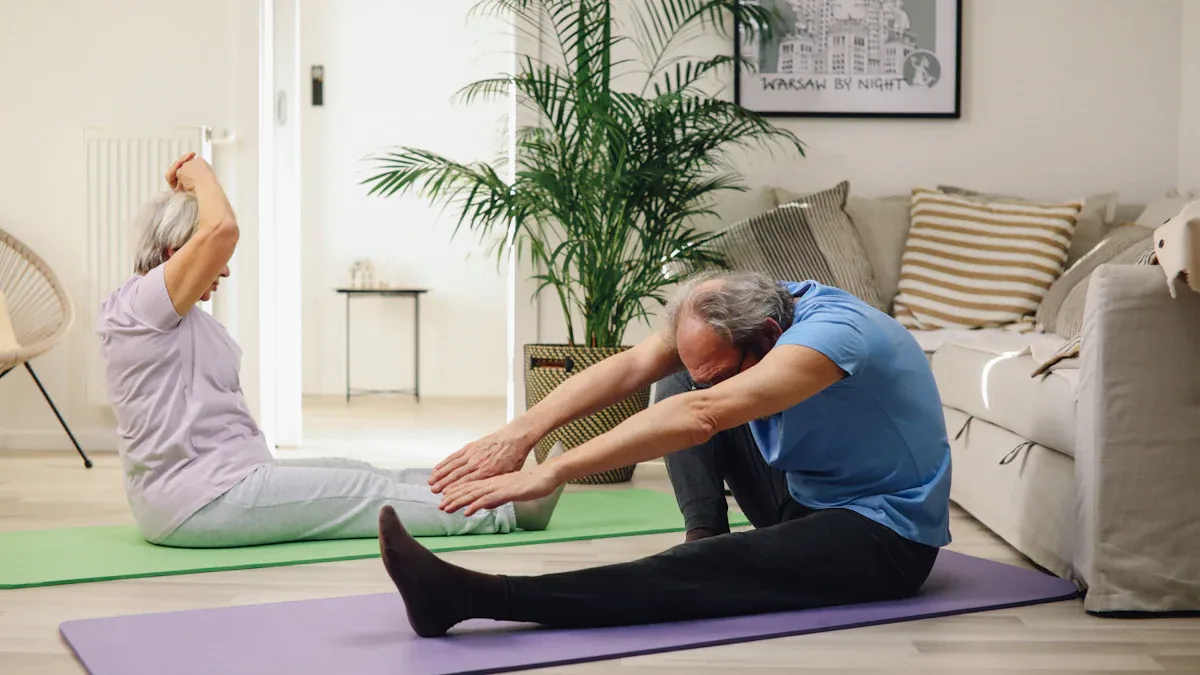
You need to move well to stay safe and independent. Functional movements, like squats and lunges, help you with daily tasks. Flexibility training improves your joint range of motion. It helps you reach, bend, and twist without pain.
- Flexibility exercises make it easier to perform daily activities.
- They enhance balance and postural stability, especially when combined with resistance training.
Stretching and yoga are great ways to improve flexibility. You can add these to your weekly routine for better movement and injury prevention.
Cardiovascular Health
Keeping your heart healthy is key for exercise recommendations for healthy aging. The U.S. Department of Health and Human Services suggests at least 150 minutes of moderate-intensity activity each week. You can break this into 30 minutes a day, five days a week.
- Walking, cycling, or swimming are good choices.
- You can split your activity into shorter sessions throughout the day.
Regular exercise lowers your risk of chronic disease and helps you live longer. Studies show that men who exercise regularly can gain about two hours of life expectancy for each hour of exercise.
Structured Rest and Recovery
Rest is just as important as exercise. Your muscles grow and repair during recovery. After you work out, your body enters a state where it absorbs nutrients and rebuilds muscle fibers.
Muscle growth happens after rest, nutrition, and hormonal balance allow your body to rebuild stronger tissue. Without proper recovery, strength gains and performance improvements are incomplete.
Recovery nutrition helps your muscles repair and refuel. Athletes who use structured recovery regain strength faster than those who only rest. Make sure you get enough sleep and eat well after exercise to support bone health and overall vitality.
Sleep and Recovery for Vitality
Protecting Sleep Quality
You probably know how important sleep feels after a long day. Sleep helps your body and mind recharge. Many adults over 40 struggle with sleep. About 29% experience at least one sleep disturbance symptom, and 10% deal with severe sleep issues. Poor sleep can lower your energy and affect your quality of life.
Here are some ways sleep problems can impact you:
- You may feel tired during the day.
- Your mood can change quickly.
- You might notice trouble focusing or remembering things.
Tip: If you wake up feeling tired often, try tracking your sleep habits for a week. Small changes can make a big difference.
Creating a Restful Routine
You can improve your sleep by building a calming bedtime routine. Experts say most adults need seven to nine hours of sleep each night. Good sleep hygiene helps you get the rest you need.
Try these steps to create a restful routine:
- Go to bed and wake up at the same time every day.
- Stay active during the day. Physical and social activities help your body know when it’s time to be awake.
- Avoid naps, or keep them short and before 2 PM.
- Limit alcohol, caffeine, and nicotine. These can disrupt your sleep.
- Make your bedroom quiet and dark. Turn off screens at least 30 minutes before bed.
- Consider herbal teas or supplements like chamomile or melatonin, but use them in small doses.
Block out time to wind down before bed. Reading, gentle stretching, or listening to calm music can help you relax.
Importance of Recovery Time
Recovery time matters for your health and energy. When you sleep well, your body repairs cells and your brain processes memories. Preventing burnout keeps your energy up and protects your mind.
Here’s why recovery is key:
- It helps you avoid physical and mental strain.
- Sleep supports cellular repair and keeps your brain sharp.
- Recovery keeps your energy steady for exercise and daily tasks.
- Stress reduction, like mindfulness or light activity, protects your brain and lowers the risk of cognitive decline.
Remember, taking time to rest is not lazy. It’s a smart way to stay healthy and strong as you age.
Managing Stress and Social Connection
Stress Reduction Techniques
You can maintain vitality by managing stress in your daily life. Stress affects your mental and emotional well-being, so finding ways to reduce it helps you feel better and stay healthy. Many adults in their 40s and beyond use simple techniques to lower stress. Try these methods:
- Mindfulness and meditation can decrease stress by 30%. You focus on your breath and stay present.
- Exercise releases endorphins and improves your mood.
- Cognitive behavioral techniques help you change negative thoughts. These methods can reduce stress and anxiety by about 40%.
- Relaxation techniques, like deep breathing, lower your heart rate and blood pressure.
- Time management helps you organize your day and feel less overwhelmed.
- Social support from friends and family lowers stress levels and boosts resilience.
Tip: Pick one or two techniques and practice them each day. You will notice improvements in your overall wellness and wellbeing.
Building Social Support
Strong social connections play a big role in your overall wellness. You need support from friends, family, and your community to maintain vitality. Studies show that both formal and informal social support reduce frailty and improve mental and physical health. Take a look at these findings:
| Evidence Type | Findings |
|---|---|
| Longitudinal Study | People with fewer social ties had higher mortality rates over nine years. |
| Review of Studies | Higher social support leads to better cardiovascular and immune health. |
| Cohort Study | Emotional support predicts better cognitive function over time. |
| Cross-sectional Survey | Quality of kin and non-kin support improves wellbeing in older adults. |
You can build social support by joining clubs, volunteering, or simply reaching out to loved ones. These connections help your mental and emotional well-being and support your overall wellness.
Mindfulness for Maintaining Vitality
Mindfulness helps you with maintaining vitality as you age. Practicing mindfulness strengthens your body’s ability to regulate stress and improves sleep quality. Research shows mindfulness can enhance neuro-functional connectivity, which boosts self-regulation and vitality. Mindfulness also helps you form healthy habits that last. You can try simple mindfulness exercises, like focusing on your breath or noticing your surroundings.
| Mechanism | Description |
|---|---|
| Parasympathetic Regulation | Mindfulness strengthens your body’s stress response. |
| Habit Formation | Mindfulness helps you build lasting habits for wellbeing. |
| Sleep Quality | Mindfulness improves sleep, which supports overall wellness. |
Note: Mindfulness works well with other stress reduction techniques. You can combine it with exercise or relaxation for even better results.
Proactive Health Monitoring
Essential Screenings After 40
You can take charge of your health by scheduling regular screenings. These tests help you catch problems early and keep you on track for healthy aging. Many screenings focus on preventive care. You might wonder which tests matter most. Here’s a handy table to guide you:
| Test/Screening | Purpose | Frequency |
|---|---|---|
| Blood Pressure | Detect hypertension | Yearly |
| Cholesterol & Lipids | Heart health | Every 1–4 years |
| Blood Sugar & HbA1c | Diabetes risk | Every 1–3 years |
| CBC & Vitamin Panel | Anemia, deficiency | Every 1–2 years |
| Thyroid Profile | Hormonal balance | Annually |
| Liver & Kidney Tests | Organ function | Every 1–2 years |
| Cancer Screenings | Early cancer detection | Age & gender based |
| BMI & Waist | Obesity risk | Annually |
These preventive health measures help you stay ahead of chronic diseases. You can ask your doctor which screenings fit your age and risk factors.
Tracking Health Metrics
You can track your health metrics at home or during checkups. This habit gives you a clear picture of your wellness. It’s a smart preventive step. You might check your blood pressure, cholesterol, or blood sugar. Each metric tells you something important.
“Tracking health metrics allows us to personalize our wellness journey,” says Sharman. “It can provide a roadmap to understand our bodies better and tailor our lifestyle choices for optimal wellbeing. It’s like having a compass for your health, guiding you towards sustainable habits and proactive health management.”
- Blood pressure: High numbers raise your risk for heart attack or stroke.
- Cholesterol: Your blood test shows “good” HDL and “bad” LDL cholesterol. These numbers matter for your heart.
You can use these numbers to adjust your diet, exercise, and preventive routines.
Partnering with Your Doctor
You can build a strong partnership with your doctor for preventive care. Your doctor helps you choose the right screenings and keeps your health history up to date. This teamwork leads to better health outcomes and makes preventive health measures easier.
| Age Group | Recommended Screenings | Benefits |
|---|---|---|
| 40-49 | Blood pressure, cholesterol, diabetes | Early detection of cardiovascular issues |
| 50-59 | Colon cancer screening, mammograms | Prevention of serious diseases |
| 60+ | Bone density, prostate exams | Management of age-related health risks |
- Consistent monitoring of health history
- Accurate diagnoses based on comprehensive records
- Better health outcomes through personalized care
Partnering with your doctor gives you access to preventive advice and helps you stay on top of healthy aging. You can ask questions and get support for your wellness goals.
Mindset for Maintaining Health and Vitality
Positive Attitude Toward Aging
You can shape your experience as you get older by keeping a positive mindset about aging. When you see aging as a chance for growth, you feel more energetic and engaged. Studies show that your attitude matters. People who view aging positively enjoy better mental and physical health. You might notice less depression and more satisfaction in life. You also tend to stay active and connect with others more often.
- A positive attitude lowers depression.
- You feel more satisfied with your life.
- You move more and join social activities.
- Negative views can lead to more depression and less satisfaction.
You can choose to focus on what you gain as you age, not just what you lose. This shift helps you with maintaining health and vitality.
Setting New Goals
You can boost your motivation by setting new goals. Goals give you direction and purpose. You might want to learn a new skill, join a group, or improve your fitness. When you reach a goal, celebrate—even small wins matter. This habit builds self-compassion and keeps you moving forward.
- Personal goals help you stay motivated.
- Social goals connect you with others.
- Professional goals keep your mind sharp.
- Celebrating achievements fosters gratitude and a positive outlook.
You can write your goals down or share them with a friend. This step makes your goals feel real and helps you track your progress.
Practicing Gratitude
Gratitude changes how you feel each day. When you practice gratitude, you notice the good things in your life. This habit lowers stress and lifts your mood. You can keep a gratitude journal or simply pause to reflect on what you appreciate.
| Finding | Description |
|---|---|
| Improvement in anxiety and depression symptoms | Gratitude practices help reduce anxiety and depression. |
| Complementary therapy | Gratitude boosts the effects of other mental health treatments. |
| Positive feelings | Gratitude brings more positive emotions. |
| Life satisfaction | Gratitude links to greater satisfaction with life. |
You can start by listing three things you are grateful for each morning. This simple practice supports your well-being and helps you build a positive mindset.
You can boost vitality and enjoy healthy aging by making simple changes. Start with one or two habits, like eating nutritious foods or moving more. Research shows that maintaining vitality leads to more years without disease and lower health costs. Check out this table for benefits:
| Benefit | Details |
|---|---|
| More years of life | Up to 10 extra years for women |
| Disease-free years | Up to 6.3 extra years for men |
| Lower health expenses | Healthy habits save money |
Take action today. Small steps help you build momentum and invest in your long-term health.
FAQ
How can you boost energy if you feel tired all the time?
Try drinking more water and eating whole foods. Move your body every day. Get enough sleep. If you still feel tired, talk to your doctor. You might need a health check.
What is the best exercise for healthy aging?
Strength training helps you keep muscle and bone strong. Walking, swimming, and yoga also work well. Mix different activities to stay motivated and protect your joints.
How do you manage stress quickly?
Take a few deep breaths. Go for a short walk. Call a friend or listen to music. These simple steps help you calm down and feel better fast.
Should you take supplements after 40?
You can get most nutrients from food. If your doctor suggests supplements, follow their advice. Calcium, vitamin D, and magnesium are common for healthy aging.
How often should you see your doctor for checkups?
You should visit your doctor once a year for a checkup. Ask about screenings for blood pressure, cholesterol, and cancer. Regular visits help you catch problems early.
See Also
Exploring 5-MTHF: Science-Driven Advantages for Wellness
Understanding Methylated Vitamins: Essential Benefits for Health
A Comprehensive Guide to Timing Methyl Folate Intake
Safe Methylfolate Use: A Science-Based Supplementation Guide