


You enjoy the flexibility of working remotely. However, the line between work and home easily blurs. This ‘always-on’ pressure contributes to burnout, a feeling many remote workers share.
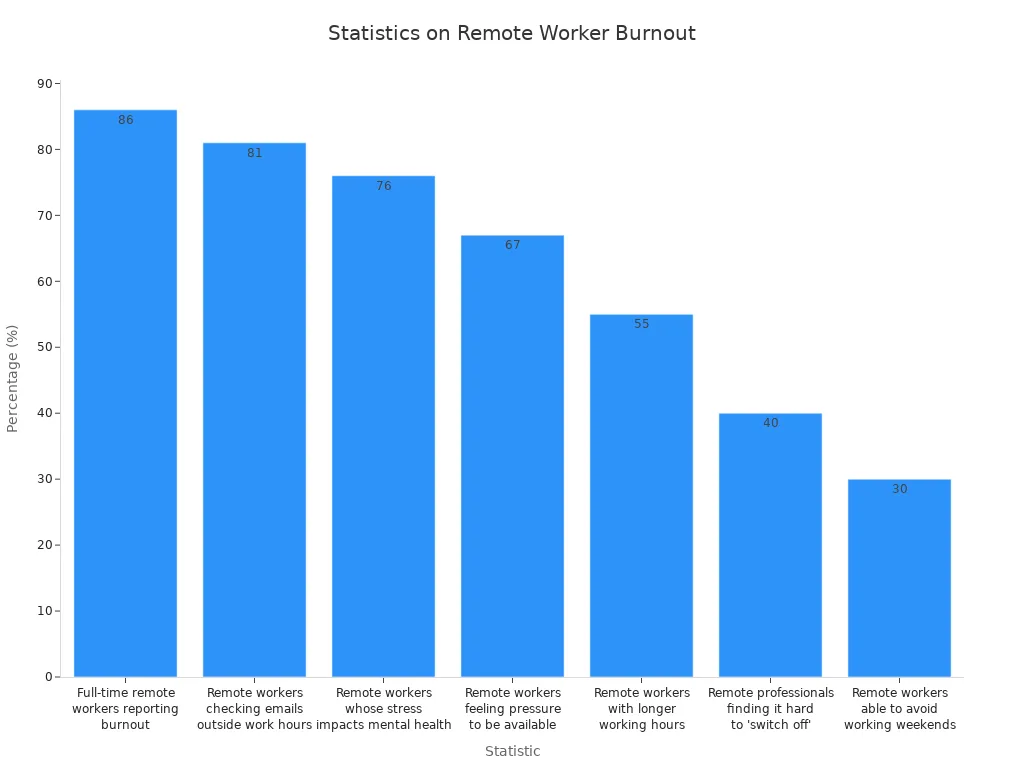
You might also notice new aches or increased stress.
- 51.83% report back pain from working at home.
- Remote workers are 40% more likely to feel anxiety.
This guide offers proactive ways to stay healthy and reclaim your well-being.
Build Healthy Habits and Boundaries
Creating structure is the most important step in your remote work journey. These healthy habits help you separate your work life from your home life. This separation is essential for your mental recovery each day.
Designate a Dedicated Workspace
Your brain connects places with activities. Working from your couch or bed can blur the line between rest and work. You should choose a specific spot for work only.
- Location: Pick a corner with good natural light. A spare room or even a well-organized closet can work.
- Personalization: Add a plant or a favorite piece of art. A personalized space can improve your mood and focus.
- Organization: Keep your desk tidy. A clutter-free area helps you maintain a clear mind.
Set Firm Start and End Times
The biggest challenge of remote work is knowing when to stop. You must set clear boundaries for your workday. Decide on your start time and, more importantly, your end time. Stick to them. This practice protects your personal time and prevents burnout.
Establish a Morning Routine
How you start your day sets the tone for everything that follows. Your morning routine should energize you.
Pro Tip: Avoid checking your email first thing in the morning. This puts you in a reactive mode. Instead, plan your top priorities for the day before you log on. This simple change helps you control your daily work routine.
Schedule Your Breaks
Your brain was not designed for constant focus. Scheduling short breaks is one of the best habits you can build. Research shows that even brief pauses can reset your brain’s attention center and lower stress. You can try taking a 5-minute break every hour to stretch or walk around. This small action improves your focus and creativity throughout the day.
Prioritize Physical Health to Stay Healthy

Your physical well-being is the foundation of your productivity and happiness. The shift to remote work often means more sitting and less natural movement. You can counteract these effects with small, consistent actions. Focusing on your physical health helps you prevent chronic pain and maintain your energy levels.
Create an Ergonomic Setup
Your home office setup directly impacts your body. Poor ergonomics can lead to musculoskeletal disorders (MSDs), back pain, and repetitive strain injuries. You can prevent these long-term issues by creating a supportive workspace.
Your goal is to maintain a neutral posture. Here is how you can adjust your main equipment:
- Chair 🪑: Your chair should support the natural curve of your spine. Adjust its height so your feet rest flat on the floor with your knees at a 90-degree angle. Your elbows should also be at about 90 degrees, level with your desk.
- Monitor 🖥️: Position your monitor about an arm’s length away. The top of the screen should be at or slightly below your eye level. This prevents you from craning your neck up or down.
- Keyboard and Mouse ⌨️: Keep your keyboard and mouse close to you. This allows your wrists to remain straight and your shoulders to stay relaxed. Avoid resting your wrists on the desk while typing.
“In the long run, WFH ergonomics issues may lead to burnout, carpal tunnel syndrome or other cumulative trauma disorders, high blood pressure, and stress on the cervical spine and neck.”
Investing time in your setup is an investment in your long-term health.
Maintain Good Posture
An ergonomic setup is only half the battle. You must also actively maintain good posture throughout the day. Slouching can cause a surprising number of problems.
- Misalignment of your spine
- Tension headaches
- Poor circulation
- Digestive issues like acid reflux
- Reduced lung capacity
No single posture is perfect for long periods. You should check and adjust your posture every 15 minutes. Try these simple exercises at your desk to align your body:
- Chin Tucks: Sit up straight and gently pull your chin backward, as if making a double chin. This aligns your head over your shoulders. Hold for a few seconds.
- Shoulder Blade Squeezes: Pull your shoulder blades together and down. Hold for 5-10 seconds to open up your chest and counteract hunching.
- Feet on the Floor: Keep both feet flat on the floor. Avoid crossing your legs, which can misalign your pelvis.
Integrate Daily Movement
Your body is designed to move. Prolonged sitting is a major health risk, but you can offset it by integrating movement into your workday. Health experts recommend adults get 150-300 minutes of moderate activity per week.
Pro Tip: Set a timer to remind yourself to stand up and move for a few minutes every hour. Even short breaks for light activity are better than sitting without interruption.
You do not need a full gym to be active. Here are some simple exercises you can do right at your desk:
| Exercise | How to Do It | Repetitions |
|---|---|---|
| Desk Squats | Stand up from your chair, then slowly sit back down without using your hands. | 10-15 reps |
| Calf Raises | Stand and hold onto your desk for balance. Raise your heels off the floor. | 15-20 reps |
| Wall Sits | Stand with your back against a wall. Slide down until your knees are at a 90-degree angle and hold. | Hold for 30 seconds |
| Shoulder Rolls | Lift your shoulders up toward your ears, then roll them back and down. | 10 reps |
Stay Hydrated and Eat Well
What you put into your body is just as important as how you move it. Proper nutrition and hydration fuel your brain and keep your energy stable.
To stay hydrated, you should aim for a consistent fluid intake. General guidelines suggest:
This total includes water from all sources, including coffee, tea, and water-rich foods like fruits and vegetables. Keep a water bottle on your desk as a visual reminder.
Easy access to your kitchen can be both a blessing and a curse. Plan your meals to avoid unhealthy snacking. A little meal prep on the weekend can set you up for a week of nutritious lunches. Focus on balanced meals that include protein, healthy fats, and complex carbohydrates. Simple options like large salads with grilled chicken, veggie-packed wraps, or overnight oats can help you stay healthy and energized.
Manage Digital Well-being
You spend hours staring at screens each day. This constant digital connection can lead to eye strain, poor sleep, and mental fatigue. Managing your digital habits is a key part of staying healthy while working from home.
Use the 20-20-20 Rule for Eye Strain
Your eyes work hard when you focus on a nearby screen. The small muscles inside your eyes contract and can become fatigued. You can prevent this by following a simple rule. Every 20 minutes, you should look at something 20 feet away for 20 seconds.
This practice gives your eye muscles a chance to relax. It also reminds you to blink. People blink about 50% less when looking at screens, which can cause dry eyes. The 20-20-20 rule helps keep your eyes lubricated and comfortable.
“Focusing for hours on a small screen with the neck bent down increases the strain on neck muscles, and looking for long durations at a near object causes stress on the eye muscles and eyestrain…”
Take Tech-Free Breaks
You need breaks from all technology, not just your computer. Stepping away from screens allows your mind to rest and recharge. These breaks can lower your stress levels and improve your ability to focus when you return to work. You can try these non-digital activities:
- Read a chapter in a physical book 📖.
- Write your thoughts in a journal.
- Do a quick watercolor painting 🎨.
- Simply sit and enjoy a quiet moment.
Create a Digital Wind-Down
The blue light from your phone, tablet, and computer screen can disrupt your sleep. This light tricks your brain into thinking it is still daytime. Your brain then delays the release of melatonin, the hormone that helps you feel sleepy. You should create a digital wind-down routine at least an hour before bed. Turn off your screens and let your brain prepare for a restful night.
Limit Notifications
Constant pings and pop-ups break your concentration. Each notification pulls you away from deep, focused work. You can reclaim your focus by managing these interruptions.
- Snooze notifications on your email and messaging apps during work blocks.
- Close distracting apps and browser tabs that are not related to your current task.
- Schedule check-in times. Instead of reacting to every message, you can set aside specific times to check your email and chat apps.
Nurture Mental and Social Health

Your work-from-home routine affects more than just your body. It deeply impacts your mental and social well-being. Remote work can feel isolating, and the lack of separation between your job and personal life can increase stress. You need to actively nurture your mind and social connections to truly thrive. Taking care of your mental health is a vital part of your plan to stay healthy.
Make Intentional Social Connections
When you work in an office, social interactions happen naturally. You chat with coworkers by the coffee machine or during lunch. At home, you must create these moments yourself. Without them, loneliness can become a serious issue.
Studies show a clear link between remote work and feelings of isolation.
- Employees working from home 3–4 days a week are 1.16 times more likely to report higher levels of loneliness.
- In one study of healthcare staff who shifted to remote work, half reported moderate to severe loneliness.
- This isolation is directly linked to poorer overall well-being and increased mental distress.
You can fight this loneliness by being intentional with your social time.
- Schedule Virtual Coffees ☕: Set aside 15-20 minutes for a non-work video call with a colleague.
- Use Team Chat for Fun: Create a channel in your team’s messaging app for sharing hobbies, photos, or weekend plans.
- Join Online Communities: Find groups related to your profession or interests outside of your company.
- Plan In-Person Meetups: If you have local coworkers, suggest a monthly lunch or a coworking day.
Practice Stress Reduction
Chronic work stress is not just a mental burden. It has serious physical consequences. When you are constantly stressed, your body pays the price.
Persistent stress can damage your blood vessels, increase blood pressure, and raise your risk of heart attacks or strokes. It also causes brain changes that may contribute to anxiety and depression.
Your body’s systems are all affected:
- Musculoskeletal: Constant muscle tension can lead to chronic headaches and back pain.
- Respiratory: Stress can cause shortness of breath, which is worse for people with conditions like asthma.
- Reproductive: In both men and women, chronic stress can negatively impact hormone levels, sex drive, and fertility.
One of the most effective ways to manage stress is through mindfulness. Research shows that mindfulness meditation can change your brain for the better. It trains your attention to create a calm, focused state. A popular method is Mindfulness-Based Stress Reduction (MBSR), which uses meditation and gentle yoga to build resilience.
You can start with a simple breathing meditation at your desk.
- Find Your Posture: Sit upright but comfortably. Relax your shoulders and face. Rest your hands in your lap.
- Prepare: Take a few deep, natural breaths to settle in.
- Count the Exhale: For five minutes, focus on your breath. Inhale, then as you exhale, count “one.” Inhale, exhale, “two.” If your mind wanders, gently bring it back.
- Notice Your Breath: Stop counting. Just pay attention to the feeling of your breath moving in and out. Notice the small pause between each inhale and exhale.
Take Your Paid Time Off
Rest is not a reward. It is a requirement for good work. Well-rested employees are more productive, creative, and engaged. Taking your paid time off (PTO) is one of the best things you can do for your well-being and your job performance.
However, many remote workers struggle to use their vacation time. You might feel this way for several reasons:
- You feel less entitled to a vacation because you already work from home.
- You worry that taking time off will make you seem less committed.
- Your workload is so high that it feels impossible to step away.
- You are saving your PTO days for a potential cash-out later.
These are common fears, but you must overcome them. Your employer offers PTO because they understand that rest is essential. Time-based rewards often make employees feel more valued than monetary bonuses. Your company shows it cares about your well-being by giving you time to recharge.
Learn to Fully Disconnect
Taking a vacation is not enough if you bring your work with you. To truly recover, you need psychological detachment. This means you mentally disengage from work during your time off. It is the most important part of recovery. Detachment allows your brain to replenish its energy and resources. Without it, you never fully escape the cycle of work and fatigue.
“It is important to be able to completely unplug from work during a vacation. Some of us end up using a vacation to recuperate, but we need to actually enjoy our vacation.”
Learning to disconnect takes practice. Here are some steps you can take to make your next break a real one:
| Action | Why It Helps |
|---|---|
| Set an Out-of-Office Reply | It manages expectations and tells people you are not available. |
| Delete Work Apps From Your Phone | This removes the temptation to “just check” your email or messages. |
| Plan Your Return Week | Schedule lighter tasks for your first day back to avoid feeling overwhelmed. |
| Don’t Pack Work | Leave your work laptop at home. You give yourself permission to rest. |
| Jot Down Ideas and Let Go | If a work idea pops into your head, write it down on a notepad and then forget about it. |
True emergencies are rare. Trust your team to handle things while you are away. Your long-term health and productivity depend on your ability to fully step back and recharge.
You can stay healthy while working remotely. Your success depends on four key areas: a structured routine, physical activity, digital boundaries, and mental wellness. You do not need to change everything at once.
Pro Tip: Leading remote companies like GitLab and Zapier build success on these same principles. They use clear communication and virtual team events to support employee well-being.
Start small. Choose one or two tips from this guide to build into your life this week. Your well-being is worth the effort.
FAQ
What if I don’t have a separate room for an office?
You do not need a separate room. You can use a specific corner of your living room or bedroom. The key is to use that space only for work. This helps your brain separate your job from your personal life, even in a small area.
How can I stay active with back-to-back meetings?
You can still move during meetings. Try these simple actions:
- Stand up for one of your calls.
- Do gentle neck rolls or shoulder shrugs.
- Use a standing desk converter.
These small movements prevent your body from becoming stiff and improve blood flow.
What is the quickest way to reduce stress during a busy day?
You can use a simple breathing exercise to calm your mind quickly.
Find a comfortable posture. Close your eyes. Focus on your breath for just one minute. Notice the air moving in and out. This short pause resets your nervous system and helps you regain focus.
How do I connect with coworkers without being distracting?
You should schedule your social time. Ask a colleague for a 15-minute virtual coffee break ☕. This intentional chat respects everyone’s focus. It also builds stronger team bonds than random messages. You create a dedicated time for connection without interrupting important work.
See Also
Methylated Vitamins: Boosting Absorption for Enhanced Health and Well-being
Nutritional Strategies: Managing Tinnitus Symptoms Through Smart Dietary Choices
Magnesium Taurate 2024: KAL vs. Naxttii Health for Optimal Supplementation
Naxttii Health Vitamins: Understanding Their Efficacy and Onset Time
Methyl Folate: A Guide to Optimal Selection and Timely Supplementation