


The main difference between vitamins and minerals is their origin. Vitamins are organic substances made by plants or animals. Minerals are inorganic elements that come from the soil and water. Your body needs both of these essential nutrients to work correctly.
Simple Analogy: Think of vitamins like delicate paper sculptures; they can be broken down by heat or air. Minerals are more like simple building blocks; they hold their structure.
These nutrients help your body grow and stay healthy. Both vitamins and minerals are vital for your well-being.
The Main Difference Between Vitamins and Minerals
The core difference between vitamins and minerals lies in their chemical makeup. Vitamins are organic compounds. This means they are complex substances made by living things like plants and animals. Minerals, on the other hand, are inorganic. They are simple elements that originate from the earth, finding their way into our diet through soil and water.
Your body needs both vitamins and minerals to thrive, but it handles them differently.
- Vitamins are complex because their structure contains the element carbon. Think of them as intricate molecules with many connected parts.
- Minerals are much simpler. They are individual elements, like iron or calcium, and do not contain carbon. Your body absorbs these elements in their basic form.
This structural difference explains why vitamins are so much more delicate than minerals. Their complex organic bonds can be broken.
A Closer Look at Stability 🔬 Because vitamins are organic, they are vulnerable. Factors like heat, air, and acid can change their chemical shape and destroy them. Minerals are inorganic and hold their structure. Cooking your food won’t destroy its iron content, but it can easily reduce its Vitamin C content.
The breakdown of vitamins is not just a theory; it happens every day in our kitchens. The way you store and cook your food can significantly impact its nutritional value. This is especially true for certain sensitive vitamins.
Here is a simple breakdown of how common factors affect vitamins:
| Factor | How It Affects Vitamins | Real-World Examples |
|---|---|---|
| Heat | Breaks down the chemical structure, making the vitamin useless. | Vitamin C starts to degrade at temperatures as low as 86°F (30°C). Heat-sensitive vitamins include Vitamin C and some B vitamins like Thiamine (B1). |
| Air (Oxygen) | Causes a process called oxidation, which degrades vitamins over time. | Slicing an apple and watching it turn brown is a form of oxidation. A study showed Vitamin C in fruit juice can decrease by 50% over four weeks just from air exposure. |
| Acid | Can speed up the destruction of certain vitamins, especially when combined with other factors. | The presence of Vitamin C (ascorbic acid) can cause Vitamin B12 to break down much faster, particularly in solutions with a pH around 5.0. |
Understanding this key difference between vitamins and minerals is the first step to making smarter choices about your diet. While minerals are robust, vitamins need to be handled with care to ensure you get their full benefit.
A Closer Look at Vitamins

Vitamins are essential for our health, but not all vitamins behave the same way inside your body. Scientists group the 13 essential vitamins into two categories based on how they dissolve and are absorbed. This key difference affects how your body uses and stores them.
Fat-Soluble vs. Water-Soluble
The two main types of vitamins are fat-soluble and water-soluble. Your body absorbs fat-soluble vitamins with fats from your diet. It absorbs water-soluble vitamins with water. This simple distinction changes how often you need to consume them.
| Category | Water-Soluble Vitamins | Fat-Soluble Vitamins |
|---|---|---|
| Absorption | Absorbed directly into the bloodstream | Absorbed with dietary fat |
| Storage | Not stored; excess is removed in urine | Stored in the liver and fatty tissues |
Fat-Soluble Vitamins (A, D, E, and K) These vitamins are stored in your body’s liver and fat tissues for later use. Because they can be stored for months, you do not need to consume them every single day. However, this storage ability means they can build up to toxic levels if you take too much, especially from supplements. For example, excessive Vitamin A can cause liver damage, while too much Vitamin D can lead to heart and kidney problems.
Water-Soluble Vitamins (C and B-complex) This group includes Vitamin C and the eight B vitamins. They dissolve in water and are not stored in your body. Any extra amounts are flushed out in your urine. This means you need to replenish these vitamins frequently through your diet to avoid a deficiency.
Daily Dose Tip 🥗 Since your body doesn’t store water-soluble vitamins, eating a variety of fruits and vegetables daily is the best way to get what you need.
Here are some examples of important vitamins and their food sources:
- Vitamin A (Fat-Soluble): Essential for vision and immune function. Find it in carrots, sweet potatoes, and spinach.
- Vitamin C (Water-Soluble): Supports the immune system and skin health. Oranges, strawberries, and broccoli are excellent sources.
- Vitamin D (Fat-Soluble): Crucial for strong bones and muscles. Get it from fatty fish like salmon and fortified milk.
- Vitamin B12 (Water-Soluble): Needed for nerve health and making red blood cells. It is found in meat, eggs, and dairy products.
Understanding Essential Minerals
Unlike organic vitamins, minerals are inorganic elements that come from the earth. Your body absorbs these elements from the plants you eat or the animals that ate those plants. These essential minerals are fundamental for your health. They become part of your body’s tissues, like bones and teeth. They also help with critical jobs like nerve impulse transmission and muscle contraction.
Macrominerals vs. Microminerals
Scientists divide minerals into two groups based on how much your body needs. You need large amounts of macrominerals. You only need small amounts of microminerals. Both types of minerals are equally important for your health.
Macrominerals are the heavy lifters. Your body requires more than 100 milligrams of these each day. Calcium and phosphorus are the main minerals stored in your skeleton. They give your bones structure and strength.
Your Body’s Mineral Bank 🦴 Your skeleton acts like a storage bank for calcium and phosphorus. If you do not get enough calcium from your diet, your body will take it from your bones. This withdrawal can weaken your skeleton over time. Magnesium is another key player, influencing both muscle and nerve function.
Here are some major macrominerals and their sources:
| Mineral | Recommended Daily Amount (Adults) | Common Food Sources |
|---|---|---|
| Calcium | 1,000–1,300 mg | Dairy products, leafy greens, fortified tofu |
| Phosphorus | 700–1,250 mg | Meat, fish, eggs, dairy, processed foods |
| Magnesium | 310–420 mg | Nuts, legumes, whole grains, leafy greens |
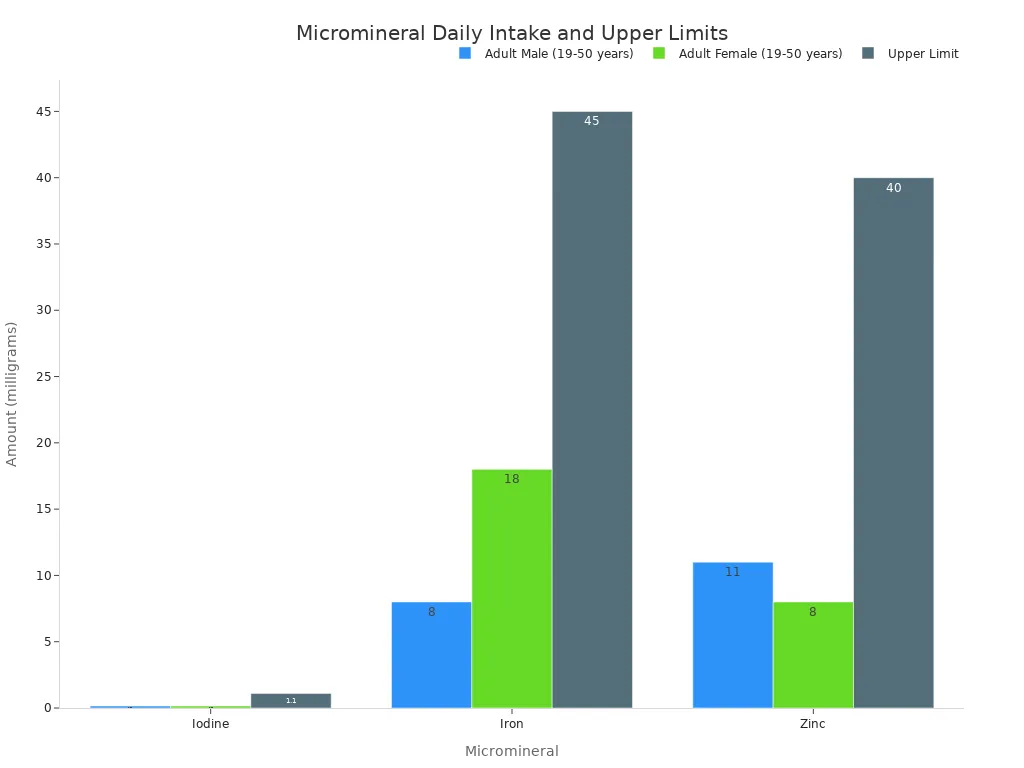
Microminerals, also known as trace minerals, are needed in very small quantities. A deficiency in these minerals can still cause serious health problems. For example, a lack of iron can lead to fatigue, weakness, and difficulty concentrating. Important microminerals include iron, zinc, and iodine. You can find them in foods like lean meats, seafood, leafy greens, and whole grains.
How to Get Your Vitamins and Minerals

The best way to get the vitamins and minerals your body needs is through a healthy diet. Food provides a complex mix of nutrients that work together. Following dietary guidelines to eat more whole foods is a great strategy.
Building a Nutrient-Rich Diet
Building a diet rich in essential nutrients starts with your plate. Focus on adding a variety of colorful foods to your meals. Many foods are excellent sources of both vitamins and minerals.
- Dark Leafy Greens: Spinach and kale are packed with vitamins A, C, and K. They also provide minerals like calcium and iron.
- Nuts and Seeds: These are powerhouses of minerals like magnesium and zinc. They also contain important B vitamins and vitamin E.
- Fish: Fatty fish like salmon offers vitamin D and key minerals like selenium and potassium.
Smart Pairing Tip 💡 You can help your body absorb more nutrients by pairing certain foods. For example, eating iron-rich spinach with vitamin C from strawberries helps your body absorb the iron. Similarly, adding olive oil to tomatoes helps you absorb more of the antioxidant lycopene.
Making smart food choices is the foundation for avoiding vitamin and mineral deficiencies.
Do You Need a Supplement?
While food is the best source, some people may need supplements. Certain groups are more at risk for vitamin and mineral deficiencies. These include older adults and pregnant women. A supplement can help fill nutritional gaps.
However, more is not always better. Taking too many vitamins or minerals can be harmful. Unnecessary supplements can cause digestive issues or even lead to vitamin toxicity. High doses of certain vitamins can also interfere with prescription medications. For example, Vitamin K can reduce the effectiveness of blood thinners.
If you think you need a supplement, talk to a doctor first. They can help you determine if you have any vitamin and mineral deficiencies. If you do buy supplements, look for a third-party seal from organizations like USP or NSF. This seal shows the product was tested for purity and quality.
The key difference between vitamins and minerals is simple: vitamins are organic and minerals are inorganic. Both types of nutrients are vital for your health. They help convert food into energy and build strong bones. A balanced, colorful diet is your best strategy for getting the vitamins and minerals your body needs.
Important Final Step 👨⚕️ Always talk with your doctor before taking any supplements. A healthcare provider can help you understand the benefits and risks to ensure your safety.
FAQ
Can I get all my nutrients from food?
Yes, a balanced diet is the best way to get your nutrients. Eating a variety of colorful fruits, vegetables, and whole foods usually provides everything your body needs. Food offers a complex mix of nutrients that work together for your health.
What’s the best time to take vitamins?
It depends on the type of vitamin.
- Fat-soluble vitamins (A, D, E, K): Take these with a meal that contains some fat to help absorption.
- Water-soluble vitamins (B, C): You can take these on an empty stomach with water.
Do vitamins give you energy? ⚡
No, vitamins do not contain calories, so they do not provide energy directly. However, B vitamins play a key role. They help your body convert the food you eat into usable energy. A deficiency can make you feel tired.
How do I know if I have a deficiency?
Only a doctor can diagnose a nutrient deficiency. Common signs like fatigue can have many causes. Your doctor can order blood tests to check your vitamin and mineral levels and recommend the right course of action for you.
See Also
Magnesium Supplements: A Confident Start for Your Wellness Journey
Unlocking 5-MTHF Benefits: Your Science-Backed Advantage for Modern Wellness
Top Vegan Multivitamins 2024: Discovering Brands That Truly Deliver Results
Opti-Folate L-Methylfolate 2024 Review: Science-Backed Folate for Optimal Wellness
Taking Methylfolate (5-MTHF): Your Science-Backed Guide for Safe, Effective Supplementation