

You may feel overwhelmed by daily stress. You are not alone; research shows about a third of adults feel this way. The good news is that powerful stress reduction is achievable in a short time.
A review of studies confirms that just 10-20 minutes of exposure to nature significantly lowers key stress markers.
This guide provides a science-backed plan for your well-being. You will learn the exact dose of nature exposure needed to feel calmer and more focused in your busy life.
The ‘Nature Dose’ to Reduce Stress
Think of nature like a prescription. Science helps us understand the right “dose” to improve your mental well-being. You can find the perfect amount of nature time to fit your schedule and reduce stress effectively.
The 10-20 Minute Rule
You can feel better with a very small commitment. The minimum effective dose of nature exposure is just 10-20 minutes. This short period is enough to start lowering your body’s stress markers. A University of Michigan study provided clear evidence for this.
Researchers found that spending 20 to 30 minutes sitting or walking outdoors gave the biggest drop in the stress hormone cortisol. This simple action can have a powerful impact on your daily stress.
The 120-Minute Weekly Goal
For long-term benefits, you should aim for a weekly goal. A major 2019 study found that people who spent at least 120 minutes in nature each week reported much better health and well-being. This two-hour goal was effective for everyone. It worked for older adults, city residents, and people with long-term health issues. You can achieve this goal in one long trip or several shorter visits. Consistent time in nature is key for your mental health.
The 50-Minute Sweet Spot
Longer is not always better. Research from Cornell University shows that the most efficient benefits for your mood and focus happen within a specific window. You get the best results from a single exposure lasting between 10 and 50 minutes. This is great news. It means a quick walk in a park can significantly boost your focus without a huge time commitment.
Benefits of Nature Exposure

Understanding the “nature dose” is the first step. Now, you can explore the powerful benefits this simple habit brings to your mind and body. Time in nature creates real, measurable changes that help you feel better.
Lower Stress Hormones
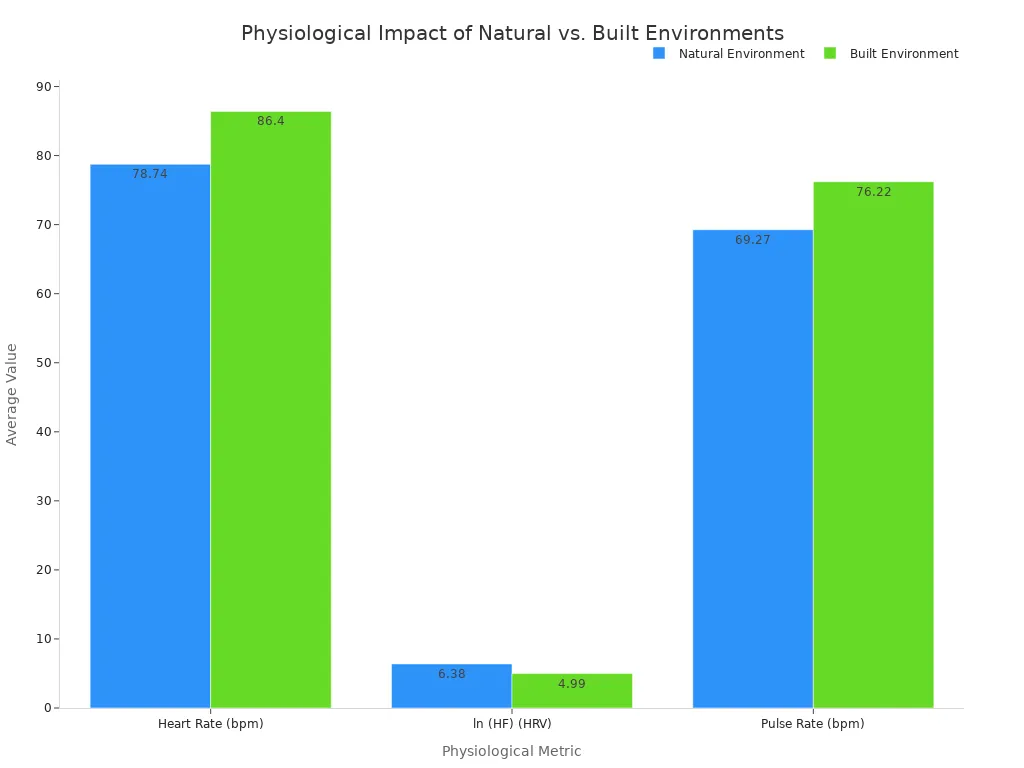
Nature exposure directly calms your body’s “fight or flight” response. It activates your parasympathetic nervous system, also known as the ‘rest and digest’ system. This shift signals safety to your brain and helps you recover from chronic stress. As a result, your body produces less of the stress hormone cortisol. This helps lower stress levels. Studies show your heart also benefits.
| Metric | Natural Environment (Average) | Built Environment (Average) |
|---|---|---|
| Heart Rate (bpm) | 78.74 | 86.40 |
| Heart Rate Variability | Higher (More relaxed) | Lower (More stressed) |
Your heart rate slows, and its rhythm becomes more variable, which are signs of a relaxed state.
Improve Mood and Focus
Feeling happier and more focused is another key benefit. Nature helps your brain produce more dopamine and serotonin. These chemicals contribute to feelings of happiness and well-being. Your ability to concentrate also improves thanks to something called Attention Restoration Theory.
Tip: Urban life constantly demands your direct focus, which can be draining. Natural elements like rustling leaves or moving clouds capture your attention effortlessly. This “soft fascination” gives your brain a much-needed break, restoring your mental energy.
Reduce Anxiety and Rumination
Consistent exposure to nature can rewire how your brain handles negative emotions. A walk in a natural setting helps reduce anxiety by calming activity in the amygdala, your brain’s fear center. This simple exposure also helps stop rumination, which is the pattern of getting stuck on negative thoughts. Research shows a 90-minute nature walk decreases activity in the part of the brain linked to this pattern. This proves that nature exposure is a powerful tool to protect your mental health from the effects of daily stress.
Practical Ways for Spending Time in Nature
Knowing the benefits of nature is the first step. Now you can learn how to fit this powerful habit into your busy schedule. These practical tips help you get your daily dose of nature, no matter where you live or work. Making a small change can help you de-stress and feel better.
Take a Quick Nature Break
You do not need a long trip to feel calmer. A short nature break can make a big difference, especially during a busy workday. Office workers find that even small moments of interacting with nature boost their mental well-being. You can try these simple micro-breaks at your desk or a nearby window.
- Watch the clouds move across the sky.
- Step outside and identify three different natural sounds. 🐦
- Water a desk plant and gently clean its leaves.
- Take a picture of a flower or interesting tree on your phone.
You can make these short breaks even more powerful with simple awareness exercises. This practice is called mindfulness in nature. It helps you focus on the present moment and quiet your mind.
Try This Mindfulness Exercise: Find a quiet spot and sit comfortably. Close your eyes and take a few deep breaths. For three minutes, just listen. Notice the sound of the wind, birds, or rustling leaves. This active listening calms your nervous system.
How to Spend Time in Nature Daily
Building a consistent habit is key to long-term stress reduction. You can make spending time in nature a regular part of your day using a method called “habit stacking.” This means you pair a new nature habit with something you already do. This makes the new habit feel almost automatic. For example, you can get your morning sunlight exposure while doing other activities.
- Eat your breakfast on a porch or by a sunny window.
- Write in your journal while sitting outside.
- Plan your day on a bench in a park.
You can also bring the outdoors inside. Creating a “nature corner” in your home or apartment is a great form of nature therapy. This gives you a dedicated green space for relaxation.
- Use a multi-tier plant stand: This lets you display several plants of different sizes without taking up much floor space.
- Start an indoor herb garden: Grow functional plants like basil or mint in your kitchen for fresh smells and flavors. 🌿
- Add a tall statement plant: A single large plant, like a Fiddle-leaf fig, can transform a corner and add a dramatic touch of green.
This consistent nature exposure helps you build a strong connection with nature.
Find Nature in the City
You can experience nature even in a busy city. You just need to know where to look. Many cities have hidden parks, community gardens, and other green spaces waiting for you to discover them. Technology can help you find these spots. Apps like Parkscape or the official NPS app use your phone’s GPS to show you nearby parks and trails.
Your nature experience does not have to be in a wild forest. Urban greening projects bring nature into city centers.
- Community Gardens: Places like the Q Gardens in Brooklyn are local hubs where people gather, grow food, and socialize. They turn unused lots into vibrant community areas.
- Vertical Forests: Cities are getting creative with architecture. The Vertical Forest (Bosco Verticale) in Milan features skyscrapers covered in thousands of trees and shrubs, creating a new ecosystem for birds and insects.
Seeking out these areas for a walk or quiet moment is a great way to practice immersion. This type of urban forest bathing can significantly lower your stress. You can find a way to spend time in nature almost anywhere.
You now have a powerful tool to manage daily stress. A consistent, small dose of nature is all you need. You do not need grand expeditions. A local park, a tree-lined street, or even a view from a window can lower anxiety and boost your mood. As one writer reminds us:
- “Nature is not a place to visit. It is home.” — Gary Snyder
Your Challenge: Pick one simple activity from this guide. Schedule it in your calendar for this week. Take the first step toward a calmer you. 🗓️
FAQ
What if I cannot go outside?
Yes, a nature view helps. You can lower stress by looking out a window. A view of a tree or the sky improves your focus. This simple act provides real benefits for your well-being.
Do I have to exercise, or can I just sit?
You can just sit still. Research shows sitting quietly in nature is very effective. It lowers your stress hormones just like walking does. The main goal is to be present in a natural space. 🧘
What should I do if the weather is bad?
You have great indoor options. Listen to recorded nature sounds like rain or birds. You can also look at nature photos. Spending time near your houseplants is another effective way to connect with nature.
Is a city park as good as a wild forest?
Yes, a city park is very effective. It provides major stress reduction benefits. Your brain and body respond positively to any green space. You should use the parks and natural areas that are most convenient for you.
See Also
Unlocking Modern Wellness: Science-Backed Benefits of 5-MTHF Supplementation
Methylfolate (5-MTHF): Your Science-Backed Guide to Safe and Effective Dosing
Sleep Better: A Beginner’s Guide to Science-Backed Magnesium Malate
Protein and ADHD: A Scientific Guide for Health-Conscious Families
Methyl Folate: Your Step-by-Step Guide to Optimal Selection and Timing