

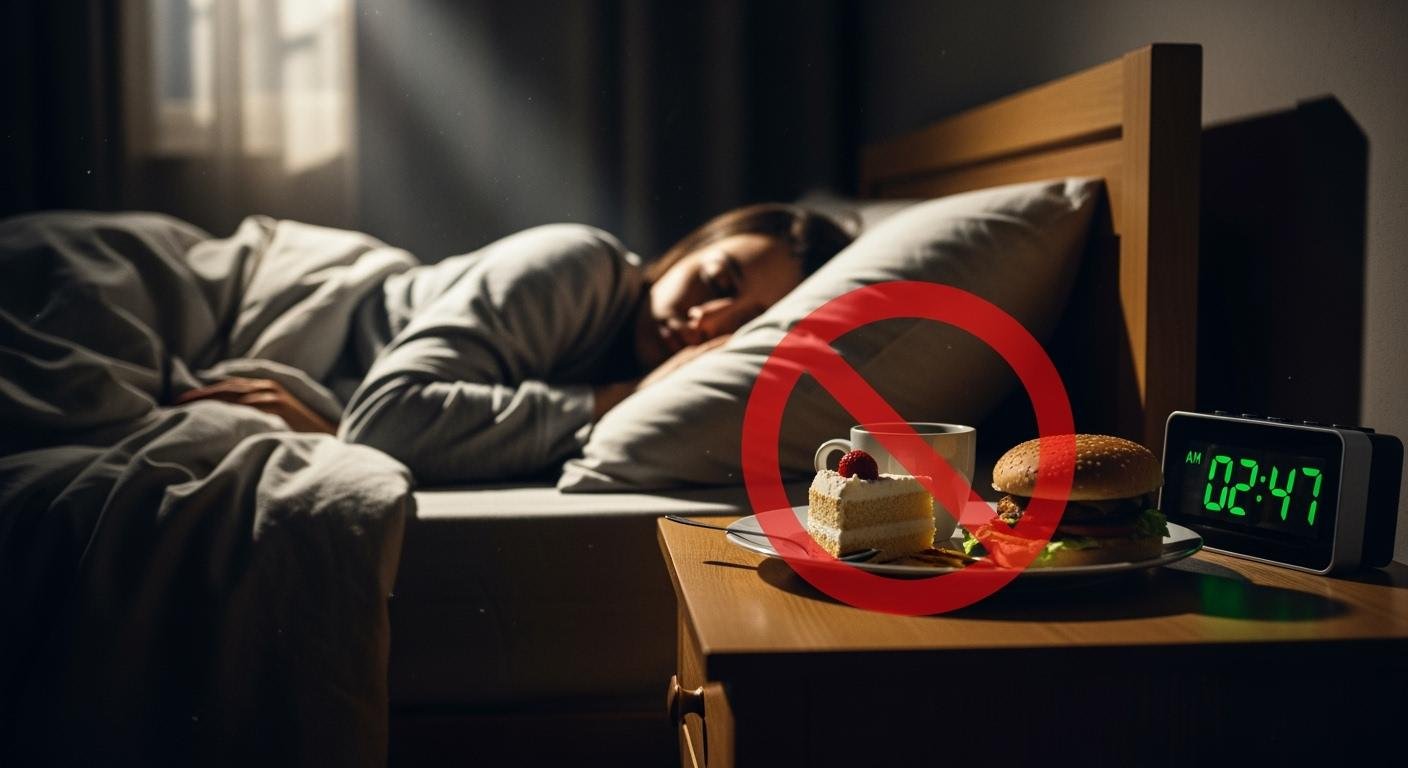
The number one enemy of your sleep is caffeine. This stimulant blocks sleep-promoting chemicals in your brain. This action makes falling asleep much harder.
Sleep Tip: Most people already avoid caffeine late. Evening intake is only about 10–20% of their daily total.
However, caffeine is not the only problem for your nightly rest. Other common foods can also sabotage your journey to better sleep. We will explore what to avoid and what you should eat to promote peaceful sleep.
Foods That Disrupt Your Sleep

Certain foods and drinks can seriously damage your chances of getting a good night’s rest. Understanding how food affects sleep is the first step toward making smarter evening choices. You can improve your sleep quality by avoiding these common culprits before bed.
Caffeine
Caffeine is the most well-known sleep disruptor. It works by blocking adenosine, a chemical your brain produces that makes you feel sleepy. Caffeine molecules fit perfectly into your brain’s adenosine receptors. This action prevents adenosine from doing its job, keeping you alert and awake. Research shows caffeine primarily targets the A2A adenosine receptors to promote wakefulness.
Did You Know? Caffeine has a long half-life of about 4 to 6 hours. This means if you drink a cup of coffee at 4 PM, half of that caffeine could still be active in your system at 10 PM. This makes it much harder to fall asleep faster.
Many people only think of coffee, but caffeine hides in many other places. Be mindful of these sources:
- Coffee and most teas (black, green, chai)
- Sodas and energy drinks
- Chocolate, especially dark chocolate
- Some supplements and snack bars
- Herbal products like yerba mate and guarana
Alcohol
A glass of wine might make you feel drowsy, but it ultimately sabotages your sleep. Alcohol may help with sleep onset initially. However, as your body metabolizes it, your sleep becomes fragmented. Even low doses of alcohol reduce the amount of REM sleep you get. This is the restorative stage of sleep important for memory and learning. These disruptions prevent you from getting deep, continuous rest, making it harder to stay asleep better.
Heavy, Fatty, and Fried Foods
Your digestive system slows down during sleep. Eating a heavy, fatty, or fried meal before bed creates a problem. Your body must choose between digesting food and resting. This conflict often leads to discomfort and interrupted sleep. These foods can also trigger heartburn and acid reflux. Fatty foods stay in your stomach longer. This increases the chance that stomach acid will leak back into your esophagus, causing a painful burning sensation when you lie down. Avoiding large meals 2 to 3 hours before bed gives your stomach time to empty.
Spicy Foods
Spicy foods can interfere with your sleep in two main ways. First, they often cause indigestion and heartburn, which can feel much worse when you are lying flat. Second, the active compound in chili peppers, capsaicin, can raise your body temperature. Your body temperature naturally needs to drop to initiate sleep. Eating spicy foods can disrupt this process, making it harder for you to drift off. Studies on young men showed that spicy meals disrupted their sleep, reduced deep sleep, and increased the time they spent awake during the night.
High-Sugar Snacks
That late-night bowl of ice cream or handful of cookies can ruin your sleep. Sugary foods cause a rapid spike in your blood sugar. Your body responds by releasing insulin to manage the sugar. This leads to a quick drop in blood sugar levels, often called a “crash.” This crash can trigger the release of stress hormones like adrenaline and cortisol. These hormones put your body on high alert, causing you to wake up in the middle of the night. Diets high in sugar are linked to more arousals and a lower quality of deep sleep, preventing you from achieving better sleep.
Foods That Help You Sleep

Avoiding disruptive foods is only half the battle. You can actively improve your rest by choosing foods that help you sleep. These options contain key sleep-promoting nutrients that signal to your body it is time to wind down. Adding these sleep-promoting foods to your evening routine can be a simple, natural way to achieve a more restful night.
Tart Cherries and Juice
Tart cherries are one of the best melatonin-rich foods you can find. Your body naturally produces melatonin to regulate your sleep-wake cycle. Data shows that consuming tart cherry juice concentrate increases your melatonin levels. This can improve both sleep duration and quality.
One study involving adults with insomnia found that drinking tart cherry juice twice a day for two weeks increased their sleep time by an impressive 84 minutes.
Montmorency cherries, a specific type of tart cherry, contain some of the highest melatonin levels among fruits. They also provide tryptophan, an amino acid your body uses to create more melatonin and serotonin. For a simple sleep aid, you can try one of the following options:
- Drink 8 to 16 ounces of tart cherry juice daily, split between morning and evening.
- Take 1 ounce of tart cherry concentrate about an hour before bed. You can drink it straight or mix it with water.
Nuts (Almonds, Walnuts, Pistachios)
A small handful of nuts can be a great bedtime snack for sleep support. Certain nuts are packed with sleep-friendly nutrients. Almonds, walnuts, and pistachios are excellent choices.
| Nut | Key Compound | How It Helps Your Sleep |
|---|---|---|
| Almonds | Magnesium | Promotes muscle relaxation and helps your body produce melatonin. |
| Walnuts | Melatonin & Magnesium | Directly influences your sleep cycle and helps calm the body. |
| Pistachios | Melatonin & Tryptophan | Contains very high levels of melatonin and an amino acid that aids relaxation. |
American-grown pistachios have an especially high melatonin content, with about 660 nanograms per gram. These nuts offer a powerful combination of compounds to help you get high-quality sleep.
Turkey and Eggs
You have probably heard that turkey makes you sleepy after Thanksgiving dinner. This is because it contains tryptophan, an essential amino acid. Your body uses tryptophan to produce serotonin, a chemical that helps regulate sleep. Serotonin is then converted into melatonin, the hormone that promotes sleepiness. Eggs are another excellent source of tryptophan.
According to the National Sleep Foundation, “Carbohydrates make tryptophan more available to the brain…the best bedtime snack is one that contains both a carbohydrate and protein.”
For tryptophan to work effectively, it needs to cross into your brain. Pairing these foods with a complex carbohydrate helps. The carbs trigger insulin, which clears other amino acids from your bloodstream. This process allows more tryptophan to enter your brain, boosting the production of serotonin and melatonin. Consider a small snack like a hard-boiled egg with a whole-wheat cracker for better sleep.
Kiwi and Bananas
Certain fruits can also be a good food for sleep. The kiwi is a surprising superstar when it comes to improving your rest. A study from Taiwan’s Taipei Medical University found that adults with sleep problems who ate two kiwi fruits one hour before bed for four weeks saw amazing results.
- They were able to fall asleep faster.
- Their total sleep time increased by over 13%.
- Their overall sleep quality improved significantly.
Researchers believe the benefits of kiwi come from its serotonin content. Serotonin is a brain chemical that helps regulate your sleep cycle. The anti-inflammatory antioxidants in kiwi, like vitamin C, may also contribute to better rest. Bananas are another helpful fruit, as they contain magnesium to promote relaxation.
Chamomile Tea
A warm cup of chamomile tea is a classic natural remedy for a good night’s sleep. This herbal tea contains an antioxidant called apigenin. Apigenin works by binding to specific receptors in your brain. This action enhances the effect of GABA, a neurotransmitter that quiets brain activity and creates a calming effect.
Studies confirm the benefits of chamomile for sleep. One clinical trial found that elderly individuals who took chamomile extract capsules for 28 days had significantly better sleep quality than a control group. While it may not increase your total sleep time, chamomile can reduce the number of times you wake up during the night. This gentle tea is an excellent way to promote relaxation before bed.
Building a Meal Plan for Better Sleep
Knowing what to eat is a great start. Now you can build a plan that makes good sleep a regular part of your life. You can create a calming bedtime routine by choosing the right foods at the right time. This simple change can greatly improve your sleep.
Simple Sleep-Promoting Foods and Snacks
You should choose light and easily digestible foods for your evening snack. Heavy meals can disrupt your sleep, but a small, smart snack can help it. These options combine protein and complex carbs to support your body’s production of sleep hormones.
Snack Ideas for Better Sleep 😴
- Tart Cherry and Pistachio Yogurt Parfait: Layer Greek yogurt with tart cherries and pistachios. This snack gives you a dose of melatonin and magnesium.
- Deli Turkey Wrap: Use a whole-grain tortilla with a few slices of low-sodium turkey and some baby greens. This pairs tryptophan with a complex carb.
- Almond and Walnut Protein Bar: Blend almonds, walnuts, and dates. Press the mixture into a pan and refrigerate. This creates a simple, no-bake bar full of sleep-promoting foods.
These simple snacks give your body the nutrients it needs to wind down without making your digestive system work overtime.
The Best Time to Eat Before Bed
When you eat is just as important as what you eat. Your body has many internal clocks. Your brain’s main clock follows light, but the clocks in your gut follow food. Eating late can confuse these clocks. This confusion can disrupt your metabolism and harm your sleep quality.
You should generally stop eating your last large meal 2 to 3 hours before you go to bed. This gives your body enough time to digest. It also reduces the risk of heartburn when you lie down. Different types of foods and drinks need different amounts of time.
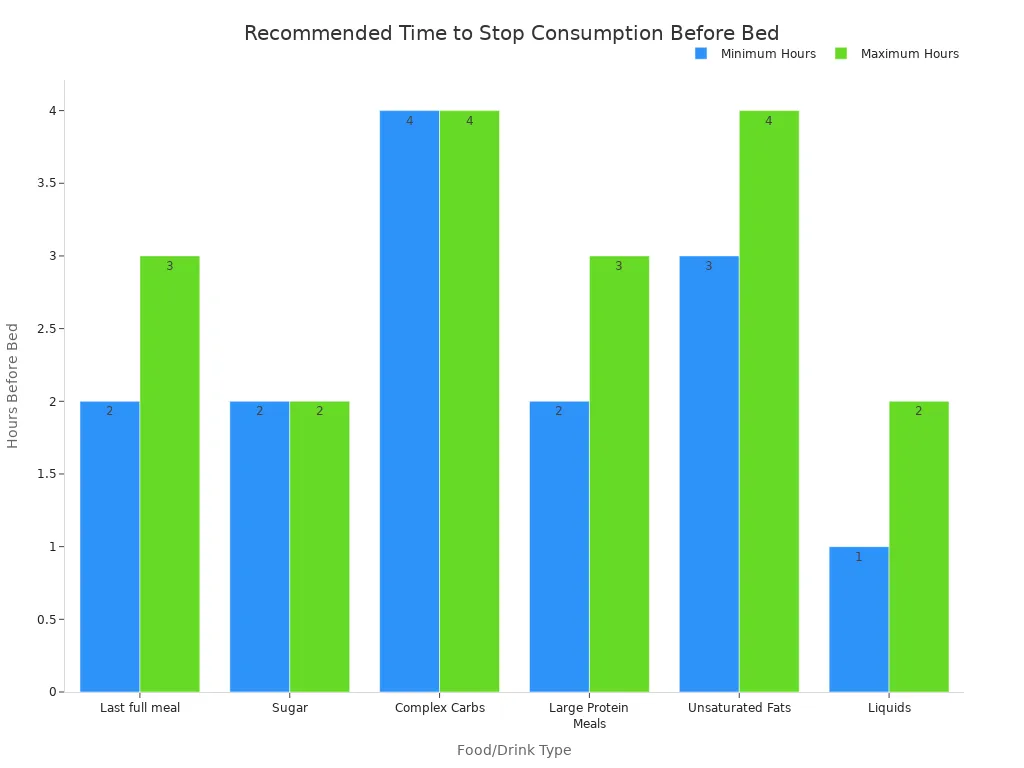
Following these time windows helps keep your body’s clocks in sync. This supports better digestion and a more restful night of sleep.
You can achieve better sleep by making smart food choices. Avoid caffeine and heavy, spicy, or sugary foods before bed. These items can disrupt your sleep quality. Instead, choose simple sleep-promoting foods. A handful of almonds or a warm cup of chamomile tea can promote relaxation. These small changes help you get a restful night.
Your journey to better sleep can start tonight. Try one of these simple food swaps and feel the difference for yourself.
FAQ
How long before bed should I stop eating for better sleep?
You should eat your last large meal 2 to 3 hours before bed. This gives your body time to digest. A full stomach can disrupt your sleep. A proper eating schedule supports quality sleep.
Is dark chocolate really bad for my sleep?
Yes, dark chocolate can harm your sleep. It contains caffeine and theobromine, which are both stimulants. These compounds can keep you awake. You should avoid it close to bedtime for better sleep.
Can a glass of warm milk help me sleep?
Warm milk can promote good sleep. It contains tryptophan, which helps your body make sleep-inducing hormones. The warm temperature also has a soothing effect. This simple routine can improve your sleep.
What if I get hungry right before bed?
You can have a small, smart snack. Choose something light, like a handful of almonds or a banana. These foods contain nutrients that support sleep. Avoid heavy or sugary options that disrupt sleep.
See Also
Unlock Restful Nights: A Novice’s Guide to Magnesium Malate
Sleep Better: Magnesium Malate Explained for New Users
Dietary Strategies: Managing Tinnitus Symptoms Through Smart Nutrition Choices
Starting Magnesium Supplements: A Confident Guide for Newcomers
Methyl Folate: Choosing and Timing Your Supplement for Optimal Benefits