

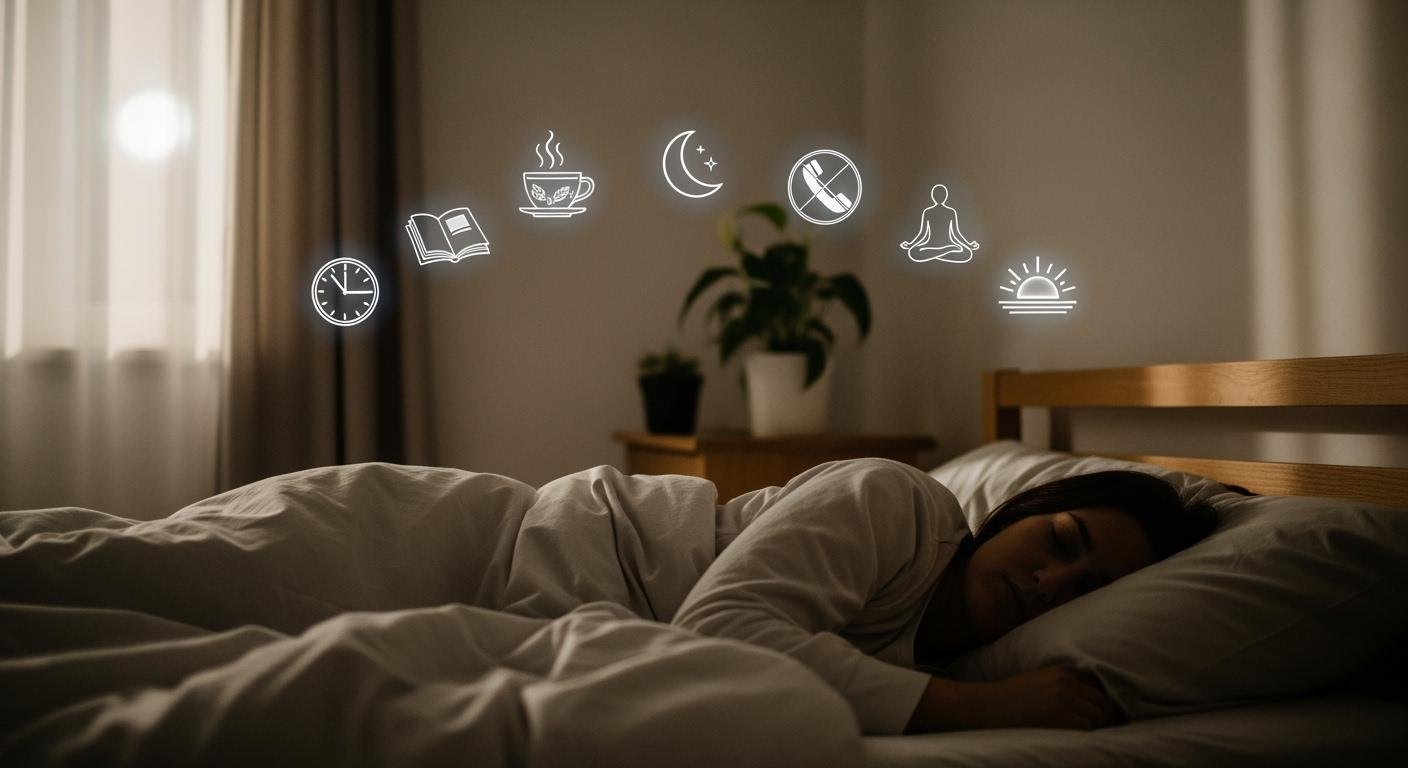
Feeling tired even after a full night of sleep? The problem might be your sleep schedule. You are not alone; nearly half of adults have an inconsistent regular sleep schedule. Your body runs on an internal clock called the circadian rhythm. A consistent sleep schedule is the most powerful way to regulate this clock. Ignoring your circadian rhythm leads to poor sleep quality and unhealthy habits.
An irregular sleep routine can lower your quality of sleep and increase health risks. You can build a healthy sleep routine. These recommendations will help you prioritize your sleep for better quality sleep.
Step 1: Set a Fixed Wake-Up Time
If you only make one change to your sleep routine, make it this one. A fixed wake-up time is the single most powerful anchor for your body’s internal clock. It sets the rhythm for your entire day.
Prioritize a Consistent Wake-Up
Your brain’s main clock, the suprachiasmatic nucleus (SCN), relies on consistent signals to keep your body on track. Waking up at the same time every morning is the strongest signal you can send. This simple action helps regulate your circadian rhythm. A well-regulated clock leads to major benefits.
- You will experience more consistent energy levels.
- Your body’s hunger and alertness cues will become more synchronized.
- You will notice improved mood stability.
- Your body will produce melatonin more reliably at night, helping your sleep.
Anchor Your Regular Sleep Schedule
To establish a new wake-up time, you should avoid drastic changes. A sudden shift can leave you feeling groggy. Instead, adjust your sleep schedule gradually. Start by setting your alarm 15-20 minutes earlier than usual. Stick with this new time for a few days. Once you feel comfortable, shift it another 15-20 minutes earlier. Repeat this process until you reach your goal wake-up time. This method helps your body adapt without causing sleep loss.
Stick to It, Even on Weekends
It is tempting to sleep in on Saturdays and Sundays. However, this creates a “social jetlag” that confuses your body. An inconsistent sleep routine disrupts your circadian rhythm and harms your quality of sleep. When you try to return to your weekday schedule, you may feel the negative effects.
Changing your wake and sleep times on the weekend makes it harder to get back on track for the week. This inconsistency is linked to lower mood, increased anxiety, and reduced alertness when Monday morning arrives.
Maintaining a consistent sleep schedule is the foundation of a healthy regular sleep schedule. Aim to wake up within the same one-hour window every single day, including weekends.
Step 2: Set a Sleep Schedule by Calculating Bedtime
Once you have a fixed wake-up time, you can determine your ideal bedtime. This step helps you set a sleep schedule that aligns with your body’s natural needs. A consistent bedtime is just as important as a consistent wake-up time for a healthy sleep routine.
Determine Your Personal Sleep Needs
Most adults need between seven and nine hours of sleep per night to function at their best. However, your exact need is personal. Pay attention to how you feel on different amounts of sleep. Do you feel energized after seven hours, or do you need closer to nine to feel fully rested? Finding your unique sleep requirement is key to building an effective sleep schedule.
Work Backward From Your Wake-Up Time
You can now calculate your target bedtime. Take your fixed wake-up time from Step 1. Subtract the number of hours you need to sleep. For example, if your wake-up time is 6:30 AM and you need eight hours of sleep, your target bedtime is 10:30 PM. This simple calculation gives you a clear goal for your evening sleep routine.
Allow for at Least Seven Hours of Sleep
Prioritizing at least seven hours of sleep is crucial for your health. The Centers for Disease Control and Prevention (CDC) warns that sleeping less than seven hours daily increases your risk for chronic health conditions. A poor regular sleep schedule can lead to serious problems.
- Heart Health: You may develop high blood pressure or unhealthy cholesterol levels.
- Metabolic Issues: Your risk for Type 2 diabetes increases.
- Mental Health: You might experience more symptoms of depression and anxiety.
- Brain Function: It can negatively affect memory and learning.
Consistently missing out on adequate rest harms nearly every system in your body. Making sufficient sleep a non-negotiable part of your life is one of the best things you can do for your long-term well-being.
Step 3: Create a Relaxing Bedtime Routine

Your brain needs clear signals that the day is ending. A relaxing bedtime routine tells your body it is time to wind down and prepare for sleep. This set of habits is a powerful cue that helps you transition from a busy day to a restful night.
The “No Screens” One-Hour Rule
You need to power down your devices at least one hour before bed. Phones, tablets, and computers emit blue light. This specific type of light is very effective at suppressing melatonin, the hormone that regulates your sleep-wake cycle. Even dim light from a screen can cause problems falling asleep.
According to Joanna Cooper, M.D., a neurologist and sleep medicine specialist, “Device screens produce blue light, which is the most active part of the light spectrum in our sleep cycle. This stimulation suppresses melatonin production, making it difficult to fall asleep.”
Research shows that blue light can shift your internal clock twice as much as other light colors. This disruption is a major cause of difficulty falling asleep.
Explore Calming Wind-Down Activities
You can replace screen time with calming practices that promote rest. Your new bedtime routine should include activities that relax your mind and body. These new habits will improve your sleep routine. Consider adding one or two of these to your evening:
- Read a physical book: Avoid the blue light from an e-reader screen.
- Take a warm bath: A bath taken 1-2 hours before bed helps lower your core body temperature. This drop signals to your body that it is time for sleep.
- Gentle stretching or yoga: Poses like the seated forward bend or legs-up-the-wall can release muscle tension.
- Journaling: Writing down your thoughts can help clear your mind.
Use a Bedtime Reminder Alarm
A consistent sleep routine needs a starting signal. You can set a gentle alarm on your phone for 30-60 minutes before your target bedtime. This alarm is not for waking up; it is your cue to begin your relaxing bedtime routine. This simple trigger helps you build a strong, healthy sleep routine. It ensures you give yourself enough time to unwind and prepare for a good night’s sleep.
Step 4: Optimize Your Sleep Environment

Your bedroom environment sends powerful signals to your brain. A space designed for rest makes it easier to fall asleep and stay asleep. Good sleep hygiene includes creating a sanctuary that promotes relaxation.
Keep It Cool, Dark, and Quiet
You can control three key factors for better sleep: temperature, light, and sound. Your body rests best in a cool room. Most sleep experts agree the ideal temperature for quality sleep is between 60 and 67 degrees Fahrenheit (15.5–19.5 degrees Celsius). This range helps your body lower its core temperature, a natural step in preparing for sleep.
Darkness is equally important. Even small amounts of light can disrupt your internal clock.
- Use blackout curtains to block streetlights.
- Cover or remove electronics that emit light.
A quiet room is essential for a sound sleep. You can reduce noise by adding thick rugs or door sweeps to block sound from seeping in. If outside noise is a problem, a white noise machine can help mask disruptions.
Design Your Room for a Good Night’s Sleep
You can design your room to be a calm and peaceful space. These simple design practices can significantly improve your sleep quality. Start by removing clutter. A tidy room helps create a calm mind and reduces stress. Choose a soft, muted color palette for your walls, like light blues, grays, or creamy whites. These colors promote a feeling of tranquility. You can also improve air quality by adding air-purifying plants like snake plants or spider plants. A few drops of lavender essential oil in a diffuser can also help signal to your body that it is time to wind down.
Tip: Arrange your furniture to create a feeling of safety. Place your bed so you can see the door without your feet pointing directly at it. This layout can make the room feel more secure and relaxing.
Reserve the Bedroom for Sleep Only
You need to teach your brain that your bed is for sleeping. When you work, watch TV, or scroll on your phone in bed, your brain associates the space with alertness. This can make it difficult to switch off at night. Make a rule to keep screens and work materials out of the bedroom entirely. This single change reinforces the connection between your bedroom and rest. Reserving your bedroom for sleep and intimacy is a cornerstone of a healthy sleep routine. It strengthens your entire sleep routine and helps you get a good night’s sleep.
Step 5: Watch What You Eat and Drink
What you consume in the evening directly impacts your sleep quality. Your eating and drinking habits can either support or sabotage your sleep routine. Simple adjustments to your diet can make a significant difference in how well you rest.
Avoid Evening Caffeine and Alcohol
You should avoid caffeine and alcohol before bed. Caffeine is a stimulant with a long-lasting effect. Its half-life, the time your body takes to clear half of it, is four to six hours. Consuming caffeine even six hours before bed can disrupt your sleep.
Alcohol may make you feel sleepy at first, but it harms your sleep later in the night. It can cause several problems:
- It relaxes throat muscles, which can worsen snoring and sleep apnea.
- It disrupts your natural sleep stages, reducing restorative REM sleep.
- It can lead to more frequent awakenings and vivid nightmares.
Time Your Meals and Late-Night Snacks
Your body needs time to digest food. You should eat your last large meal about three to four hours before your bedtime. This timing helps prevent issues like indigestion or acid reflux that can keep you awake. If you feel hungry before bed, choose a light, healthy snack. Good practices include eating a banana with almond butter or a few whole-grain crackers with cheese. These snacks provide nutrients that support sleep without overloading your digestive system.
A heavy meal close to bedtime forces your digestive system to work hard. This activity can raise your body temperature and interfere with your ability to fall asleep.
Hydrate Smartly to Avoid Wake-Ups
Staying hydrated is important, but timing is key. You should stop drinking large amounts of fluids one to two hours before you go to bed. This simple change reduces the chances that you will wake up to use the bathroom. These small adjustments create a healthy sleep routine. They are powerful habits that support uninterrupted rest and a consistent sleep schedule.
Step 6: Leverage Light and Daily Activity
Your daily habits send strong signals to your body’s internal clock. You can use light and physical activity to reinforce your sleep-wake cycle. These powerful tools help regulate your energy during the day and prepare you for rest at night.
Get Morning Sunlight Exposure
You should expose yourself to natural sunlight shortly after waking up. Light is a critical signal for your body. Morning sunlight tells your brain to stop producing melatonin, the sleep hormone. It also triggers the release of cortisol, a hormone that helps you feel alert. This simple action helps set your body’s internal timer for the entire day.
“Light is the single most important element for setting our circadian clock, or internal 24-hour rhythm, and morning light is key,” says Nathaniel Watson, MD, a sleep specialist.
Getting sunlight in the morning helps your body start a countdown. About 14 hours later, your brain will begin producing melatonin again, preparing you for sleep. This makes it easier to fall asleep at your target bedtime.
Engage in Daily Physical Activity
You can improve your sleep with regular exercise. Consistent physical activity helps you fall asleep faster and increases your overall sleep quality. You do not need to perform intense workouts to see benefits. Moderate activities like brisk walking, cycling, or swimming are very effective. Even increasing your daily steps can reduce stress and improve your sleep. This is a key part of a healthy sleep routine.
Avoid Intense Exercise Before Bed
You should avoid strenuous exercise within two hours of your bedtime. Intense workouts activate your body. They raise your heart rate and core body temperature. This puts your body in a “revved up” state, making it difficult to wind down. One study found that high-intensity exercise one hour before bed delayed sleep by an average of 14 minutes. These habits are important for a consistent sleep routine. Gentle activities like stretching are a much better choice for the evening.
Step 7: Maintain Your Consistent Sleep Schedule
Building a new sleep schedule takes effort. Maintaining it is the final step toward long-term success. You will have good nights and bad nights. The key is to stay consistent with your new habits and not let one poor night derail your progress.
How to Handle a Bad Night
Everyone experiences a bad night of sleep occasionally. You should not panic or overcorrect. Instead, follow a simple plan to get back on track.
- Stick to your wake-up time. Do not sleep in, even if you feel tired. This helps reset your body clock.
- Get morning sunlight. Light exposure tells your brain the day has started.
- Be careful with naps. A short 20-minute power nap can help, but long naps can make it harder to sleep at night.
- Avoid extra caffeine. A morning coffee is fine, but do not rely on it all day.
These actions support your regular sleep schedule and help you recover quickly.
Track Progress Without Obsessing
You can track your sleep to see your progress. A simple sleep diary is a great tool. You can write down your bedtime and wake-up time each day. Wearable devices also track sleep automatically. This data helps you see patterns in your sleep routine. However, you should avoid obsessing over the numbers. The goal is to understand your patterns, not to achieve a perfect score. Tracking should help you build a better sleep routine, not cause anxiety.
Be Patient and Aim for Consistency
Your body needs time to adapt to a new consistent sleep schedule. This process can take days or even weeks. Be patient with yourself as you build these new habits.
“It can take days or weeks to adjust your sleep-wake cycle. Everyone adjusts at different rates, and it’ll depend on factors like how big of a change you’re trying to make,” says Dr. Chester Wu.
Focus on consistency over perfection. Sticking to your new sleep schedule most of the time is what matters. Small, steady efforts are what build a lasting, consistent sleep schedule that improves your overall health and energy.
You can build a better sleep routine. Follow these recommendations to reclaim your rest.
- Set a fixed wake-up time.
- Calculate your bedtime.
- Create a relaxing bedtime routine.
- Optimize your sleep environment.
- Watch what you eat and drink.
- Use light and daily activity.
- Maintain your sleep schedule.
Remember, consistency is more important than perfection. Small, steady efforts build lasting habits. A consistent sleep schedule improves your sleep quality and supports a healthy sleep routine. You will gain better focus, improved mood, and a stronger immune system. This path leads to better quality sleep and long-term health. Your new sleep schedule is a powerful tool for a better life.
FAQ
How long does it take to fix my sleep schedule?
Your body needs time to adjust. You may feel better in a few days. A full adjustment to a new sleep routine can take several weeks. Patience is important. Focus on being consistent with your new habits for the best results.
What if I work night shifts?
You can still build a consistent schedule. The same rules apply, just at different times. Set a fixed “wake-up” time, even if it is in the afternoon. These recommendations will help you create a healthy sleep routine that fits your work life.
Is it okay to take a nap? (sleeping face)
Yes, short naps can be helpful. You should keep naps to 20-30 minutes. Take them in the early afternoon. Long or late naps can make it harder for you to fall asleep at your target bedtime.
Why do I still feel tired after 8 hours?
Sleep quality is as important as sleep quantity. An inconsistent schedule disrupts your sleep cycles. You may not get enough deep, restorative sleep. This makes you feel tired even after a full night in bed.
See Also
Unlock Restful Nights: A Novice’s Guide to Magnesium Malate
Sleep Soundly: Magnesium Malate’s Science-Backed Benefits for Beginners
Methyl Folate: Your Guide to Optimal Choice and Timing
Magnesium for Newbies: A Clear Path to Supplement Confidence
Methylfolate Timing: Discover Your Ideal Supplement Schedule