

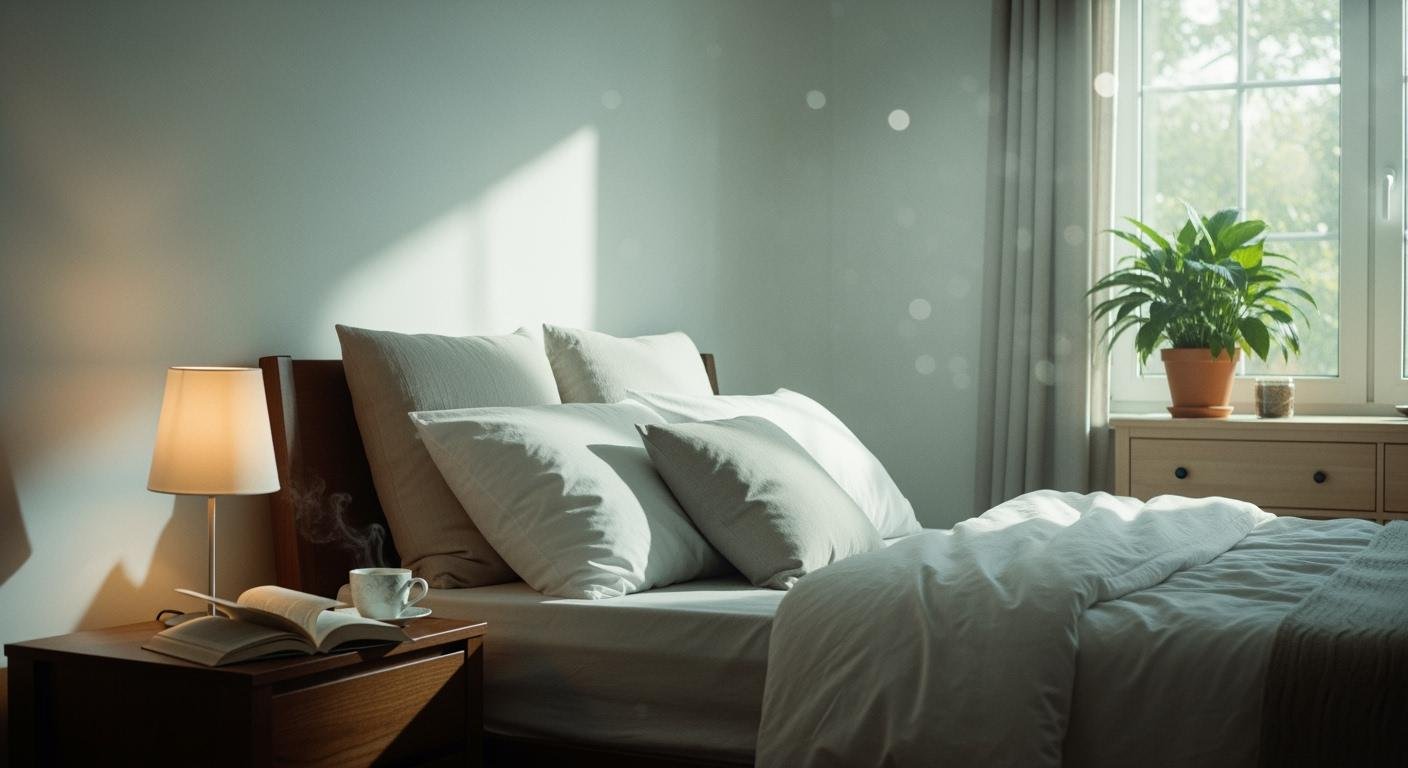
An optimized bedroom environment is the foundation for quality sleep. You are not alone if you struggle to get a good night’s sleep. Recent data shows just how common this is.
In 2020, 14.5% of U.S. adults reported trouble falling asleep. Nearly 18% had trouble staying asleep.
You can achieve better sleep. You can create the perfect bedroom for sleep improvement. Your ideal bedroom—a dark, quiet, cool space defined by comfort and the right temperature—is achievable. Simple steps will help you build the best bedroom environment, improving your sleep quality and overall sleep environment. Your perfect bedroom awaits.
Create the Best Bedroom Environment with Darkness

Your brain needs a clear signal to produce melatonin, the hormone that regulates sleep. Light is the most powerful signal that disrupts this process. Exposure to even normal household lighting before bed can delay your body’s internal clock. This makes it harder to fall asleep. Creating a dark sleep space is a critical step toward better sleep. A dark bedroom environment helps you fall asleep faster and stay asleep longer.
Install Blackout Curtains
You can block streetlights and other outside light sources effectively. Blackout curtains are an excellent tool for this purpose. They create a dark sanctuary inside your bedroom. While studies may not show a direct link between these curtains and curing chronic insomnia, they are a practical way to control your sleep environment. They help you build the perfect bedroom for uninterrupted rest.
Cover or Remove Electronics
Your electronic devices emit blue light. This light is especially disruptive to your bedtime routine. Research shows blue light can increase the time it takes to fall asleep. It also shortens your body’s melatonin production by about 90 minutes.
Light exposure during sleep can reduce melatonin levels by over 50 percent. This disruption can even affect your blood pressure.
You should turn off and unplug electronics in your sleep space. For devices you cannot remove, cover their lights with electrical tape. This simple action improves your quality of sleep.
Use a Quality Sleep Mask
A sleep mask offers a personal and portable darkness solution. You can create a perfect bedroom feel anywhere. When choosing a mask, look for key features.
- Material: Silk feels comfortable and cool against your skin.
- Straps: Two thin straps are often more comfortable than a single thick one.
- Design: Contoured masks give your eyes space, but a flat design may be better for side sleepers.
A good mask will block light without adding uncomfortable pressure.
Manage Natural Light
Sunlight can wake you up too early. This is especially true in east-facing rooms. You can manage this light to protect your sleep. Consider painting your bedroom walls a cool, neutral tone like blue. This creates a soothing atmosphere in the morning. For a bigger change, you can install vertical sun shades outside your windows. These shades filter light well and help you maintain your ideal bedroom for sleep.
Design Your Ideal Bedroom for Quiet
A quiet environment is essential for restorative sleep. Noise disrupts your rest, even if you do not fully wake up. Research shows that traffic noise can make your sleep less effective and shorten important sleep stages like deep sleep and REM sleep. Even a small reduction in noise can improve your sleep quality. Creating a quiet bedroom environment helps you build your ideal bedroom for a peaceful night.
Use a White Noise Machine
You can mask disruptive sounds with a consistent background noise. A sound machine can create a calm atmosphere that helps you sleep. While many people use white noise, you have other options that might work better for your sleep space.
| Noise Type | Characteristics | Impact on Sleep |
|---|---|---|
| White Noise | Sounds like static; has equal power across all frequencies. | Masks background noise effectively. Some people find the high-pitched sound unpleasant. |
| Pink Noise | Sounds like steady rain or wind; deeper than white noise. | May help you fall asleep faster and stay in deep sleep longer. Often feels more soothing. |
| Brown Noise | Sounds like a strong waterfall; a deep, rumbling sound. | Filters out noise well. Its effect on sleep is mostly based on personal reports. |
Add Sound-Absorbing Decor
Hard surfaces like wood floors and bare walls reflect sound. This makes your bedroom feel noisy. You can add soft materials to absorb sound and create a calming environment.
- Place a thick, plush rug on the floor.
- Hang heavy tapestries or fabric art on the walls.
- Use thick curtains over your windows.
More material, especially dense and textured items, will dampen sound in your sleep space.
Eliminate Disruptive Noises
You can take simple steps to reduce noise from inside your home before your bedtime routine. Small fixes make a big difference in creating the perfect bedroom.
Quick Tip: Walk through your house and listen for small noises. A squeaky door hinge or a humming appliance can be enough to disturb your sleep.
Use a lubricant like WD-40 on squeaky doors. Try to run your dishwasher or laundry machine earlier in the evening. A simple foam door sweep can block noise coming from under your bedroom door.
Soundproof Windows and Doors
For a more significant change, you can improve the soundproofing of your bedroom. This helps block outside noise and sounds from other parts of your home. Consider replacing a hollow bedroom door with a solid wood one to create a better barrier. You can also apply weatherstripping tape around your window frames and door to seal gaps. These upgrades help you build the best bedroom environment and protect your quiet sleep space, leading to the perfect bedroom for uninterrupted sleep.
Optimize Temperature for Your Ideal Bedroom Setup
Your body temperature naturally drops to initiate sleep. A cool room helps this process, signaling to your brain that it is time for rest. Research shows that as your core body temperature decreases, your alertness also goes down, preparing you for sleep. A warm bedroom can disrupt this cycle, leading to more frequent awakenings and less deep, restorative sleep. The ideal bedroom setup maintains a temperature between 60-67°F (15-19°C) to support your body’s natural rhythm.
Set Your Thermostat Correctly
You should aim for the sweet spot of 60-67°F to create the perfect bedroom for sleep. A room warmer than this can increase wakefulness and reduce the amount of slow-wave sleep you get. This deep sleep stage is vital for memory and physical recovery. You can also monitor humidity to enhance your sleep space.
Ideal Humidity: For the best sleep, keep your bedroom’s humidity between 40% and 60%. This complements the cool temperature and improves comfort.
Choose Breathable Bedding
Your bedding choices directly impact your body temperature. You should choose natural, breathable fabrics that release heat and moisture. Materials like 100% cotton percale and linen are excellent because their looser weaves promote airflow. Avoid synthetic fibers like polyester, which trap heat and can make you sweat. You can also select a duvet with the right tog rating for your bedroom temperature.
| Season | Room Temperature | Recommended Tog Rating |
|---|---|---|
| Summer | Above 75°F (24°C) | 2.5 – 4.5 Tog |
| Spring/Autumn | 60-75°F (16-24°C) | 7.5 – 10.5 Tog |
| Winter | Below 60°F (16°C) | 12.5 – 15.0 Tog |
Improve Air Circulation
A stuffy room feels warmer than it is. You can improve air circulation with a fan or an air purifier to create a cool bedroom. Good airflow helps your body regulate its temperature and makes your sleep space feel more comfortable. For the best results:
- Place a fan or purifier about 6-10 feet from your bed.
- Ensure there are 3-5 feet of clear space around the unit for proper intake and output.
- Avoid pointing the fan directly at you, as this can cause dry eyes or a sore throat.
Use Windows for Temperature Control
You can use your windows strategically to manage your bedroom temperature. On cool nights, open windows on opposite sides of your home to create cross-ventilation. This pushes hot air out and draws cool air in. During cold winters, you can block drafts from window frames with simple tools like a rope caulk or a draft snake. These small adjustments help maintain a consistent temperature in your sleep space, contributing to the best bedroom environment and a better bedtime routine for quality sleep. This is a key step toward your perfect bedroom.
Maximize Comfort for a Good Night’s Sleep

Physical and mental comfort are the final pillars for your ideal bedroom setup. A tidy, clutter-free room reduces stress and mental distractions, creating a calm atmosphere. Your brain learns to associate your bedroom with rest when it is a sanctuary, separate from daily stressors like work. This psychological comfort is just as important as physical comfort for achieving a good night’s sleep.
Select the Right Mattress and Pillows
Your mattress and pillows are the foundation of your comfort. The right mattress supports proper body alignment, which is essential for quality sleep. You can find the best mattress for your body by considering your sleep style.
- Side Sleepers: Often need a softer mattress to cushion hips and shoulders.
- Back Sleepers: Typically benefit from a medium to firm mattress for spinal support.
- Stomach Sleepers: Usually require a firm mattress to prevent their hips from sinking.
Your pillow is also critical. You should replace your pillow if you notice signs of wear.
Is your pillow lumpy, flat, or discolored? Do you wake up with neck pain? These are signs you need a new one to maintain comfort and get better sleep.
Layer Bedding for Adjustability
Your bedding helps regulate your temperature throughout the night. You can create the perfect bedroom experience by layering your bedding. Start with breathable sheets made from materials like cotton or bamboo. Then, add a lightweight blanket and a duvet. This layering system allows you to easily add or remove covers to stay comfortable, preventing you from waking up too hot or too cold. This simple strategy helps you maintain uninterrupted sleep.
Declutter Your Sleep Space
A cluttered bedroom can increase your stress levels. Studies show that a messy environment can raise levels of cortisol, the stress hormone, making it harder to relax. You can create a more peaceful sleep space with a few simple habits.
- Keep surfaces like your nightstand and dresser clear of unneeded items.
- Use under-bed containers or closed storage to hide belongings.
- Make it a habit to put things away daily to maintain a calm environment.
Establish a Work-Free Zone
You must teach your brain that your bedroom is for sleep. When you bring work into your bedroom, you create a mental association between your sleep space and stress. This makes it difficult to unwind during your bedtime routine. Create a firm boundary by removing laptops, work papers, and other job-related items from the room. Protecting your bedroom as a work-free zone is a powerful step toward creating the best bedroom environment and ensuring restful sleep.
Your ideal bedroom setup for better sleep rests on four key elements: a dark, quiet, cool bedroom defined by comfort. You do not need to change everything at once. Start with one or two small adjustments for sleep improvement. Creating a calm sleep space improves your sleep environment. This optimized bedroom environment supports quality sleep.
Consistent, quality sleep can even add years to your life, making every small change in your bedroom a powerful investment in your future.
FAQ
How important is my mattress for better sleep?
Your mattress is very important. A good mattress supports your body correctly. The right mattress helps you avoid pain and get restful sleep. You should choose a mattress based on your sleep position. A supportive mattress is a key part of your bedroom comfort.
What is sleep hygiene and how does it relate to my bedroom?
Sleep hygiene refers to healthy habits that help you sleep well. Your bedroom environment is a big part of good sleep hygiene. A dark, quiet, and cool bedroom signals to your brain that it is time for sleep. This improves your overall sleep quality.
I feel overwhelmed. What is the first step I should take?
You can start with one small change. Making your bedroom completely dark is a great first step. You can also try setting a cool temperature tonight. A new mattress can wait. These simple actions can immediately improve your sleep and help you build a better bedroom over time.
See Also
Magnesium Malate For Sleep: Your Science-Backed Path To Restful Nights
Unlock Better Sleep: A Beginner’s Guide To Magnesium Malate
Understanding ADHD And Protein: Essential Nutrition For Focus
Protein And ADHD: A Scientific Look For Health-Conscious Families
ADHD And Protein: Connecting Nutrition For Improved Well-Being